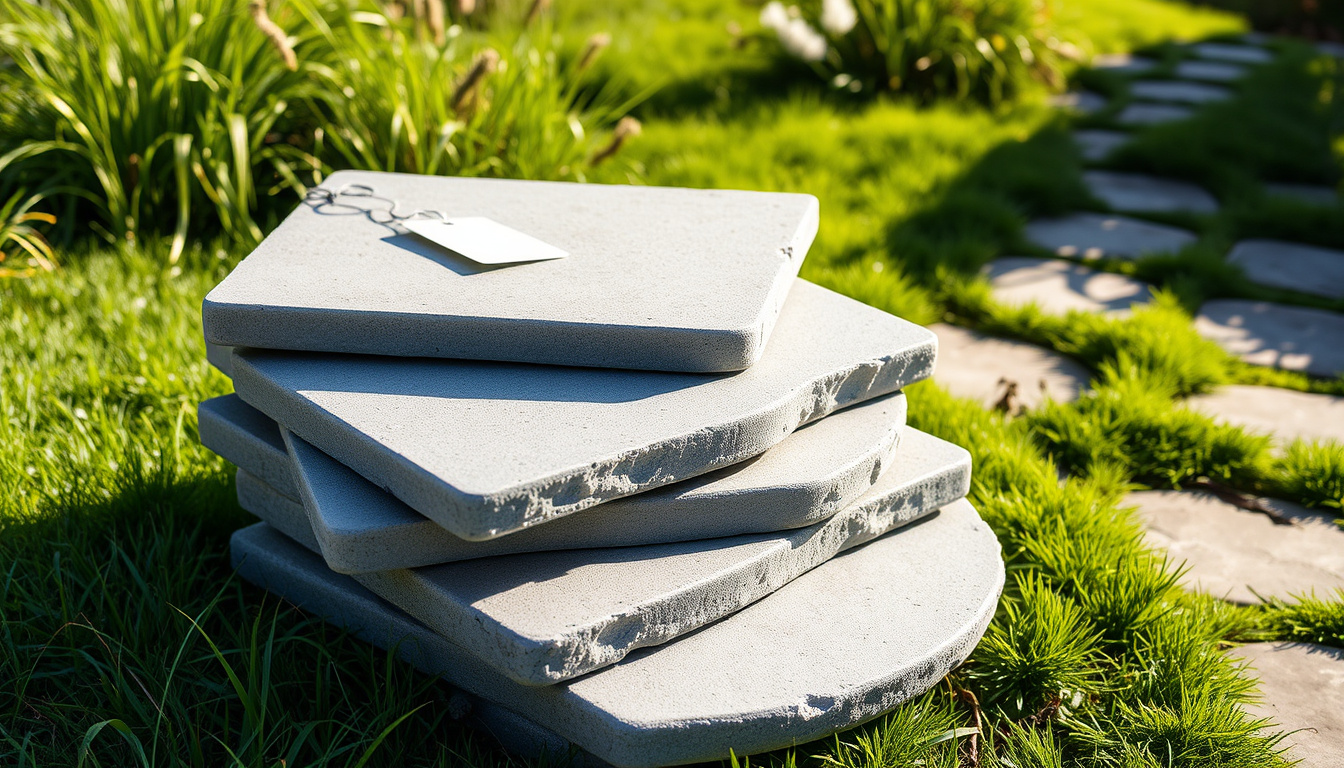
If you’re staring at a muddy patch of garden and wondering how much a proper patio actually costs, you’re not alone. Budget paving slabs in Ireland start around €15 to €25 per square metre for material-only supply, according to Constructors.ie (Irish construction cost guide), but the real expense comes from the preparation and installation work.
Average budget slab cost (2026): €15 – €25 / m² ·
Labour to lay a patio: €35 – €60 / m² ·
Total for a 40 m² patio: €2,400 – €3,600 ·
Cheapest alternative: Gravel (€5 – €10 / m²)
Quick snapshot
- Budget concrete slabs cost €15–€25 / m² in Ireland (Constructors.ie)
- Professional labour adds €35–€60 / m² (Constructors.ie)
- A 100–150mm compacted hardcore sub-base is essential for stability (Constructors.ie)
- Future price trends for paving materials in Ireland remain uncertain
- Quality consistency between budget retailers (Chadwicks vs B&Q) is hard to verify without side-by-side comparison
- Availability of second-hand and clearance stock varies by region and season
- Spring 2025: paving season begins with stable prices
- Mid 2025: inflation pushes concrete slab costs slightly higher
- Winter 2025: off-season discounts on remaining stock
- April 2026: new stock arrives at higher baseline pricing
- Compare prices across Chadwicks, Woodies, B&Q, and local builders merchants
- Decide between DIY installation or hiring a professional landscaper
- Source second-hand slabs on DoneDeal for deeper savings if available
| Metric | Value |
|---|---|
| Cheapest slab type | Concrete paving slabs |
| Average slab cost Ireland 2026 | €15 – €25 per m² |
| Average labour cost to lay paving | €35 – €60 per m² |
| Estimated total for 40m² patio | €2,000 – €4,000 |
| Cheapest paved alternative | Gravel |
| Best value paving slab size | 600x600mm |
What is the cheapest form of paving on a budget?
Comparing concrete, gravel, and budget slabs
- Gravel is the cheapest paving material at roughly €5 to €10 per square metre, according to Constructors.ie (Irish construction cost guide), but it requires edging and periodic maintenance.
- Budget concrete slabs cost €15 to €25 per square metre for material-only supply, as reported by Constructors.ie (paving cost breakdown), making them the cheapest solid paving option.
- Indian sandstone starts at €35 to €55 per square metre, while porcelain ranges from €50 to over €95 per square metre, per the same source.
Six material options, one pattern: the less you pay per square metre, the fewer colour and finish choices you get. Budget concrete slabs are utilitarian — they work perfectly for paths, shed bases, and secondary patios where appearance takes a back seat to function.
Cost breakdown of each option
- Gravel: €5–€10 / m² — cheapest but needs annual topping up and weed management
- Budget concrete slabs: €15–€25 / m² — durable, functional, limited styles
- Textured concrete slabs: €28–€45 / m² — better grip and visual appeal
- Indian sandstone: €35–€55 / m² — natural look, mid-range price
- Irish limestone or granite: €55–€80 / m² — premium local stone
- Outdoor porcelain: €50–€95+ / m² — high-end finish, low maintenance
The trade-off: every step up in material quality roughly doubles the slab cost. A 40 m² patio in budget concrete costs about €600 to €1,000 in slabs alone; the same area in porcelain runs €2,000 to €3,800 just for the material.
What is a cheaper option to slabs?
Gravel drives and pathways
- Gravel remains the most common budget alternative to paving slabs across Ireland, costing €5 to €10 per square metre, according to Constructors.ie (Irish cost guide).
- It requires a proper sub-base and edging to prevent migration, particularly on driveways that see vehicle traffic.
What this means: gravel buys you time. A well-laid gravel path or parking area can last several years with minimal upkeep, and you can always pave over it later when the budget allows.
Concrete hardstanding
- A poured concrete hardstanding costs roughly €20 to €40 per square metre, according to Constructors.ie (paving cost guide), making it competitive with budget slabs.
- It creates a solid, seamless surface that works well for parking areas, but it lacks the visual appeal and drainage flexibility of slabbed patios.
Resin bound surfaces
- Resin-bound surfacing is more expensive than budget slabs at roughly €45 to €70 per square metre installed, according to Constructors.ie (paving price overview), but it offers a permeable, weed-resistant finish that requires minimal maintenance.
How much should a 40m2 patio cost?
Material costs for 40m²
- Budget concrete slabs for a 40 m² patio: approximately €600 to €1,000 (€15–€25 / m²), per Constructors.ie (material pricing).
- Sub-base materials (hardcore and sharp sand) add roughly €200 to €400 depending on depth and local delivery charges.
Labour costs in Ireland 2025–2026
- Professional installation in Ireland typically costs €60 to €150 per square metre depending on material and complexity, according to Constructors.ie (Irish labour rates).
- Local rates vary: Greater Dublin averages €90 to €140+ per m², Munster €80 to €115 per m², and Connacht €70 to €100 per m², as detailed by Constructors.ie (regional cost breakdown).
Total project budget
- For a standard 40 m² patio using budget concrete slabs with professional installation, expect a total of €2,000 to €4,000, based on Constructors.ie (project cost estimates).
- DIY installation cuts the labour cost (€35–€60 / m²) entirely, reducing the total to roughly €800–€1,400 for materials and sub-base.
A DIY homeowner in Cork could build a 40 m² budget slab patio for under €1,500 in materials. The same patio in Dublin with professional labour tips past €4,000. Location and labour choice matter as much as the slab itself.
The pattern: labour accounts for roughly half the total cost, so the DIY route offers the biggest savings for homeowners willing to put in the physical work.
Can I lay slabs just on soil?
Why pure soil is an unstable base
- Soil alone cannot support the weight of paving slabs, especially under foot traffic or furniture, according to Constructors.ie (installation advice).
- Irish clay soil expands and contracts with moisture changes, causing slabs to shift and crack within months.
The consequences of cutting corners
- Wet Irish weather makes soil-based installations unreliable — water pools beneath the slabs, leading to frost heave during winter, uneven surfaces, and persistent weed growth.
- DIYers on Boards.ie (Irish DIY forum) frequently report having to re-lay slabs within a year when they skipped the sub-base on clay soil.
Temporary versus permanent installations
- Laying slabs directly on soil is acceptable only for temporary installations like a seasonal greenhouse floor or a short-term event path where longevity is not expected.
- For any permanent patio, a compacted hardcore sub-base of 100 to 150mm is non-negotiable, as confirmed by Constructors.ie (sub-base guidance).
What do you put down before laying slabs?
Choosing the right sub-base material
- A compacted hardcore sub-base of 100 to 150mm is essential for permanent patios, according to Constructors.ie (sub-base specification).
- Type 1 MOT hardcore (granite or limestone 40mm down to dust) is the standard material used across Irish landscaping projects.
Laying a mortar bed correctly
- A full mortar bed (4:1 sharp sand to cement mix) provides the strongest support for permanent patios, as recommended by Constructors.ie (mortar bed advice).
- For lighter applications, a 50mm sharp sand blinding layer over compacted hardcore can be used, but mortar is preferred for longevity in Irish wet conditions.
Using geotextile membranes
- A geotextile membrane between the soil and the hardcore layer prevents weed growth and stops the sub-base from sinking into the clay over time.
- Costing roughly €1 to €2 per square metre, it is a cheap insurance policy that saves significant rework later.
The implication: spending an extra €50 on membrane for a 40 m² patio prevents hundreds of euros in weed-control effort and sub-base repairs down the line.
What happens if I don’t put gravel under pavers?
How gravel provides essential drainage
- Gravel (or hardcore) acts as the primary drainage layer below paving, allowing rainwater to percolate away from the slab base rather than pooling, according to Constructors.ie (drainage explanation).
- Without this layer, water sits directly beneath the slabs, softening the ground and creating mud that destabilises the surface.
Preventing frost heave
- In Irish winters, trapped water beneath slabs freezes and expands, lifting the slabs unevenly — a phenomenon called frost heave that cracks joints and creates trip hazards.
- Gravel’s open structure gives water space to drain and prevents freeze-thaw damage.
Structural stability and load distribution
- A compacted gravel sub-base spreads the weight of foot traffic, furniture, and vehicles evenly across the ground, preventing individual slabs from sinking or tilting.
- Without it, slabs on Irish clay soil typically become uneven within 6 to 12 months, as reported by users on Boards.ie (Irish DIY community).
The catch: skipping gravel to save a few hundred euros often leads to a full patio replacement within two years, costing far more than the original sub-base would have.
Paving material comparison: which option fits your project?
Four common paving materials, one clear trade-off: upfront cost versus longevity and appearance. The table below maps the Irish market as of 2026.
| Material | Cost per m² (material only) | Durability | Best for | Irish weather suitability |
|---|---|---|---|---|
| Budget concrete slabs | €15 – €25 | Good (15–20 years) | Utility paths, shed bases, budget patios | High with proper sub-base |
| Gravel | €5 – €10 | Moderate (3–5 years before topping up) | Driveways, temporary paths | Moderate — needs edging |
| Indian sandstone | €35 – €55 | Very good (25+ years) | Patios, entertaining areas | Excellent — naturally slip-resistant |
| Outdoor porcelain | €50 – €95+ | Excellent (30+ years) | High-end patios, pool surrounds | Excellent — low porosity |
What this means: budget concrete slabs deliver the best cost-to-longevity ratio for functional areas, while sandstone and porcelain offer superior aesthetics and lifespan at two to four times the price.
DIY vs professional installation: pros and cons
Upsides
- DIY: save €35–€60 / m² in labour, full control over timing and materials
- DIY: satisfying personal project with tangible results
- Professional: guaranteed finish with structural warranty
- Professional: includes excavation, waste removal, and full tooling
Downsides
- DIY: requires physical effort, tool rental or purchase, and time
- DIY: mistakes in sub-base preparation lead to costly rework
- Professional: adds €1,400–€2,400 to a 40 m² project
- Professional: scheduling availability varies by season
The catch: a DIY patio that fails because of poor sub-base preparation costs more in the long run than hiring a professional the first time. For Irish clay soil, the sub-base is not the place to save.
Timeline: paving slab trends and costs in Ireland
- Spring 2025: Paving season begins; prices stable with typical demand.
- Mid 2025: Inflation leads to a slight increase in concrete slab costs across Irish merchants, as tracked by Constructors.ie (price monitoring).
- 2025–2026: Cost of laying a patio rises due to combined material and transport expense increases.
- Winter 2025: Retailers such as Chadwicks and Woodies offer off-season discounts on remaining slab stock — typically 15–25% off.
- April 2026: New slab stock arrives at higher baseline pricing, confirming the upward trend.
Buyers who can wait until late autumn save significantly. Winter 2025 clearance pricing on budget concrete slabs at Irish builders merchants often brings the per-slab cost below €1.50 for standard 600×600 units.
Clarity check: what’s confirmed and what remains uncertain
Confirmed facts
- Budget paving slabs cost €15–€25 / m² in Ireland (2026) — Constructors.ie paving cost guide
- Labour costs dominate the budget at €35–€60 / m² — Constructors.ie labour rates page
- 100–150mm of compacted hardcore sub-base is required for stability — Constructors.ie sub-base guide
- Gravel is the cheapest paving alternative at €5–€10 / m² — Constructors.ie cost comparison
- Woodies sells 25kg paving slab sand with a 5-for-€20 multi-buy offer — Woodies (Irish DIY retailer)
- B&Q Ireland lists single paving slabs from €5.35 to €40 per slab — B&Q Ireland (DIY retailer)
What’s unclear
- Specific future price trends for paving materials in Ireland remain uncertain due to fluctuating import costs
- Quality consistency between budget retailers (Chadwicks vs B&Q vs local merchants) is hard to verify without controlled comparison
- Availability of second-hand and clearance stock on DoneDeal varies significantly by region and season
Perspectives from the trade and DIY community
“Budget paving slabs are durable and functional — they’re perfect for hidden areas, greenhouse floors, or utility paths where you don’t need decorative stone. The key is always the sub-base, not the slab itself.”
— Constructors.ie (Irish construction cost guide), paving cost breakdown
“I laid 40m² of budget slabs on my own in a weekend. Saved about €1,500 in labour, but spent two full days digging out clay and hauling hardcore. The sub-base prep took longer than the slabs themselves.”
— Experienced DIYer on Boards.ie (Irish DIY forum)
“Natural stone pricing reflects quarry origin and thickness. Indian sandstone at €35–€55 per m² offers a genuine upgrade in appearance without the premium of Irish limestone at €55–€80 per m².”
— Constructors.ie (paving material cost guide)
Summary: what your paving budget actually buys
Cheap paving slabs in Ireland deliver exactly what the name promises — an affordable, functional surface that holds up well when installed correctly. The real cost driver is not the slab but the ground beneath it: a proper sub-base on Irish clay soil is the difference between a patio that lasts two decades and one that needs re-laying next spring. Budget-conscious Irish homeowners should spend carefully on concrete slabs, invest properly in the sub-base, and consider autumn clearance from local builders merchants for the best value.
Related reading: Paving Slabs Cost Ireland Price Guide · Average Price for Paving Ireland
drivewaysandpatiosdublin.ie, constructors.ie, pavingcork.ie, powerlandscapingdublin.com, squote.app
Frequently asked questions
Can I lay slabs directly on grass?
No. Grass provides no load-bearing capacity, and slabs laid directly on turf will sink, shift, and grow weeds within weeks. Always remove turf, dig down at least 150mm, and install a compacted hardcore sub-base before laying slabs.
How much does it cost to concrete a 40m2 area?
Poured concrete for a 40 m² area costs roughly €20 to €40 per square metre, totalling €800 to €1,600 for material-only supply, according to Constructors.ie (paving cost guide). Labour and finishing add another €15 to €25 per m².
Are paving slabs from Woodies good quality?
Woodies stocks a range of budget to mid-range concrete slabs suitable for paths and patios. Their prices are competitive with other Irish retailers, and they offer multi-buy deals on paving sand — but local builders merchants often beat their per-slab price on larger orders, according to Constructors.ie (retail comparison).
Do I need to use a plate compactor?
Yes, for any permanent installation. A plate compactor (rentable from tool hire shops for roughly €40–€60 per day) compresses the hardcore sub-base into a solid, level layer that prevents future sinking. Skipping this step is the most common cause of slab failure in DIY projects.
Can I paint cheap paving slabs to improve them?
Yes, with specialist masonry paint or concrete stain. Clean the slabs thoroughly, apply a primer, and use two coats of outdoor-grade paint. The finish typically lasts 2 to 4 years before reapplication is needed, depending on foot traffic and Irish weather exposure.
How can I make cheap paving slabs look expensive?
Use a larger slab format (600x900mm or 600x600mm), lay them in a staggered pattern rather than a grid, and leave wider joints (10–15mm) filled with a pale grey polymeric sand. The combination tricks the eye — wide joints and offset patterns are associated with natural stone installations.
What time of year is best to lay a patio in Ireland?
Late spring (May to June) and early autumn (September) offer the most reliable weather for curing mortar and compacting sub-bases. Avoid laying slabs during frost or heavy rain — mortar needs consistent temperatures above 5°C for proper setting.