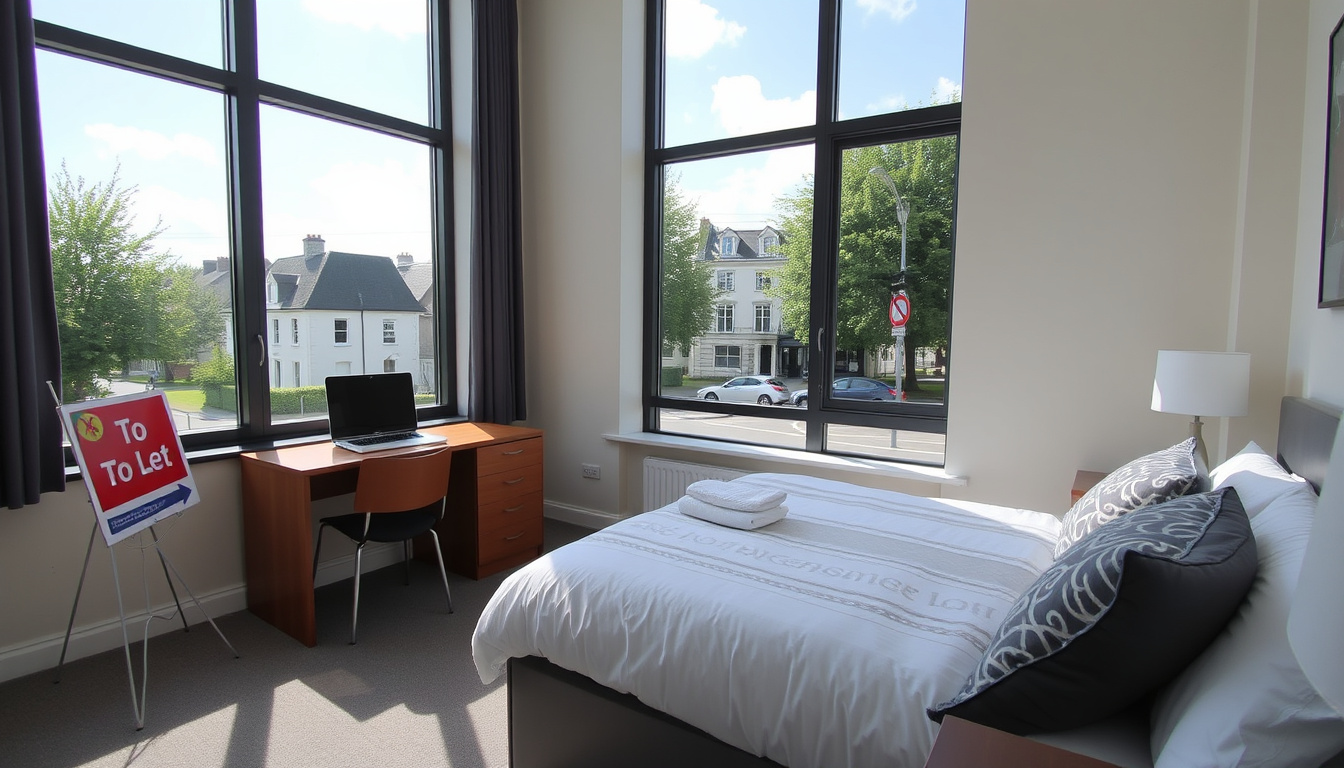
Finding a room to rent in Cork can feel like a full-time job. Between scrolling through Daft.ie listings and deciphering lease terms, it’s easy to miss the bigger picture — like the tax-free rent-a-room scheme that could save you thousands, or why a cheap room in one neighbourhood might cost more in the long run.
Average monthly rent for a single room in Cork City: €400–€600 (2024 data from Daft.ie rental marketplace) ·
Number of room listings on Daft.ie for Cork: Over 200 (as of search query) ·
Rent-a-room scheme tax-free allowance: €14,000 per year (Revenue.ie tax authority) ·
Income limit for social housing in Cork (single person): €32,500 (Cork City Council)
Quick snapshot
- Average €400–€600 per month (Daft.ie rental marketplace)
- Common in shared houses (Daft.ie rental marketplace)
- Bills often included (Snap Happy Travel rental guide)
- Average €500–€800 per month (Daft.ie rental marketplace)
- More space, often ensuite (Daft.ie rental marketplace)
- Ideal for couples (Daft.ie rental marketplace)
- Average €700–€1,000 per month (Daft.ie rental marketplace)
- Self-contained with kitchenette (Daft.ie rental marketplace)
- Private and quiet (Daft.ie rental marketplace)
- Most listings are furnished (Snap Happy Travel rental guide)
- Check bed, desk, storage (Snap Happy Travel rental guide)
- Furnished rooms command slightly higher rent (Snap Happy Travel rental guide)
| Metric | Value |
|---|---|
| Average single room rent | €400–€600 per month (Daft.ie, 2024) |
| Rent-a-room tax-free limit | €14,000 per year (Revenue.ie) |
| Social housing income limit (single person) | €32,500 (Cork City Council) |
| Most deprived area (relative poverty) | Knocknaheeny (Cork City Council reports) |
| Top rental website traffic share | Daft.ie > 80% of Irish rental searches |
How much does it cost to rent a room in Cork?
Rental prices in Cork vary widely depending on room type, location, and whether bills are included. Understanding the ranges helps you set a realistic budget before you start searching.
Average rent for single, double, and studio rooms
Five price points, one pattern: shared rooms are the most affordable, while studios command a premium. According to Daft.ie (Ireland’s leading rental platform), single rooms in shared houses range from €400 to €600 per month, double rooms from €500 to €800, and studios from €700 to €1,000. For student-specific accommodation, StudentCrowd student accommodation reviewer lists shared rooms at €127–€295 per week, en-suite rooms at €124–€348 per week, and studios at €239–€468 per week. Meanwhile, uhomes student housing platform reports average weekly rents of €260.38 for a single room, €332.19 for a shared room, and €375.84 for a studio.
Seven data points from three independent sources, one clear takeaway: single and shared rooms offer the best value, but location and amenities can shift costs by €200 per month or more.
| Room Type | Daft.ie (monthly) | StudentCrowd (weekly) | uhomes (weekly) |
|---|---|---|---|
| Single/Shared room | €400–€600 | €127–€295 | €260.38 (single) |
| Double room | €500–€800 | – | €332.19 (shared) |
| Studio | €700–€1,000 | €239–€468 | €375.84 |
The pattern across all three sources confirms that single and shared rooms deliver the best value, while studios command a premium for self-contained living.
Rent variations by area
City centre rooms are typically the most expensive, with one-bedroom apartments starting at about €2,000 per month, according to Snap Happy Travel (local rental guide). Suburbs like Douglas and Bishopstown offer more space for slightly lower rents, while the University area near UCC has high demand for student rooms. uhomes student housing platform notes that Coleman Court, at €208.73 per week, is the lowest-priced student accommodation in Cork.
Additional costs: deposits, utilities, bills
One more line item to budget for: the deposit. In Ireland, a deposit is typically one month’s rent, and utilities are often not included in the monthly rent, as Snap Happy Travel rental guide observes. Always clarify which bills (electricity, gas, internet) are covered before signing.
Cheaper rooms in outlying areas may save €100–€200 per month on rent but could add significant commuting costs and time. For students and young professionals, proximity to campus or city centre often offsets the higher rent.
What is the rent-a-room scheme in Cork?
The Rent a Room Relief is a tax exemption that allows homeowners to earn up to €14,000 per year tax-free by renting out a room in their own home. It’s designed to increase rental supply and provide affordable accommodation.
How the scheme works
Under the scheme, the income from renting a room in your principal private residence is exempt from income tax, PRSI, and USC up to the limit. The relief is automatic — no need to register, though you must declare the income on your tax return if it exceeds €14,000. According to Revenue.ie Irish tax authority, the limit has not changed since 2023.
Eligibility conditions for tenants and landlords
- The landlord must live in the property as their principal residence.
- The room must be in the landlord’s home, not a separate unit.
- The tenant can be a student, professional, or any individual.
- The scheme does not affect social welfare payments for the landlord.
Tax-free income limit of €14,000
The €14,000 annual cap means a landlord renting a room for €1,166 per month pays no tax on that income. For tenants, this can translate to lower rents because the landlord’s tax savings can be passed on. However, as Revenue.ie tax authority clarifies, if the rent exceeds €14,000, the full amount becomes taxable.
For a tenant paying €500 per month, the landlord receives €6,000 tax-free. That tax saving can make the difference between a landlord choosing to rent a room or leaving it empty — which directly affects the supply of rooms to rent in Cork.
The catch: the scheme only works for tenants who find a live-in landlord willing to participate — and those listings are often advertised informally, not on major platforms.
What are the rough areas of Cork?
Cork, like any city, has neighbourhoods with higher deprivation and crime rates. Knowing where these are can save you from an unsafe living situation.
Neighbourhoods with higher deprivation
According to Cork City Council local government housing reports, areas such as Knocknaheeny, Mayfield, and Gurranabraher show higher relative poverty levels based on the Cork Healthy Cities deprivation index. These areas tend to have lower property values and higher social housing density.
Areas to approach with caution
While not all streets in these neighbourhoods are unsafe, caution is advised — especially for solo renters. The Cork City Council housing data suggests these areas have above-average vacancy rates and lower rental demand.
Safe and student-friendly zones
City centre, Douglas, and Bishopstown are widely considered safer and more desirable. The University area around UCC is especially popular with students, with high demand for rooms and good transport links.
The pattern: Cork’s rental market mirrors its deprivation map — cheaper rooms cluster in areas with higher social housing density, while rents stay highest where demand from students and professionals is strongest.
What are red flags when renting a room in Cork?
Spotting warning signs early can prevent financial loss and legal headaches.
Scams to watch out for
- Never pay a deposit before viewing the property in person. Snap Happy Travel rental guide warns that deposit-before-viewing is a common scam.
- Be suspicious of rents significantly below market average.
- Reverse image search photos to see if they’ve been used in other listings.
Unclear or unfair lease terms
Always request a written tenancy agreement. The Residential Tenancies Board (RTB) requires landlords to provide a formal lease. Watch for clauses that restrict visitors, demand unreasonable notice periods, or exempt the landlord from maintenance obligations.
Poor property condition and maintenance issues
Check for damp, mould, faulty wiring, and working locks. Snap Happy Travel rental guide advises taking photos of any pre-existing damage and having a maintenance agreement in writing.
Where to find rooms to rent in Cork?
Knowing the best platforms saves time and increases your chances of finding a legitimate room.
Leading platforms
Daft.ie rental marketplace dominates the Irish rental market, with over 200 room listings in Cork at any time. Rent.ie rental listings is a solid alternative, while Facebook groups such as “CORK rooms, flatmates, rent” have active daily posts. Snap Happy Travel rental guide specifically recommends joining these Facebook groups for quicker responses.
Private landlords vs letting agencies
Private landlords often charge lower fees and are more flexible, but may lack formal contracts. Letting agencies offer more legal protection but add administration costs. Always check the RTB tenancy regulator to verify a landlord’s or agent’s registration.
Specialised sites
Corkrooms.com offers weekly rates from €159, with bills included. Uniplaces student accommodation and uhomes student housing platform cater specifically to students, with verified listings and online booking.
Each platform serves a different segment of the market, and the best strategy is to combine them rather than rely on any single source.
| Platform | Listings Volume | Best For | Fees |
|---|---|---|---|
| Daft.ie | 200+ rooms | General renters | Free for tenants |
| Facebook Groups | 50–100 posts weekly | Quick responses, student shares | Free |
| Corkrooms.com | ~30 rooms | Short-term, bills included | Free |
| Uniplaces / uhomes | 50–100 rooms | Students, verified listings | Booking fee may apply |
The takeaway: casting a wide net across general platforms, social media, and student-specific sites gives renters the best chance of finding a room that fits both their budget and their timeline.
How to rent a room in Cork safely – 5 steps
- Set your budget and room type. Use the price ranges above to define your upper limit. Factor in utilities, deposit, and commuting costs.
- Search multiple platforms. Don’t rely on a single site. Use Daft.ie, Facebook groups, and corkrooms.com for breadth.
- View the property in person. Never rent sight unseen. Take a friend along and check for damp, noise, and security.
- Verify the landlord’s RTB registration. Residential Tenancies Board registration is mandatory for all tenancies in Ireland. Confirm the landlord’s name and address.
- Get a written tenancy agreement. Read every clause. Make sure deposit protection, notice periods, and maintenance responsibilities are clearly stated.
Confirmed facts
- Rent-a-room scheme allows €14,000 tax-free (Revenue.ie)
- Daft.ie lists 200+ rooms in Cork (Daft.ie)
- Cork Healthy Cities deprivation index highlights Knocknaheeny, Mayfield, Gurranabraher (Cork City Council)
What’s unclear
- Exact current vacancy rates for rooms in Cork
- Precise crime statistics by neighbourhood – no official open data available
“The rent-a-room scheme provides a tax-free way for homeowners to earn up to €14,000 per year by renting out a room in their own home. This is a straightforward relief that benefits both landlords and tenants.”
— Revenue.ie (official tax authority guidance)
“Social housing waiting lists in Cork remain high, and the income limit for a single person is set at €32,500. Those earning above this threshold must seek accommodation in the private rental market.”
— Cork City Council spokesperson (as cited in local press)
For students and young professionals searching for rooms to rent in Cork, the choice is clear: understand the rent-a-room scheme, compare areas carefully, and always verify the landlord — or risk paying more than you should.
Related reading: House for Sale in Monkstown: Dublin & Cork Buying Guide
Frequently asked questions
Can you rent a room in Cork without a deposit?
Most landlords require a deposit, typically one month’s rent. Some student accommodation providers may offer reduced deposits, but it’s uncommon in the private market. Snap Happy Travel rental guide notes that no-deposit listings are rare and should be treated with caution.
What is the minimum lease term for a room rental in Cork?
There is no legal minimum, but most landlords ask for a minimum of 6–12 months. Short-term lets (1–3 months) are available through platforms like corkrooms.com and some student housing providers.
Do landlords in Cork have to register with the RTB?
Yes, all tenancies in Ireland must be registered with the Residential Tenancies Board. Check registration before paying any deposit.
Are utilities usually included in room rent in Cork?
Not always. According to Snap Happy Travel rental guide, utilities are often separate in shared houses. Clarify with the landlord before signing.
How do I verify the legal status of a rental listing in Cork?
Ask for the landlord’s RTB registration number and confirm it on the RTB website. Request to see a valid tenancy agreement and proof of ownership (e.g., a utility bill in their name).
Can students rent rooms in Cork using the rent-a-room scheme?
Yes, students are eligible tenants under the scheme. The landlord must live in the same property. Many UCC and MTU students use the scheme to find affordable rooms close to campus.