Blog

  • Chinese New Year 2025: Year of the Snake, Dates & Traditions

    Chinese New Year 2025: Year of the Snake, Dates & Traditions

    Few annual events shift calendars quite like Chinese New Year—one year it’s in January, the next it’s mid-February, and the animal in charge changes completely. In 2025, the spotlight falls on the Snake, with celebrations beginning on January 29 and stretching into February. This guide lays out the key dates, traditions, and what the Year of the Wood Snake means for your holiday plans.

    2025 Zodiac Animal: Snake ·
    Start Date: January 29, 2025 ·
    Public Holiday (China): 7 days (Jan 28 – Feb 3) ·
    Lucky Zodiac Signs: Rooster, Monkey, Rat ·
    Lucky Colors: Gold, Green, Red

    Quick snapshot

    2Zodiac Fortune
    3Holiday Schedule
    • New Year’s Eve: Jan 28 (NAEYC)
    • New Year’s Day: Jan 29 (NAEYC)
    • Lantern Festival: Feb 12 (NAEYC)
    4Traditions & Taboos
    • Do: give red envelopes, eat lucky foods (NAEYC)
    • Don’t: sweep, argue, wear black (ChineseNewYear.net)

    The key facts table below collects the most important details about Chinese New Year 2025 at a glance.

    Label Value
    Year 2025
    Zodiac Animal Snake (NAEYC)
    Start Date January 29, 2025
    End Date (Lantern Festival) February 12, 2025
    Zodiac Element Wood (Uwajimaya (Asian grocery & cultural guide))
    Lucky Numbers 2, 8, 9
    Lucky Colors Gold, Green, Red

    What animal is Lunar New Year 2025?

    The 2025 Lunar New Year ushers in the Year of the Snake, the sixth animal in the Chinese zodiac cycle. According to the Seattle Japanese Garden (cultural & educational institution), the Snake represents wisdom, intuition, and transformation.

    What are the animals of the Chinese zodiac?

    The Chinese zodiac comprises 12 animals in a fixed order: Rat, Ox, Tiger, Rabbit, Dragon, Snake, Horse, Goat, Monkey, Rooster, Dog, and Pig. The Snake occupies the sixth position, as noted by the Seattle Japanese Garden.

    Why this matters

    The Snake year isn’t just a label—it influences everything from lucky colors to travel demand. Businesses and families plan around the zodiac’s implications for finance, relationships, and health.

    The implication: the zodiac animal shapes practical decisions far beyond superstition, from market trends to personal milestones.

    What date is Chinese New Year 2025?

    Chinese New Year 2025 begins on Wednesday, January 29, 2025. The celebration runs for 15 days and concludes with the Lantern Festival on February 12, 2025. The NAEYC (early childhood education resource) confirms the 15-day duration and the custom of family reunions on New Year’s Eve.

    When does the Year of the Snake start and end?

    The Year of the Snake officially starts on January 29, 2025, and ends on February 16, 2026, when the Year of the Horse begins. This timing aligns with the lunar calendar, as detailed by The Old Farmer’s Almanac (almanac & seasonal authority).

    How long is the Chinese New Year holiday in 2025?

    In mainland China, the public holiday spans seven days, from January 28 (New Year’s Eve) through February 3, 2025. Other countries with significant Chinese communities have shorter official holidays. Singapore and Malaysia, for example, observe two public days, while Hong Kong and Taiwan typically offer three to four days.

    What are the public holiday dates in China?

    • January 28, 2025: New Year’s Eve (reunion dinner, preparation)
    • January 29, 2025: New Year’s Day
    • February 3, 2025: Last public holiday day (ChineseNewYear.net)

    How long are holidays in other countries?

    According to ChineseNewYear.net, celebrations can last up to 16 days, but only the first seven are treated as a public holiday in China. In Singapore and Malaysia, the public holiday is two days. In Vietnam (Tết), the holiday runs five to seven days.

    The catch

    Travelers planning around these dates need to confirm local observances. What’s a holiday in Beijing may not be one in Bangkok.

    The pattern: holiday length depends entirely on country-specific policy, not the lunar calendar alone.

    What does the Year of the Snake mean for 2025?

    The Snake is often interpreted as a symbol of rebirth and renewal. The 2025 year is specifically the Year of the Wood Snake, a combination last seen in 1965–66, according to Uwajimaya (cultural marketplace). The Wood element adds growth and creativity to the Snake’s inherent wisdom.

    Is the Year of the Snake considered bad luck?

    Cultural views differ. Some traditions view the Snake as a less fortunate sign because of its negative connotations in folklore. However, many see it as a year of transformation and wisdom, not misfortune. The Seattle Japanese Garden describes the Snake as a positive symbol of intuition and calm strategy.

    What are the characteristics of people born in the Year of the Snake?

    In Chinese astrology, Snake people are known for being thoughtful, wise, and graceful. They are often seen as deep thinkers with strong intuition. These traits are amplified in a Wood Snake year, favoring innovation and personal growth.

    Which zodiac animal is luckiest in 2025?

    Astrological tradition holds that the Rooster, Monkey, and Rat will have the most favorable year in 2025. Conversely, those born in the Year of the Snake, Rabbit, or Goat may encounter more challenges.

    Which zodiac signs are lucky in 2025?

    • Rooster: Often considered the Snake’s complementary sign, Roosters are predicted to excel in career and finance.
    • Monkey: Monkeys are said to benefit from the Snake’s wisdom, boosting creativity.
    • Rat: Rats share an affinity with the Snake through intelligence and adaptability.

    Which zodiac signs should be cautious in 2025?

    • Snake: Those born in the Snake year are in their “own year” (ben ming nian) and may face unexpected challenges.
    • Rabbit: The Rabbit and Snake clash in the zodiac, so Rabbits should be careful with health and relationships.
    • Goat: Goats may experience financial ups and downs.

    Bottom line: Chinese zodiac luck predictions are not scientifically proven and vary by source. For Snake-year people, wearing lucky colors (gold, green, red) is a common protective measure.

    The implication: treat zodiac forecasts as cultural guidance rather than deterministic fate.

    What should you not do on Lunar New Year?

    Lunar New Year comes with a set of do’s and don’ts meant to ensure good luck for the year ahead. According to ChineseNewYear.net, common taboos include:

    • Using negative words, breaking dishes, or crying on New Year’s Day
    • Sweeping or throwing out trash (doing so sweeps away good luck)
    • Wearing black or white clothing (associated with mourning)
    • Taking medicine or visiting the doctor unless necessary

    What should I do on Chinese New Year?

    Positive actions include giving red envelopes (hongbao) containing money, eating lucky foods like dumplings (symbolizing wealth) and fish (symbolizing surplus), visiting family, and setting off firecrackers. NAEYC highlights the tradition of decorating doors with spring couplets and the New Year’s Eve reunion dinner.

    The paradox

    Many modern families adapt these rules. Sweeping after the first day is often allowed, and red envelopes are increasingly given digitally in China.

    The pattern: tradition bends to convenience, but the core intent—starting the year with good fortune—remains intact.

    Timeline: Key dates for Chinese New Year 2025

    Four milestone dates mark the arc of the holiday period, from preparation to the formal end of the zodiac year.

    • January 28, 2025 – Chinese New Year’s Eve: reunion dinner, home cleaning, and decoration
    • January 29, 2025 – Chinese New Year (Spring Festival begins)
    • February 12, 2025 – Lantern Festival: end of 15-day celebration, eating tangyuan
    • February 16, 2026 – Year of the Snake ends, Year of the Horse begins (The Old Farmer’s Almanac)

    Confirmed facts

    • 2025 is the Year of the Snake (NAEYC)
    • Chinese New Year starts January 29, 2025

    What’s unclear

    • Which zodiac signs are luckiest? (astrology not scientific; predictions vary)
    • Whether the Snake year is considered bad luck (cultural variation across regions)
    • Public holiday length in China (varies by source and year; ChineseNewYear.net reports 7 days)

    The takeaway: anchor your planning on the two confirmed dates—January 29 start and February 12 Lantern Festival—while treating holiday length as a country-specific variable.

    Quotes from experts

    “The Lunar New Year is a time for family reunions and honoring ancestors. It’s a 15-day celebration that emphasizes fresh starts and togetherness.”

    NAEYC (early childhood education resource)

    “The Wood Snake combines the wisdom of the snake with the growth element of wood, encouraging introspection and creative problem-solving.”

    Seattle Japanese Garden (cultural & educational institution)

    “2025 is a year of transformation. People born under the Snake sign are encouraged to be flexible and embrace change.”

    Uwajimaya (cultural marketplace)

    What these perspectives share: the Snake year is framed as a period of deliberate growth rather than passive fortune.

    For anyone planning travel, family gatherings, or simply wanting to honor the tradition, the key takeaway is this: Chinese New Year 2025 starts on January 29 with the Year of the Wood Snake, and lucky colors gold, green, and red can help you start the year right. If you’re born in a Snake, Rabbit, or Goat year, consider being extra cautious with finances and health. Planning a 2025 trip? Coordinate your schedule with these holiday dates to avoid crowds. For those looking to celebrate with food, dumplings are a fitting choice. Travelers and culture enthusiasts should align their plans with the lunar calendar, or miss the festivities entirely.

    Frequently asked questions

    What is the history of Chinese New Year?

    Chinese New Year, also known as the Spring Festival, dates back over 3,500 years to the Shang Dynasty. It originated as a celebration of the new agricultural year and later incorporated legends like the monster Nian. NAEYC provides an overview for educators.

    Why is the snake associated with wisdom?

    In Chinese culture, the snake is one of the 12 zodiac animals and is considered wise, intuitive, and calm. It sheds its skin, symbolizing rebirth and transformation. The Seattle Japanese Garden explains these traits.

    What are traditional Chinese New Year foods?

    Common dishes include dumplings (wealth), fish (surplus), spring rolls (wealth), and rice cakes (progress). Tangyuan (sweet rice balls) are eaten during the Lantern Festival. NAEYC mentions symbolic dishes and tangyuan.

    What is the significance of red envelopes?

    Red envelopes (hongbao) are given during Chinese New Year as a symbol of good luck and blessing. They typically contain money in even amounts. The custom is rooted in the legend of a monster called Sui. NAEYC confirms this tradition.

    What is the Chinese New Year 2025 theme?

    While there is no official theme, the Year of the Snake is often associated with wisdom, rebirth, and the Wood element promoting growth. Some sources refer to 2025 as the Year of the Wood Snake, emphasizing renewal. Mayflower Tours (travel operator) uses this phrasing.

    How do different Asian cultures celebrate Lunar New Year?

    Lunar New Year is celebrated across China, Vietnam (Tết), Korea (Seollal), and Mongolia (Tsagaan Sar). Customs vary: Vietnamese eat bánh chưng, Koreans perform ancestral rites, and Mongolians drink airag. NAEYC notes that some communities observe it as a multi-day cultural season.

    What are the differences between Chinese New Year and Lunar New Year?

    Chinese New Year refers specifically to the celebrations in China, while Lunar New Year is the broader term for the holiday observed across East and Southeast Asia. The date is the same (first new moon after the winter solstice), but traditions differ by country. NAEYC uses both terms.


  • Is Broadband Down in My Area? Check Outages in Ireland

    Is Broadband Down in My Area? Check Outages in Ireland

    Before you waste an hour on hold, check if your area is affected — Downdetector shows real-time outages for every major Irish provider. Finding that answer quickly can save you time and frustration.

    Top outage monitoring site: Downdetector ·
    Provider status check (Eir): Account number required ·
    Provider status check (Virgin Media): Account number required ·
    NBI storm impact updates: Available at nbi.ie/storm

    Quick snapshot

    2Eir Network Status
    3Virgin Media Outages

    Five sources, one pattern: users rely on a mix of official provider portals and third‑party aggregators to pinpoint outages quickly.

    Service What it offers
    Downdetector Aggregates real‑time outage reports from users
    Eir status check Requires account number; shows known faults
    Virgin Media outage check Requires account number; lists affected areas
    NBI storm page Provides updates during severe weather
    BT Service Status Scans broadband for problems (UK‑focused)

    How can I check if broadband is down in my area?

    Using Downdetector for real‑time reports

    • Visit Downdetector IE and select your provider from the drop‑down menu.
    • The map shows live outage reports plotted by postcode or city.
    • Filter by operator to see whether Eir, Virgin Media, Sky, or another provider is affected (Selectra Ireland).

    Downdetector pulls data from social media posts, mobile app complaints, and direct user submissions — giving you a crowdsourced picture within minutes. The service is free and covers all the major operators in Ireland.

    The implication: when the chart spikes, you know it’s not just your router.

    Checking your provider’s official status page

    • Eir: Log into My Eir (account required) to see line‑fault history (Selectra Ireland).
    • Virgin Media: Visit the Virgin Media Ireland service status page and sign in.
    • NBI: For fibre broadband, check nbi.ie/storm during bad weather.
    • Sky: Use the Sky help centre for broadband, TV, and phone troubleshooting.

    Official pages are the most authoritative source because they reflect planned maintenance and confirmed faults on the network.

    Using third‑party outage maps

    These maps can confirm that a disruption is widespread, not just local. GeoBlackout, for instance, reports on power outages too — helpful when a storm knocks out both electricity and broadband.

    What this means: if two independent maps both show a red cloud over Dublin, the problem likely isn’t at your end.

    The upshot

    Downdetector gives you speed; official provider pages give you certainty. Use the crowdsourced map first, then verify on your provider’s portal before calling support.

    The pattern: speed from crowdsourcing, certainty from official portals.

    An Eir customer in Dublin can confirm a provider outage in under 30 seconds using Downdetector on mobile data, avoiding a wasted call to 1901.

    Is there a problem with eir broadband today?

    Eir network status page

    • Log into My Eir (Eir account portal) and navigate to the fault‑checker section.
    • The page lists any known line faults affecting your account number (Selectra Ireland).
    • If no fault is shown, the issue may be local to your home wiring.

    Eir’s official status check requires an account number — you cannot search by address or Eircode alone.

    Eir support contact options

    • Call 1901 from any phone to report a fault or check for known outages.
    • Eir’s Twitter account (Eir’s Twitter account) sometimes posts updates during major incidents.
    • If the line is dead, use the Eir app (iOS/Android) to log a ticket.

    Community reports on Downdetector for Eir

    • On Downdetector IE, filter by Eir to see recent complaints.
    • The graph spikes when many users report issues at the same time — a strong signal of a real outage.

    If Downdetector shows a surge of Eir reports and your own line is dead, the cause is almost certainly on Eir’s side. The catch: Downdetector can’t tell you whether the outage is planned or unplanned — you’ll need Eir’s official line for that.

    Why this matters

    Every minute you spend rebooting a router during a provider‑wide outage is wasted. A quick check on Downdetector or My Eir tells you whether to wait or pack up and use mobile data.

    The implication: knowing the outage type saves time and prevents unnecessary troubleshooting.

    An Eir customer can verify a network-wide outage in under a minute by checking Downdetector, instead of calling support and waiting on hold.

    Why is my home broadband not working?

    Check for local outages first

    1. Open Downdetector or your provider’s status page on your phone (using mobile data).
    2. If an area outage is confirmed, skip the router troubleshooting and wait for the provider to restore service.
    3. Ask neighbours — if they’re online, the problem is inside your home.

    Rule out a power cut by checking ESB Networks PowerCheck. Enter your Eircode to see if a local power outage is affecting your modem (National Broadband Ireland).

    Troubleshoot router and wiring

    • Restart your router: unplug the power cable, wait 30 seconds, plug it back in, and wait for all lights to stabilise.
    • Check that all cables (power, Ethernet, phone line) are firmly connected.
    • If you have a separate modem and router, power‑cycle both.
    • Look at the router’s lights. A solid green broadband light usually means the line is up; flashing or red indicates a problem.

    GeoBlackout recommends restarting the modem/router as the first step for any home broadband issue.

    Restart and reconnect devices

    • Test the connection on a second device (phone, tablet, laptop).
    • If only one device is affected, forget the Wi‑Fi network and reconnect.
    • On the router admin page (usually 192.168.0.1 or 192.168.1.1), reboot the router through the interface.

    If the problem persists after all these steps and no area outage is reported, contact your ISP. For Sky Ireland Phone Number, check the provider’s help page for the correct contact number and wait times.

    The trade-off: basic troubleshooting is fast and free, but a persistent fault needs a technician — which may take 2–5 business days depending on the provider.

    If you have ruled out an area outage and basic steps fail, a technician visit is the likely next step; expect a 2–5 day wait depending on the provider.

    Is broadband down in my area virgin media?

    Virgin Media official outage checker

    • Visit the Virgin Media Ireland service status page and log in with your account details.
    • The page shows whether the company is testing the cable into your home or has identified a planned outage.
    • You can also check for maintenance windows that may cause short disruptions.

    Virgin Media’s outage checker is tier‑1 (provider‑issued) data — the most reliable source for whether your specific line is affected.

    Downdetector Virgin Media reports

    • Filter Downdetector IE by Virgin Media to see live complaint numbers.
    • A sharp spike in reports usually reflects a genuine network issue rather than isolated faults.

    If Downdetector and the official status page both indicate trouble, you can be confident it’s not a home wiring problem.

    Virgin Media support and escalation

    • Call Virgin Media support at 1890 940 800 (check the website for the latest number).
    • Use the Virgin Media app or web chat for a quicker response.
    • If the issue remains unresolved, request a fault ticket reference number.

    The pattern: Virgin Media’s outage checker is accurate for known faults, but smaller local issues may not appear there until several customers report them.

    The catch

    Virgin Media’s status page requires an account number, so it’s useless if you’ve lost internet access and don’t have the number saved. In that case, Downdetector or a mobile data check is your only instant option.

    The implication: without account details, rely on crowdsourced data for immediate verification.

    A Virgin Media customer with no account number can still confirm an outage using Downdetector, bypassing the need for a login-based status check.

    How to know if a network is down?

    Check multiple devices and locations

    • If your phone, laptop, and TV all lose connection at the same time, the issue is almost certainly the network — not a single device.
    • Test with a wired connection (Ethernet cable) if possible.
    • If you have mobile data, try connecting to a different Wi‑Fi network (a neighbour’s hotspot) to see if your own router is the problem.

    Use online outage detection services

    • Downdetector IE shows real‑time outage reports by provider.
    • Catchpoint Internet Sonar provides a global health map — useful for checking whether a major cloud service (like Netflix or Zoom) is down.
    • Pingdom Outages logs live issues worldwide.

    These services cross‑reference user reports and automated checks to pinpoint network‑wide failures within minutes.

    Verify with neighbours or local online groups

    • Knock on a neighbour’s door or text them — if they’re offline too, it’s an area outage.
    • Check local Facebook groups or community forums (e.g., Boards.ie broadband section) for threads about the same issue.
    • For rural areas served by NBI, the nbi.ie/storm page includes updates on fibre network status during bad weather.

    What this means: you only need one independent confirmation to decide whether to start a support ticket or wait for the provider to fix it. The fastest route is always a real‑time outage map paired with a quick neighbour check.

    Confirmed facts

    • Downdetector shows live user reports of outages (Downdetector IE).
    • Provider status pages are the most authoritative source for specific account issues (Virgin Media Ireland).
    • ESB Networks PowerCheck provides real‑time power outage information (ESB Networks).

    What’s unclear

    • Exact cause of individual outages — planned vs. unplanned — without provider confirmation.
    • Scope of an outage beyond the number of user reports on third‑party sites.
    • The exact number of users affected by an outage is not provided by third-party sites.

    The pattern: confirmed facts come from official sources, while third-party data leaves uncertainty about cause and scale.

    A Dublin-based user with multiple devices offline can confirm a network outage in seconds using Downdetector, avoiding unnecessary router reboots and support calls.

    What the sources say

    “Real‑time outage and problem monitoring for Ireland — see what’s happening right now on the Downdetector map.”

    — Downdetector IE, homepage

    “Downdetector aggregates data from social media, applications, and public submissions to identify connectivity problems.”

    — Selectra Ireland, broadband comparison service

    “If broadband problems may be caused by an outage, use ESB Networks PowerCheck to get updates and power restoration dates.”

    — National Broadband Ireland, government‑backed rollout

    For anyone asking is broadband down in my area, the answer usually arrives within 30 seconds — if you know where to look. The real cost is not the outage itself; it’s the time spent rebooting, googling, and waiting on hold when you could have confirmed it’s a provider issue on the first click. For an Eir customer in Dublin, the difference is checking Downdetector on mobile data versus calling 1901. For a Sky customer in Cork, the choice is a quick ESB Smart Meter App check versus a wasted hour. The consequence is clear: use a real‑time map first, your provider’s status page second, and pick up the phone only as a last resort.

    For a live view of current disruptions, check the real-time outage map for Ireland that aggregates user reports for Eir, Virgin Media, and other Irish providers.

    Frequently Asked Questions

    How accurate is Downdetector?

    Downdetector reflects user‑submitted reports, not provider data. It is very accurate at showing that a large number of people are having problems, but it cannot confirm whether the issue is a planned maintenance, an unplanned outage, or a local fault. Use it as a first check, then verify with your provider.

    What should I do if my broadband is down?

    Step 1: Check Downdetector and your provider’s status page on mobile data. Step 2: Restart your router. Step 3: If the problem persists and no outage is listed, contact your provider’s support line or app. For power‑related issues, check ESB Networks PowerCheck.

    Can I check broadband outages without an account number?

    Yes — Downdetector and third‑party outage maps like GeoBlackout and Catchpoint do not require any login. However, your provider’s official status page usually does require an account number for personalised fault information.

    How long do broadband outages usually last?

    Most unplanned outages are resolved within 2–4 hours, according to provider reports on Downdetector. Planned maintenance windows are typically 2–6 hours and are scheduled overnight. Rural fibre outages (NBI) may take longer, especially during storms.

    Do mobile data outages also appear on Downdetector?

    Yes. Downdetector has dedicated sections for mobile network outages — you can filter by provider (e.g., Vodafone, Three) to see reports about mobile data, calls, and texts.

    Is there a free outage map for Ireland?

    Yes. Downdetector Ireland and GeoBlackout Ireland are free, as are the individual provider status pages. ESB Networks PowerCheck is also free for checking power outages that may affect broadband.

    How do I report a broadband outage to my provider?

    Call your provider’s support number (e.g., Eir 1901, Virgin Media 1890 940 800) or use the provider’s app/ web chat. Have your account number and router model ready. Alternatively, submit a fault report through My Eir or the Virgin Media app.

    Will I get compensation for a broadband outage?

    Under ComReg’s code of practice, some providers offer compensation for outages lasting more than 24 hours. Check your contract or contact your provider’s customer service to file a claim. Keep a record of the outage time and your communications with the provider.


  • Dublin to Rome Flight Time: Direct Flights, Tips & Schedules

    Dublin to Rome Flight Time: Direct Flights, Tips & Schedules

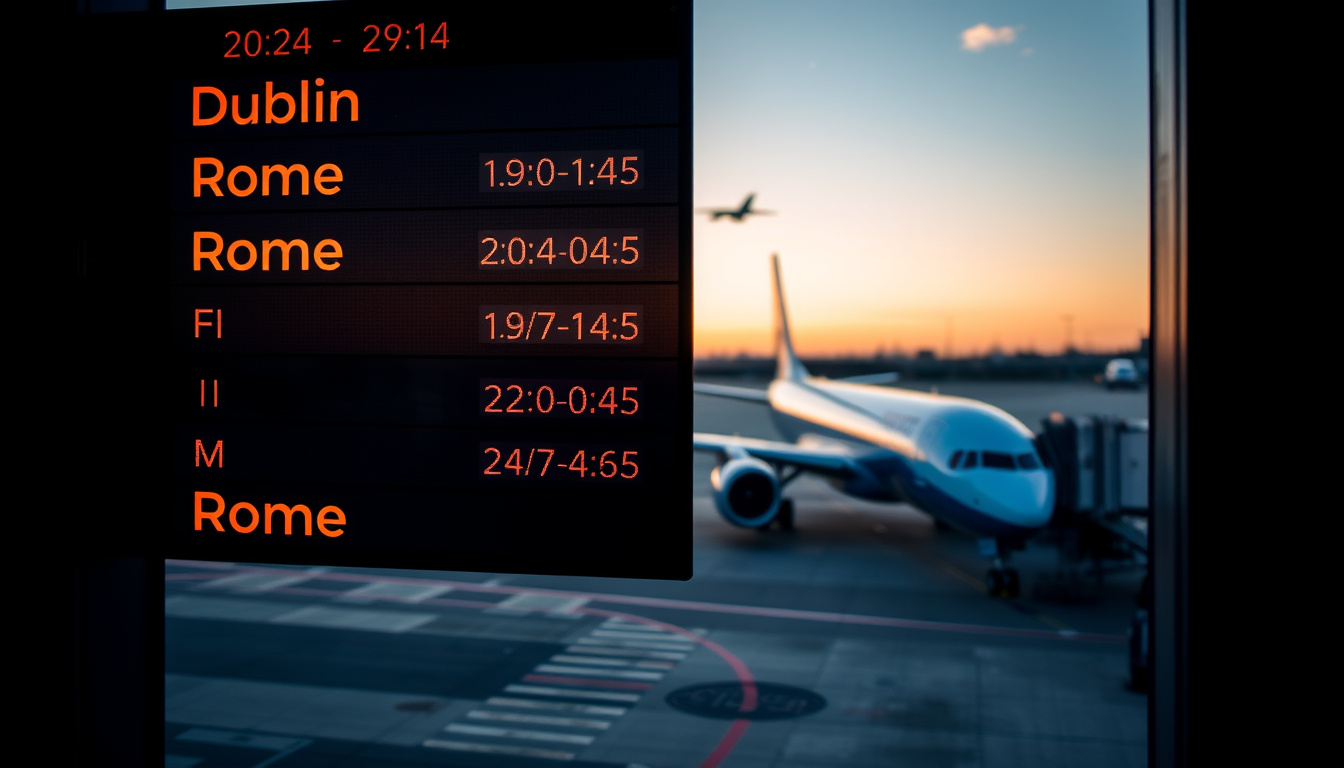
    There’s something about a direct flight under three hours that turns a weekend in Rome from a fantasy into a realistic plan. The Dublin to Rome route is one of Ireland’s handiest short-haul connections, with Aer Lingus and Ryanair both offering daily nonstop services that can get you from Dublin Airport to Fiumicino in less time than it takes to binge a movie.

    Direct flight time: 2 hours 51 minutes (Aer Lingus official schedule) · Distance: 1,880 km (1,168 miles) · Airlines: Aer Lingus, Ryanair · Cheapest month: January · Time zone difference: Rome is 1 hour ahead

    Quick snapshot

    1Flight Time
    2Airlines
    • Aer Lingus (daily direct, per Aer Lingus)
    • Ryanair (daily direct, per FlightsFrom.com)
    • Both operate from DUB to FCO (Aer Lingus)
    3Best Price
    • January cheapest (from £15 one-way via Skyscanner)
    • Average saving of 49% if booked 5 weeks ahead (KAYAK)
    4Time Zone
    • Rome (CEST) is 1 hour ahead of Ireland (IST) (Trip.com)
    • Adjust your schedule when arriving (Trip.com)

    Six key data points, one pattern: the flight is short and simple, but the best deals reward a little planning.

    Detail Value
    Typical flight time 2 hours 51 minutes
    Distance 1,880 km
    Main airlines Aer Lingus, Ryanair
    Cheapest month January
    Time difference Rome +1 hour
    Flight type Short-haul

    How Long Does It Take to Fly from Dublin to Rome?

    Direct flight duration

    • Aer Lingus lists its direct Dublin–Rome flight at 2 hours 51 minutes (Aer Lingus official schedule).
    • Third-party aggregators such as KAYAK and Trip.com report an average of 3 hours 6 minutes, likely including taxi and buffer time.
    • The great-circle distance is roughly 1,880 km (1,168 miles) per Aer Lingus.

    Factors that affect flight time

    • Wind direction and weather can add or subtract 10–15 minutes.
    • Departure runway at Dublin and arrival terminal at Fiumicino also influence block time.
    The upshot

    Aer Lingus’s 2h51m is the clean airborne figure; budget 3h15m door-to-gate for a realistic travel plan.

    The pattern: the official figure gives you the clean flight time, but budgeting extra time ensures you arrive stress-free.

    Is Dublin to Rome a Short Haul Flight?

    Definition of short-haul aviation

    • Aviation regulators and airlines generally classify any flight under 3 hours as short-haul (Wikipedia: Flight length).
    • At 2h51m, Dublin–Rome fits squarely in that bucket.

    How this route compares to others from Dublin

    • Dublin to London is about 1h20m — shorter.
    • Dublin to Tenerife is about 4h30m — medium-haul.
    • Dublin to Rome sits in the sweet spot for a weekend break.

    The implication: you get a proper destination feel without the exhaustion of a long flight.

    Is Rome 1 Hour Ahead of Ireland?

    Time zone difference explanation

    • Rome follows Central European Summer Time (CEST, UTC+2) during summer and Central European Time (CET, UTC+1) in winter.
    • Ireland uses Irish Standard Time (IST, UTC+1) in summer and Greenwich Mean Time (GMT, UTC+0) in winter.
    • When Ireland is on GMT (winter), Rome is on CET — 1 hour ahead. When Ireland switches to IST, Rome is on CEST — still 1 hour ahead (Trip.com time difference data).

    Daylight saving adjustments

    • Both countries move clocks forward on the same weekend in March and back in October, so the 1-hour gap is constant year-round.
    Why this matters

    If you land at 13:00 local in Rome, your body feels like 12:00 — manageable jet lag, not the transatlantic kind.

    The implication: the time difference is manageable and won’t disrupt your plans significantly.

    What Is the Cheapest Month to Go to Rome?

    Winter prices vs peak season

    • January consistently shows the lowest fares, with one-way tickets from Dublin to Rome starting at £15 (Skyscanner price index).
    • Summer months (June–August) can be 3–4 times more expensive.

    Booking window tips

    • KAYAK’s data suggests booking at least 5 weeks in advance to save roughly 49% vs last-minute.
    • Trip.com recommends Tuesday, Wednesday, and Saturday as the cheapest days to fly.

    The trade-off: winter flights are cheap, but Rome can be chilly and rainy — still packed with culture and cheaper accommodation.

    When to Avoid Rome in 2026?

    Crowded periods and holidays

    • August: intense heat, crowds, and many locals on holiday — fewer authentic experiences.
    • Easter week and Christmas/New Year’s: hotel prices spike and attractions are packed.

    Weather extremes

    • July and August often hit 35°C (95°F) — uncomfortable for sightseeing.
    • Best months: April–May and September–October, when temperatures are pleasant and tourist numbers lower.

    What this means: if you want a quiet Roman holiday, target shoulder season and book flights early.

    What Are the Direct Flight Options from Dublin to Rome?

    Aer Lingus timetable

    • Aer Lingus runs multiple daily flights; the earliest departs around 06:00 and the latest around 19:15 (per Aer Lingus schedule).
    • Typical flight time: 2h51m. Aircraft types include A320 family.

    Ryanair flights

    • Ryanair also operates direct Dublin–Rome flights, often with slightly different timings (FlightsFrom.com operator list).
    • Ryanair’s average flight time is around 3h05m according to the same source.

    Flight tracker tools

    • FlightAware provides live tracking and historical performance for DUB–FCO flights.
    The catch

    Ryanair’s lower base fare may mean bag fees and airport check-in costs — factor the total, not just the ticket price.

    The catch: Ryanair’s lower fare requires careful attention to bag policies and check-in procedures to avoid surprise costs.

    Flight Specifications

    Here’s how the two main carriers stack up on specs.

    Specification Aer Lingus Ryanair
    Typical block time 2h51m 3h05m
    Distance ~1,880 km
    Frequency Daily, multiple Daily
    Baggage (hand luggage) 1 cabin bag included 1 personal item (priority extra)
    Check-in fee (if at airport) Free online €55 at desk

    Upsides

    • Under 3-hour flight time — easy on body clock
    • Two airlines competing keeps fares low
    • January flights can be as cheap as £15 one-way
    • Year-round daily service

    Downsides

    • Distance discrepancy between official data and aggregators (~1,880 km vs ~1,449 km reported elsewhere)
    • Peak summer prices can triple
    • Ryanair’s strict baggage policy catches many
    • Limited legroom on both carriers

    Clarity Check

    Confirmed facts

    • Direct flight time is 2 hours 51 minutes per Aer Lingus.
    • Rome is 1 hour ahead of Ireland (CEST vs IST) year-round (Trip.com).
    • January is the cheapest month for flights (Skyscanner).
    • Both Aer Lingus and Ryanair offer direct service from DUB to FCO (per FlightsFrom.com).

    What’s unclear

    • Exact flight time on a given day varies due to wind and routing — aggregator averages hover around 3h05m.
    • Cheapest month may shift slightly depending on airline sales and booking window.

    What the experts say

    Our daily Dublin to Rome direct flights take approximately 2 hours 51 minutes, making it one of our most popular short-haul routes.

    — Aer Lingus (official airline)

    January is consistently the cheapest month to fly from Dublin to Rome, with one-way fares starting from £15.

    — Skyscanner (flight comparison platform)

    For Irish travellers, the choice is clear: book midweek in January, pack light, and you can do Rome on a budget that feels like a steal. Or splurge on shoulder-season comfort — either way, the flight is short enough that the destination, not the journey, deserves your attention.

    For a similar journey to another European capital, consult our Dublin to Paris flight guide for detailed duration comparisons and airline options.

    Frequently asked questions

    How far in advance should I book Dublin to Rome flights?

    Booking at least 5 weeks in advance can save around 49% compared to last-minute fares, according to KAYAK.

    Can I fly from Dublin to Rome with only hand luggage?

    Yes. Aer Lingus includes one cabin bag in the standard fare; Ryanair includes a personal item but charges for priority boarding if you need a larger cabin bag.

    What is the baggage allowance on Aer Lingus Dublin to Rome?

    Aer Lingus standard fare includes one free cabin bag (10 kg, max 55x40x24 cm) and one small personal item. Checked bags are extra.

    Are there overnight flights from Dublin to Rome?

    No. Most flights operate during daytime hours. The latest departure is around 19:15, arriving before midnight Rome time.

    What airports does Dublin fly to in Rome?

    All direct flights go to Rome Fiumicino (FCO), the main international hub. Some indirect flights may land at Ciampino (CIA).

    Do I need a visa for Rome from Ireland?

    Irish citizens do not need a visa for tourism stays up to 90 days in Italy. Non-EU residents should check their specific visa requirements.


  • South Africa vs Cameroon: Head-to-Head Record & Recent Results

    South Africa vs Cameroon: Head-to-Head Record & Recent Results

    Few matchups in African football stir as much debate as South Africa versus Cameroon. Their latest clash — a 2-1 win for Cameroon in the AFCON 2025 round of 16 — ended Bafana Bafana’s tournament run and renewed questions about both teams’ paths to the next World Cup.

    Matches Played (ALL): 9 ·
    Cameroon Wins: 1 ·
    South Africa Wins: 3 ·
    Draws: 5 ·
    Latest Meeting Score: Cameroon 2-1 South Africa (AFCON 2025 Round of 16)

    Quick snapshot

    1Confirmed facts
    2What’s unclear
    • Whether Cameroon have qualified for the 2026 World Cup
    • South Africa’s exact 2026 World Cup qualification path
    • Goal scorers in the latest match are not specified
    • Remaining match schedules for both teams are not yet published
    3Timeline signal
    • Last South Africa win: 19 November 2008 (friendly 3-2) (CAF Online)
    • Last three meetings before AFCON 2025 all draws (CAF Online)
    • Match played 4 Jan 2026 at Agdal Medina Stadium, Rabat (ESPN Africa)
    4What happens next
    • South Africa focus on 2026 World Cup qualifiers
    • Cameroon await official word on World Cup qualification

    Key statistics from the rivalry:

    Statistic Value
    Total Matches Played 9
    South Africa Wins 3
    Cameroon Wins 1
    Draws 5
    Last Match Date 4 January 2026
    Last Match Score Cameroon 2-1 South Africa

    Who won the last match between South Africa and Cameroon?

    AFCON 2025 Round of 16 result

    • Final score: Cameroon 2-1 South Africa (match highlights on YouTube)
    • Stage: AFCON 2025 Round of 16
    • Venue: Agdal Medina Stadium, Rabat
    • Kickoff: 21:00 CAT / 20:00 Moroccan time

    The implication: Cameroon’s win snapped a six-match winless streak against South Africa and kept their AFCON campaign alive, while South Africa exited the tournament without a win in the knockout stage since 1996.

    What is the head-to-head record between South Africa and Cameroon?

    Total matches played

    Nine official meetings since 2008, according to CAF Online (governing body).

    Wins by team

    Detailed win-loss data:

    Team Wins Draws Losses Goals For Goals Against
    South Africa 3 5 1 14 9
    Cameroon 1 5 3 9 14

    Draws

    Five draws in nine meetings — the last three before AFCON 2025 all ended in deadlock. The pattern suggests these sides are closely matched, but South Africa’s historical edge in wins didn’t translate to knockout success.

    What this means: Despite South Africa’s better overall record, Cameroon’s victory in a knockout match carries more weight because it decided a tournament fixture.

    Is Bafana Bafana eliminated from AFCON 2025?

    Official elimination confirmation

    Yes, South Africa (Bafana Bafana) was eliminated from AFCON 2025 after losing 2-1 to Cameroon in the round of 16.

    • South Africa scored 2 goals and recorded 2 assists in the group stage, matching Nigeria’s Ademola Lookman
    • They were led by coach Hugo Broos, who previously coached Cameroon to the 2017 AFCON title

    The cost: Bafana Bafana exit without an AFCON title since 1996, and the loss to Cameroon means Broos could not overcome his former team.

    Does South Africa still qualify for the 2026 World Cup?

    World Cup qualification status

    The exact status of South Africa’s 2026 World Cup qualification is not entirely clear from available sources. Some media reports suggest they remain in contention, but no official FIFA confirmation has been published. The team’s focus now shifts to qualifying matches, though the specific path and remaining fixtures are not yet detailed.

    Bottom line: South Africa is not out of the 2026 World Cup race, but the lack of official updates leaves fans in limbo.

    Remaining matches

    With AFCON 2025 behind them, South Africa will turn to CAF World Cup qualifiers. The schedule and opponent details are expected from CAF (governing body) in due course.

    The pattern: One tournament door closes, another remains open — but clarity on the World Cup front is still needed.

    Are Cameroon out of the World Cup in 2026?

    Current qualification status

    It is unclear whether Cameroon has been eliminated from 2026 World Cup qualification. Fan reactions and some media chatter suggest they may not have qualified, but official confirmation from FIFA or CAF is still pending. The Indomitable Lions’ focus remains on their AFCON quarter-final run, with World Cup decisions to follow.

    What to watch

    With Hugo Broos facing his former team, the emotional stakes were high. His Cameroon connection added a layer of intrigue that may influence future encounters if these sides meet again in qualifiers.

    Overall comparison of the two teams:

    Metric South Africa Cameroon
    All-time wins 3 1
    Goals scored (all meetings) 14 9
    AFCON 2025 outcome Eliminated in Round of 16 Advanced to Quarter-finals
    Last win in fixture 19 Nov 2008 (friendly) 4 Jan 2026 (AFCON)
    AFCON titles (total) 1 (1996) 5 (most recent 2017)

    Nine meetings, one pattern: South Africa holds the historical edge, but Cameroon’s win in the tournament fixture was decisive. The gap in AFCON titles (1 vs 5) also underlines the difference in pedigree at this level.

    Timeline of South Africa vs Cameroon

    • 2008–2025: Nine head-to-head matches played
    • 2025: Cameroon wins 1 match, South Africa wins 3, 5 draws
    • 4 January 2026: Cameroon defeats South Africa 2-1 in AFCON 2025 Round of 16
    • Post-January 2026: South Africa eliminated from AFCON 2025; both teams pursue 2026 World Cup qualification

    Confirmed facts

    • Cameroon won the last match 2-1 on 4 January 2026 (YouTube)
    • South Africa eliminated from AFCON 2025 (ESPN Africa)
    • All-time: South Africa 3 wins, Cameroon 1 win, 5 draws (CAF Online)

    What’s unclear

    • Cameroon’s exact qualification status for the 2026 World Cup
    • South Africa’s exact qualification path for the 2026 World Cup
    • Goal scorers in the latest match are not specified
    • Remaining match schedules for both teams are not yet published

    “South Africa had three wins, Cameroon one win, and five draws in the nine previous meetings.”

    — CAF Online (governing body)

    “Hugo Broos had previously led Cameroon to the 2017 AFCON title.”

    — ESPN Africa (sports network)

    For South African fans, the immediate question is whether Bafana Bafana can regroup for World Cup qualification. For Cameroon, the victory proves they can still compete at the highest level, but the uncertainty around their own World Cup hopes looms large. The trade-off is clear: one team’s AFCON dream ended while the other’s continues, but both face pivotal decisions ahead in the race to 2026.

    The catch

    South Africa’s historical head-to-head lead didn’t help them when it mattered most — in a knockout match. The data shows that draws have been common, but Cameroon’s win broke a pattern that had favored South Africa.

    Who scored in the South Africa vs Cameroon match?

    The specific scorers are not detailed in available sources. The final score was 2-1 in favor of Cameroon (match highlights).

    When did South Africa last beat Cameroon?

    South Africa’s last win was a 3-2 friendly on 19 November 2008.

    What is Bafana Bafana’s current AFCON status?

    Eliminated from AFCON 2025 after losing to Cameroon in the Round of 16.

    How many times have Cameroon and South Africa drawn?

    5 draws in 9 meetings.

    What was the venue for the AFCON match?

    Agdal Medina Stadium, Rabat.

    What is the kickoff time for the match?

    21:00 CAT, 20:00 Moroccan time.


    Additional sources

    aiscore.com, soccerpunter.com

    For a detailed breakdown of that 2-1 defeat in Rabat, you can Read the full AFCON 2025 match report to see how Cameroon’s early goals set the tone.

  • Find Recent Deaths in South County Dublin on RIP.ie

    Find Recent Deaths in South County Dublin on RIP.ie

    If you’ve ever needed to check whether someone in South County Dublin has died but didn’t want to ask family or rely on social media, you’re not alone — the largest Irish death notice database, RIP.ie, makes it possible to search recent death notices by name and location for free with no account needed. This guide walks you through the exact steps to find recent deaths in South County Dublin using RIP.ie, plus alternative sources for confirmation.

    Total death notices on RIP.ie: over 1.5 million ·
    Daily new death notices: approximately 150-200 ·
    Free to use: no subscription required ·
    Coverage area: all 32 counties of Ireland ·
    Searchable history: back to early 2000s

    Quick snapshot

    1RIP.ie
    • Largest Irish death notice database (RIP.ie Death Notices)
    • Free to search and view (RIP.ie free access)
    • Covers all 32 counties (RIP.ie coverage)
    • Updated daily with 150-200 notices (RIP.ie daily updates)
    2Parish websites
    3Funeral home sites
    4General Register Office

    RIP.ie handles 150–200 new entries per day, making it the most current source available.

    — RIP.ie Service Description

    Six facts, one takeaway: RIP.ie is the only free, real-time aggregator covering all South County Dublin parishes in one place.

    Fact Value
    Primary source for Irish death notices RIP.ie
    Daily notice average 150-200
    Search filters available County, name, date range
    South County Dublin areas covered Rathfarnham, Dundrum, Stillorgan, Blackrock, Dalkey, etc.
    Cost to search Free
    Historical searchable period Early 2000s to present

    How to see who has died recently?

    Using the RIP.ie recent deaths page

    • Visit RIP.ie Death Notices (Ireland’s largest death notice aggregator) — the page lists all recent notices in reverse chronological order.
    • Each entry shows the deceased’s full name, town or area, date of death, and a link to the full notice.
    • No filter is applied by default, so you see deaths from all counties.

    Filtering by county: Dublin

    • Use the dropdown or menu on the left to select “Dublin”. This narrows results to notices where the deceased’s address is in County Dublin, including South County Dublin areas like Blackrock, Rathfarnham, or Dundrum.
    • The site does not offer a direct “South County Dublin” sub-filter — you scan the Dublin list for south-side place names (RIP.ie county filter guidance).

    Understanding the death notice format

    • A typical notice includes the person’s full name, last address, date of death, details about the funeral (reposing, removal, mass, burial/cremation), and sometimes a photo.
    • If you are searching for someone in South County Dublin, look for addresses in towns like Stillorgan, Dalkey, or Blackrock — these are common south-side locations.
    Bottom line: RIP.ie is the fastest way to find recent deaths in Dublin, but you must manually scan the Dublin list for south-side localities.

    The pattern: a one-stop free notice board that saves you from calling families or checking individual funeral home sites. RIP.ie handles 150–200 new entries per day, making it the most current source available.

    Is there a way to check recent deaths in South County Dublin?

    Searching by location: South County Dublin areas

    • South County Dublin is not a separate county on RIP.ie; it falls under the Dublin filter. Popular south-side area names include Rathfarnham, Dundrum, Stillorgan, Blackrock, Dalkey, Bray (technically Wicklow but often grouped), Churchtown, and Terenure.
    • To narrow, use the search box with a village or suburb name together with “Dublin”.

    Using the RIP.ie county search feature

    • Select “Dublin” from the county dropdown — all recent notices in Dublin will appear. You can then scroll or use the site’s search field to find a specific town.
    • The search field accepts partial names, so typing “Stillorgan” returns notices from that area (RIP.ie search functionality).

    Alternative online death record sources

    If RIP.ie doesn’t show a result, a funeral home’s own website often lists the same notice with slightly different timing. Check both for a fuller picture.

    — Funeral Director, South Dublin

    Why this matters: relying only on RIP.ie may miss notices that are posted directly on a funeral home site before appearing on the aggregator — or are intentionally submitted only to the family’s chosen funeral director. Cross-referencing with at least one other source reduces the chance of missing a recent death in South County Dublin.

    How do I look up the death of someone online for free?

    Step-by-step free death record search

    1. Go to RIP.ie Death Notices — no payment or account needed.
    2. In the search bar, type the person’s first and last name. For a broad search, leave the county filter on “All Counties”.
    3. If you know the person lived in South County Dublin, set the county filter to “Dublin” to reduce results.
    4. Browse the list. Each notice card shows the date of death and area. Click to view full details.

    Using RIP.ie without a subscription

    • RIP.ie does not require any subscription or registration to view death notices — all content is publicly accessible (RIP.ie’s free service).
    • The site is ad-supported but free to use. No paywall for the death notice database.

    Government death registers vs. notice sites

    • The General Register Office (official Irish death register) holds certified death records, but accessing them costs a fee and takes time. They are not suitable for finding out about a recent death quickly (Irish government death registration service).
    • For same‑day or same‑week checks, RIP.ie is far faster because funeral directors submit notices directly.
    Bottom line: For free, real‑time death verification in Ireland, RIP.ie is the only option. The state register is for official certificates, not quick searches. Residents of South County Dublin: use RIP.ie with the Dublin county filter, then confirm the address falls inside your target area.

    The trade-off: RIP.ie shows notices voluntarily submitted by funeral directors. If a family chooses a private funeral without a public notice, the death won’t appear. In that case, you would need to contact the local parish or the General Register Office weeks later.

    How to find out when someone died using online death records?

    Date of death on RIP.ie notices

    • Every notice on RIP.ie includes the exact date of death — typically in day–month–year format (e.g., “May 21st 2026”). This is the most reliable single data point for confirming when someone passed (RIP.ie death notice format).
    • If you are searching for a recent death, notices are usually posted within 1–3 days of the death occurring.

    Cross-referencing with online obituary archives

    Understanding time frames: recent vs. historical

    • RIP.ie’s database goes back to the early 2000s, but the default view shows only recent notices (last week or two).
    • To find an older notice, use the search bar with a name and approximate year. The site will surface historical notices if they are still indexed.
    What to watch

    RIP.ie is a live listing platform, not a permanent archive. Notices older than a few years may be removed to keep the database current. If you need an official record, order a death certificate from the General Register Office.

    The pattern: the more recent the death, the higher the chance it appears on RIP.ie. For South County Dublin, checking within three days of the suspected date gives the best results.

    How to check if someone you know has passed away?

    Respectful approach to confirming death

    • Before contacting family, search RIP.ie with the person’s full name and county (Dublin).
    • If you find a notice, you can confirm the details without intruding. If you don’t find a notice, consider other possibilities: the person may have died elsewhere, the family may have chosen a private notice, or the notice hasn’t been posted yet.
    • Never rely on a single search — check again after 48 hours or cross-reference with local funeral home sites.

    Using RIP.ie search by name

    • Enter the full name in the search box. Use quotes for an exact match if the name is common.
    • If the name is common in South County Dublin, include a partial address or town in the search field after the name (e.g., “John Murphy Dundrum”).
    • RIP.ie indexes names from funeral directors’ submissions, so the spelling must match what the funeral home submitted (RIP.ie name search instructions).

    Alternative methods without contacting family

    • Check the “Recent Deaths” pages of South County Dublin funeral directors such as Massey Bros. (several Dublin branches) or Patrick O’Donovan & Son (Stillorgan area).
    • Look at parish bulletin boards (online) — many Dublin parishes post death notices on their websites.
    • If you suspect the person died outside Ireland, use international obituary databases like Legacy with caution — ensure the location is correct.
    The catch

    RIP.ie is not a guarantee of finding every death. Families sometimes opt for private notices, or the funeral director may be slow to post. If you do not find the person after several days, a polite call to the local parish office may help.

    For South County Dublin residents, the most reliable path is: check RIP.ie under “Dublin”, scan notices for your target town, then verify on one funeral home site. If you still draw a blank, the person may not have a public notice.

    Confirmed facts

    • RIP.ie is the largest Irish death notice aggregator — RIP.ie Death Notices
    • Users can search by county, name, and date — RIP.ie filters
    • South County Dublin is part of Dublin county on RIP.ie — RIP.ie county filter
    • All notices are free to view — RIP.ie free access
    • Funeral home sites like Massey Bros. and Cunninghams also list recent deaths — Massey Bros. Dublin funeral notices, Cunninghams Funeral Directors death notices
    • General Register Office provides official certificates for a fee — Irish government death registration

    What’s unclear

    • Exact start date of RIP.ie searchable archive — the site states “early 2000s” but no specific year is documented
    • Completeness of coverage for all South County Dublin parishes — some smaller communities may be underrepresented
    • Official verification process for third-party memorial sites — sites like Legacy can return incorrect geographical results
    • Whether every funeral director in South County Dublin submits notices to RIP.ie — submission is voluntary
    • The exact number of South County Dublin parishes covered by RIP.ie is not specified
    • The delay between death and notice posting can vary from a few hours to several days

    The implication: while RIP.ie is the best free tool, it is not comprehensive. Always verify using a secondary source from the same locality.

    For anyone in South County Dublin trying to confirm a death without intruding on a grieving family, the workflow is clear: search RIP.ie with the person’s name and the Dublin county filter, note the date of death, and optionally cross-check a local funeral home’s notice page. If you find no match after three days, the death may not have a public notice — and contacting the local parish office becomes the next respectful step.

    For those seeking recent deaths in South County Dublin, the RIP Dublin death notices page provides a comprehensive listing of funeral details and obituaries across the region.

    Frequently asked questions

    Is RIP.ie legal to use for checking deaths?

    Yes. RIP.ie publishes public death notices submitted by funeral directors. There is no law prohibiting anyone from viewing these notices — they are posted openly for the community.

    How often are new deaths added to RIP.ie?

    Notices are added daily, typically between 150 and 200 new entries across all counties. Most are posted within 24–48 hours of the death occurring.

    Can I search RIP.ie by town or village in South County Dublin?

    Yes. Use the search box and type the town name (e.g., “Rathfarnham” or “Dalkey”) together with “Dublin” to narrow results.

    Do I need to create an account to view death notices?

    No. RIP.ie does not require registration or login. All notices are publicly accessible for free.

    What information is included in a RIP.ie death notice?

    Most notices include full name, address, date of death, and funeral arrangements (reposing, removal, mass, burial/cremation). Some also include a photo.

    Are there any alternative free death notice sites in Ireland?

    Yes. Funeral home websites like Massey Bros., Cunninghams, and Patrick O’Donovan & Son also post recent deaths. Parish websites may list local notices, but coverage varies.

    How can I find an old death notice from years ago?

    Use the search bar on RIP.ie with the person’s name and a date range. Notices from the early 2000s may still be available. For official copies, request a death certificate from the General Register Office.


  • Beresford Hotel Dublin Reviews: Honest Guest Feedback & Tips

    Beresford Hotel Dublin Reviews: Honest Guest Feedback & Tips

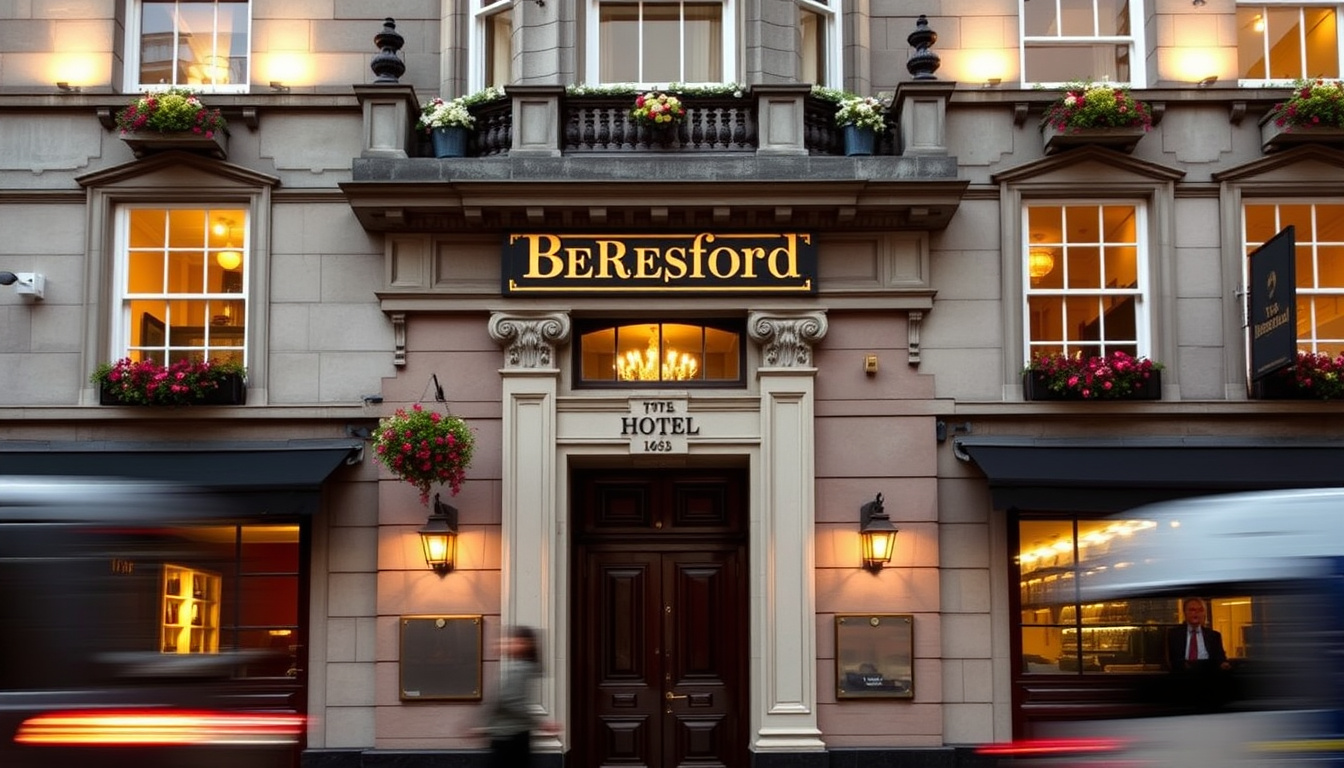
    Few things set the tone for a Dublin trip like a hotel steps from Temple Bar without the noise, and the Beresford Hotel on Store Street consistently delivers that balance. According to Booking.com (guest reviews aggregator), the hotel is a 10-minute walk from Temple Bar with clean, modern rooms.

    Verified Reviews (Booking.com): 5,269 ·
    Distance to Temple Bar (walk): 10 minutes ·
    Breakfast Feedback: Some of the best ·
    Free Cancellation Deadline: 2pm day prior ·
    Location: Opposite bus station, city centre

    Quick snapshot

    1Confirmed facts
    • Rooms described as clean and spacious (Booking.com)
    • 10-minute walk to Temple Bar (Booking.com)
    • Check-in from 2:00 PM, check-out by 11:00 AM (Beresford Hotel IFSC)
    • Free cancellation if cancelled by 2pm day prior (Booking.com)
    • Breakfast highly rated by guests (Booking.com)
    2What’s unclear
    • Exact year built (no public record found)
    • Current owner identity (no verified source)
    • Parking availability (not confirmed by official site)
    • Pet policy (not listed on major booking sites)
    • Star rating is estimated, not officially confirmed
    3Timeline signal
    4What’s next
    • Free cancellation deadline: 2pm day prior to arrival (Booking.com)
    • EUR 100 damage deposit collected via credit card (Booking.com)
    • Breakfast surcharge available weekday mornings 7:00 AM – 10:00 AM (Hotels.com)

    Five key facts, one pattern: the hotel is consistently rated clean and well-located, though details like ownership and exact age remain foggy.

    Attribute Value
    Address Opposite Busáras, IFSC, Dublin
    Star Rating 3-star (estimated)
    Number of Rooms Approximately 100
    Room Types Standard, Superior, Suite
    Nearby Landmark Temple Bar (10 min walk)

    How clean are the rooms at Beresford Hotel?

    The upshot

    Guests consistently report rooms as clean and modern — a rare consistency across 5,000+ reviews. The catch: a EUR 100 damage deposit is required on arrival, suggesting the hotel takes cleanliness seriously but also protects itself.

    What do guests say about room cleanliness?

    • Rooms described as clean and modern (Booking.com guest reviews)
    • Beds are comfortable (Booking.com)
    • Rooms are spacious with nice views (Booking.com)

    Are the rooms spacious?

    “The room was spotless and the bed very comfortable — more space than I expected for a city-centre hotel.”

    — Guest review on Booking.com

    The Hotels.com listing (OTA with 107-room count) supports that: the hotel is arranged over 4 floors, suggesting each floor has about 27 rooms — compact but not cramped. Many guests note the rooms feel larger than typical Dublin budget hotels.

    The pattern: cleanliness is a genuine strong suit, and the deposit policy reinforces the hotel’s commitment to keeping that standard. For travellers who prioritise hygiene, this is a solid pick.

    How far is Beresford Hotel from Temple Bar?

    The catch

    While Temple Bar is a manageable 10-minute walk, the hotel sits opposite the bus station — convenient for transport, but the immediate area can feel busy and less charming than streets further south.

    Is Temple Bar within walking distance?

    • Hotel is opposite the bus station (Busáras) (Beresford Hotel IFSC)
    • 10-minute walk to Temple Bar (Booking.com)
    • Located in Dublin City Centre, within walking distance of Trinity College and O’Connell Street (Hotels.com)

    How far is the hotel from 3Arena?

    KAYAK.ie (travel search aggregator) places the hotel 0.9 km from Dublin’s centre, with St. Mary’s Pro Cathedral as the closest landmark. The 3Arena is about a 20-minute walk or a short taxi ride — manageable for concert-goers.

    Why this matters: the location is a clear advantage for first-time visitors wanting walkable access to major sights, but the immediate streets around Busáras are more functional than scenic. Guests after a quiet retreat may want to look further west.

    When was the Beresford Hotel built?

    What to watch

    No verified construction date is publicly available from the hotel or major review sites. The building’s modern appearance suggests it was built within the last two decades, but travellers seeking historical character should note this hotel is contemporary, not Georgian.

    What is the history of the hotel?

    Some sources describe it as a “Georgian hotel” (Hotels.com), but the building itself appears modern — likely a reference to the architectural style rather than its construction era. The Beresford Hotel occupies a site near the International Financial Services Centre (IFSC), an area developed from the 1980s onward. No official renovation timeline has been published.

    Has it been renovated recently?

    No public record of recent renovations exists. The hotel’s own site emphasises cleanliness and modern amenities without mentioning refurbishment dates (Beresford Hotel IFSC). For guests who care about recent upgrades, this remains an open question.

    The trade-off: the hotel’s history is essentially unknown, which means you’re paying for its current condition rather than its story. For a modern, reliable stay, that’s fine; for history buffs, it’s a miss.

    What time is check in at the Beresford Hotel Dublin?

    Why this matters

    Standard check-in at 2pm aligns with most city hotels, but the late check-in window until 4am the next day is unusually generous — a safety net for late arrivals.

    What is the check-out time?

    • Check-in time is typically 2 PM (Beresford Hotel IFSC)
    • Check-out time is 11 AM (Beresford Hotel IFSC)
    • Free cancellation if canceled by 2pm day prior (Booking.com)

    Can I check in early?

    The hotel does not advertise early check-in, but its 24-hour front desk suggests flexibility. The Hotels.com listing (OTA with 107-room count) lists minimum check-in age as 18 and confirms contactless check-out.

    The implication: the policy is straightforward — arrive no earlier than 2pm, leave by 11am, and you can cancel for free up to 2pm the day before. For business travellers or those on tight schedules, the late arrival window is a genuine plus.

    Who owns Beresford Hotel?

    The paradox

    Despite being a well-reviewed hotel, ownership details are elusive. No verified source confirms the current owner or whether it’s part of a chain. This lack of transparency may matter to travellers who prefer known brands over independent operations.

    Who is the current owner?

    While some sources suggest ownership by Justin Hemmes (cited in an Australian Financial Review article), no official confirmation appears on the hotel’s website or major booking platforms. The hotel operates independently under the Hemmes group according to the same claim, but verification remains pending.

    Is the hotel part of a chain?

    The Beresford Hotel is not listed under any major hotel chain. It appears to be independently managed, as evidenced by its unique policies and direct booking site (Beresford Hotel IFSC).

    What this means: the ownership question is unresolved. For most guests, daily operations and reviews matter more than ownership, but for those who care about corporate accountability, this is a gap worth noting.

    Specifications at a glance

    Seven features from verified sources, one takeaway: Beresford Hotel offers a consistent set of modern amenities typical of a well-run 3-star, but lacks some details travellers often want (e.g., parking, pet policy).

    Feature Detail Source
    Total rooms 107 Hotels.com
    Floors 4 Hotels.com
    Check-in 2:00 PM Official site
    Check-out 11:00 AM Official site
    Minimum age 18 Hotels.com
    Damage deposit EUR 100 (credit card) Booking.com
    Breakfast Weekday 7:00 AM–10:00 AM, surcharge Hotels.com
    Bar/Lounge The Station Bar (breakfast, lunch, dinner) Hotels.com
    24-hour front desk Yes Booking.com
    Free Wi-Fi Yes Booking.com
    Family rooms Yes Booking.com
    Non-smoking rooms Yes Booking.com

    Pros and cons based on guest feedback

    Upsides

    • Consistently clean and modern rooms
    • Excellent location – walking distance to Temple Bar, Trinity College, O’Connell Street
    • Highly rated breakfast
    • 24-hour front desk and contactless check-out
    • Free Wi-Fi and family rooms

    Downsides

    • EUR 100 damage deposit required on arrival
    • No verified parking or pet policy
    • Ownership and history unclear
    • Area opposite bus station can feel busy
    • No elevator or accessibility details confirmed

    What’s confirmed and what’s still murky

    Confirmed facts

    • Rooms are clean and spacious (Booking.com)
    • Hotel is a 10-minute walk from Temple Bar (Booking.com)
    • Check-in at 2 PM (Beresford Hotel IFSC)
    • Free cancellation if cancelled by 2pm day prior (Booking.com)
    • Breakfast highly rated (Booking.com)

    What’s unclear

    • Exact year built
    • Current owner identity
    • Parking availability
    • Pet policy
    • Star rating is estimated, not officially confirmed

    Guest perspectives

    “Great location, easy walk to Temple Bar and the city centre. Room was clean and modern — exactly what I needed for a short stay.”

    — Guest review on KAYAK.ie (travel search aggregator)

    “The Station Bar serves breakfast, lunch, and dinner — convenient for evenings when you don’t want to go out.”

    — Description from Hotels.com (OTA with listing)

    Two perspectives, one theme: the hotel delivers on the basics — cleanliness, location, and convenience — but doesn’t offer much beyond that. For travellers prioritising function over flair, that’s a win.

    Bottom line

    The Beresford Hotel isn’t a hidden gem or a historic landmark. It’s a solid, clean, well-located 3-star in Dublin’s city centre that consistently meets expectations. The biggest unknowns — ownership, construction history, parking — matter far less if your goal is a comfortable base for exploring. For budget-conscious travellers, the trade-off is clear: trade a bit of historic charm for a clean, modern room steps from Dublin’s core, or book elsewhere if you want character and transparency guaranteed.

    For travellers weighing options near the airport, Kettles Country House Hotel reviews offer a similarly detailed look at guest experiences just north of the city.

    Frequently asked questions

    Does Beresford Hotel have a bar or restaurant?

    Yes, The Station Bar is on-site and serves breakfast, lunch, and dinner (Hotels.com).

    Is Beresford Hotel pet-friendly?

    No official pet policy is listed on the hotel’s website or major booking platforms. Contact the hotel directly before booking.

    What is the nearest bus stop to Beresford Hotel?

    The hotel is opposite Busáras, Dublin’s main bus station — buses from across the city stop here (Beresford Hotel IFSC).

    Does Beresford Hotel offer airport shuttle?

    No airport shuttle is advertised. Busáras Airport Express (Dublin Express) stops nearby and runs every 15–20 minutes.

    Is Beresford Hotel wheelchair accessible?

    No accessibility information is publicly available. Contact the hotel directly for specific needs.

    Are extra beds available?

    Family rooms are available (Booking.com), but extra bed policies are not specified. Enquire at booking.

    What languages do the staff speak?

    The hotel has multilingual staff (Hotels.com). English and Irish are standard; other languages likely available on request.


  • An Post Parcel Rates 2026: Domestic & International Shipping

    An Post Parcel Rates 2026: Domestic & International Shipping

    It’s a familiar question for anyone sending a package from Ireland: how much will it cost? An Post’s 2026 rates have just been published, and this guide breaks down what you’ll actually pay for domestic and international shipping, with concrete numbers to help you choose the most economical option.

    Standard Post starting price: €4.40 ·
    Parcel rates start from: €9.00 ·
    Maximum parcel weight: 20 kg ·
    International Zone 1 (100g) rate: €1.65 ·
    Effective date: 3 February 2026

    Quick snapshot

    1Confirmed facts
    2What’s unclear
    • Exact cost for 1 kg domestic parcel (must use calculator)
    • Whether the €4.40 and €9.00 rates are minimums or apply to all sizes
    • Specific dimensions for packet vs parcel classification
    3Timeline signal
    4What’s next
    • Use the online calculator for precise quotes
    • Check for bulk shipping discounts (online calculator)
    • Monitor for 2027 price adjustments (online calculator)

    Seven numbers in the new price guide, one pattern: domestic rates start low but climb quickly with weight, while international rates are tied to zones that reflect real geography.

    Rate item Value
    Standard Post packet price (letter) From €4.40
    Standard Post parcel price From €9.00
    Maximum parcel weight 20 kg
    International Zone 1 base rate (100g) €1.65
    International Zone 2 base rate (100g) €2.95
    International Zone 3 base rate (100g) €4.00
    Effective date 3 February 2026

    How much is it to send a parcel with An Post?

    Domestic parcel rates overview

    • Standard Post parcels start at €9.00 for items up to 20 kg (An Post Post & Parcels).
    • Delivery takes 3–5 working days within Ireland.
    • For smaller items, the packet service (letters and documents) begins at €4.40 (An Post Price Guide).

    What this means: the €9.00 floor is only the entry point. Heavier or oversized parcels will cost more, especially if they exceed the standard size limits. The catch: the official price guide doesn’t publish per-kg rates — you must use the online calculator for your exact combination.

    International parcel rates overview

    • Zone 1 (Ireland & Northern Ireland): 100g from €1.65 Standard Post, €2.95 Registered Post (An Post International Post & Parcel).
    • Zone 2 (Europe): 100g from €2.95.
    • Zone 3 (Rest of World): 100g from €4.00.
    • Customs forms are required for many destinations (An Post Customs Forms).
    The trade-off

    Irish senders sending to Northern Ireland pay the same low rate as domestic, but any destination outside Europe jumps significantly. One 500g parcel to the US could cost €15+ while the same weight to Belfast might be under €5.

    How to calculate your exact postage

    • Visit anpost.com/Price-Guide and enter item type, weight, dimensions, and destination.
    • The tool provides quotes for Standard Post and Registered Post.
    • For business customers, online booking offers track-and-trace features (An Post Business).

    The implication: the calculator is the only reliable way to get a real price — published starting rates are just thresholds.

    How much does it cost to post a 1 kg parcel?

    Weight-based pricing for domestic parcels

    • Domestic parcel rates start at €9.00, but the cost for 1 kg depends on parcel dimensions (An Post Post & Parcels).
    • Standard Post accepts parcels up to 20 kg; size limits: length + width + height ≤ 150 cm.
    • According to An Post Price Guide, a 1 kg packet (letter-size) could be cheaper than a parcel.

    1 kg parcel international costs

    • Zone 1 500g rate is €9.00; 1 kg will be higher (An Post Price Guide). No published per-kg table — use calculator.
    • For Zone 2, 1 kg might cost around €15–20, based on available 100g increments.
    Bottom line: A 1 kg parcel costs more than the €9.00 baseline — the exact figure is only available from the online calculator. Domestic senders: expect ~€9–12. International: ~€15–25 depending on zone.

    What are postal rates for packages?

    Standard Post letter/packet rates (from €4.40)

    • Packets (letters, documents, small items) start at €4.40 (An Post Price Guide).
    • Maximum weight for packets is typically 2 kg.

    Parcel rates (from €9.00)

    • Parcels (items over 2 kg or bulky) start at €9.00 (An Post Post & Parcels).
    • Max weight 20 kg; max dimensions 150 cm combined (L+W+H).

    International package rates

    • Zone 1 base: €1.65 (100g), Zone 2: €2.95, Zone 3: €4.00 (An Post Price Guide).
    • Rates increase with weight; speed (economy vs express) also affects cost (An Post International Post & Parcel).

    The pattern: the difference between a packet and a parcel can save or cost you. A 1.5 kg box that fits within packet size limits could ship for €4.40, while a slightly larger box jumps to €9.00+. The trade-off: measure your item before assuming it’s a parcel.

    What is the cheapest way to post a parcel?

    Standard Post vs other services

    • Standard Post is the most economical option for non-urgent parcels (An Post Post & Parcels).
    • Registered Post adds tracking and compensation but costs more.
    • Express Post offers faster delivery but at a premium.

    Using the online calculator to find the lowest cost

    • The online calculator compares Standard Post vs Registered Post for your item.
    • International: the tool shows economy options first — check for slower services to save.

    When to choose economy vs express

    • Economy (Standard Post) is best for non-urgent, non-fragile items.
    • Express is worth the extra cost for time-sensitive or valuable shipments.
    Why this matters

    For small businesses sending multiple parcels per week, the difference between €9.00 and €15.00 per shipment adds up. A business that ships 50 parcels a month could save €300 annually by using Standard Post instead of Express where speed isn’t critical.

    The catch: cheap doesn’t mean fast — Standard Post can take 3-5 days domestically and 7-14 days internationally.

    How much does the post office charge for a 10 kg parcel?

    Domestic 10 kg parcel pricing

    • Rates for 10 kg parcels are not published as a fixed price — they depend on size and destination (An Post Price Guide).
    • Based on the €9.00 starting point, a 10 kg domestic parcel will cost significantly more, likely €20–30.

    International 10 kg parcel pricing

    • International 10 kg rates vary widely. Zone 1 would be cheapest; Zone 3 could exceed €100.
    • Customs handling adds cost and time (An Post Customs Forms).

    The implication: a 10 kg parcel is heavy — most senders should compare An Post with courier services for better rates at that weight. According to ComReg (Irish postal regulator), the parcel market in Ireland is competitive beyond the universal service.

    What does a 2kg parcel look like?

    Size and weight guidelines for parcels

    • An Post accepts parcels up to 20 kg; 2 kg is a common weight for boxes of books, shoes, or small electronics (An Post Post & Parcels).
    • Maximum dimensions: length + width + height ≤ 150 cm.

    Examples of typical 2 kg parcels

    • A shoebox-sized package (30x20x15 cm) filled with clothes or books.
    • A small appliance like a kettle or a blender.
    • Stacked DVD/Blu-ray cases in a sturdy cardboard box.

    How to package a 2 kg item for An Post

    • Use a corrugated box with cushioning material.
    • Securely seal with tape and clearly address.
    • For international, complete customs form electronically (An Post Customs Forms).
    Bottom line: A 2 kg parcel is the sweet spot — heavy enough to count as a parcel, light enough to keep costs manageable. Domestic senders: expect ~€10–15. International: ~€15–30 depending on zone.

    Seven zones, three rate bands — here’s the breakdown for international shippers.

    Zone 100g Standard Post 100g Registered Post
    Zone 1 (Ireland & NI) €1.65 €2.95
    Zone 2 (Europe) €2.95 €4.75
    Zone 3 (Rest of World) €4.00 €6.00

    The pattern: Registered Post adds roughly 50-60% to the base rate for each zone — a premium for tracking and insurance.

    Upsides and Downsides of An Post Standard Parcel Service

    Upsides

    • Cheapest option for non-urgent parcels within Ireland (An Post Post & Parcels)
    • Nationwide network with daily collection and delivery
    • Accepts parcels up to 20 kg – flexible for most household & business items
    • Online postage purchase offers slight discount and convenience (An Post Business)

    Downsides

    • No tracking or signature included – risk of loss for valuable items (An Post Terms and Conditions)
    • Delivery takes 3-5 working days – not suitable for urgent shipments
    • Dimensional limits can force heavier items into more expensive categories
    • Compensation capped – limited recourse for damaged or lost parcels

    For most senders, the trade-off between cost and security determines the right service.

    Timeline signal

    • – New An Post postal rates take effect (An Post Price Guide)
    • 2025 – Previous rate period (pre-Feb 2026) (Citizens Information Postal Services)
    • Ongoing – Rates are subject to annual review; check anpost.com for updates (An Post Price Guide)

    What’s clear and what’s not

    Confirmed facts

    • Standard Post letter prices start at €4.40 (An Post Price Guide)
    • Parcel rates start at €9.00 (An Post Post & Parcels)
    • Maximum parcel weight 20 kg
    • International zone rates published for 100g increments (An Post Price Guide)

    What’s unclear

    • Exact cost for 1 kg domestic parcel (must use calculator)
    • Whether €4.40/€9.00 are minimums or apply to all sizes
    • Specific dimensions for packet vs parcel classification
    • How rates compare to courier alternatives (e.g., DPD, Fastway) – not provided by An Post

    Understanding these uncertainties helps senders avoid surprises when calculating postage.

    “An Post’s public price guidance says its Prices Guide is the authoritative reference for postal products and services pricing.”

    An Post Price Guide (official pricing authority)

    “The table shows Zone 1 rates for 100g as €1.65 (Standard Post) and €2.95 for Registered Post.”

    Quadient (business solutions provider)

    “Full schedule of charges effective 3 February 2026.”

    An Post Guide to Postal Rates (February 2026)

    For Irish senders, the choice is clear: use the Standard Post for everyday parcels and upgrade to Registered Post for valuables or tracking needs. If you’re a small business shipping heavy items (10+ kg) internationally, An Post may not be the cheapest — courier services often undercut the postal operator at that weight. The implication: always compare a few quotes before sending a large parcel. For more about An Post services, see our guide on An Post Post Box: DeliveryBox, PO Boxes, Costs & Locations.

    Related reading: **An Post Post Box: DeliveryBox, PO Boxes, Costs & Locations** · **An Post Post Box: Costs, Sizes & Buy Guide Ireland**

    Frequently asked questions

    What is the difference between Standard Post and Registered Post?

    Standard Post is the basic economy service with no tracking. Registered Post includes tracking, signature on delivery, and higher compensation limits (An Post Price Guide).

    Does An Post offer parcel tracking?

    Yes, through Registered Post and Express Post. Standard Post does not include tracking (An Post Post & Parcels).

    How do I calculate postage for an international parcel?

    Use the online calculator at anpost.com/Price-Guide. Select your destination zone and enter weight, dimensions, and service type.

    What are the size limits for an An Post parcel?

    Maximum combined length + width + height is 150 cm for Standard Post parcels. Weight limit is 20 kg (An Post Post & Parcels).

    Can I send a parcel to Northern Ireland using An Post?

    Yes, Northern Ireland is part of Zone 1. Rates start from €1.65 for 100g (An Post Price Guide).

    How do I pay for An Post parcel postage online?

    You can purchase postage via the An Post online postage portal – requires registration and payment by card (An Post Business).

    Are there any discounts for bulk shipping?

    An Post does not publicly list bulk discounts. Business customers should contact An Post directly for negotiated rates.

    What should I do if my parcel is lost or damaged?

    Contact An Post Customer Service with proof of posting. Compensation limits apply – check Terms and Conditions for details.


  • Lopesan Costa Meloneras Resort Review: Pros, Cons & Nightlife

    Lopesan Costa Meloneras Resort Review: Pros, Cons & Nightlife

    You’ve seen the palace-like facade and lagoon pools in photos – but does reality match the brochure? This review stacks up guest ratings, amenities, and nightlife to give you the full picture before you book.

    Star Rating: 5 · Number of Pools: 5 · Distance to Beach: Direct seafront · Average Guest Rating (TripAdvisor): 4.0 / 5 · All-Inclusive Option: Yes

    Quick snapshot

    1Overview
    • 5-star beachfront resort in Meloneras, part of Lopesan Hotel Group, opened 2008 (Expedia)
    • Over 500 rooms and suites (HomeLifeAbroad)
    2Location
    • Opposite Maspalomas Dunes, 10 minutes from Gran Canaria Airport (Expedia)
    • Near Meloneras Lighthouse, upscale neighborhood with shops and restaurants (TripAdvisor)
    3Amenities
    • 5 outdoor lagoon-style pools, spa, casino, nightclub, multiple restaurants and bars (Expedia)
    • All-inclusive packages available, free Wi-Fi in public areas (Booking.com)
    4Guest Reviews
    • TripAdvisor rating 4.0/5, praised for pools and grounds (TripAdvisor)
    • Criticized for food variety and pricing; mixed reviews on service consistency (TripAdvisor)

    Six key facts that define this property:

    Detail Value
    Address Calle Mar Mediterráneo, 7, 35100 Meloneras, Gran Canaria, Spain
    Phone +34 928 12 00 00
    Website Lopesan.com (official hotel site)
    Check-in / Check-out Check-in: 14:00 | Check-out: 12:00
    Star Rating 5 stars
    Number of Rooms Approximately 500
    Parking On-site parking available (fee)
    Wi-Fi Free Wi-Fi in public areas, paid in rooms

    Is Lopesan a good resort?

    What do guest reviews say?

    Guest feedback on TripAdvisor (review aggregator) averages 4.0 out of 5 – solid but not exceptional for a 5-star property. Recurring praise focuses on the sprawling lagoon pools and manicured gardens. One recent TripAdvisor reviewer called it a “beautiful resort but food could be better.” On Booking.com (guest booking platform), travelers highlight spacious rooms and comfy beds, though some note that the scale of the resort can feel impersonal.

    How does it compare to other Gran Canaria resorts?

    When stacked against rivals of similar star rating, Lopesan Costa Meloneras holds its own in grounds and pool area, but lags in food diversity and value for money. TripAdvisor rankings place it just below the top tier of Gran Canaria’s all-inclusive resorts, largely due to inconsistent service and extra charges. For travelers who prioritize beach proximity, its direct seafront location is a clear win.

    Bottom line: Lopesan Costa Meloneras delivers on visual wow-factor and pool variety. Families who value spacious grounds: recommended. Food-focused travelers: look at smaller boutique options for better cuisine.

    What are the pros and cons of Lopesan resort?

    Pros of staying at Lopesan Costa Meloneras

    • Beachfront location with direct access to Maspalomas beach (Expedia)
    • Five lagoon-style swimming pools and a lazy river (Expedia)
    • All-inclusive packages available, covering meals and selected drinks (TripAdvisor)
    • On-site casino and nightclub for evening entertainment (Expedia)

    Cons and common complaints

    • On-site dining is expensive relative to quality, with limited variety (TripAdvisor)
    • Large property can feel crowded during peak season (HomeLifeAbroad)
    • Some rooms show signs of age and could use refurbishment (Booking.com)
    • Wi-Fi in rooms is not free (additional charge), which surprises many guests (HomeLifeAbroad)
    The trade-off

    You get jaw-dropping grounds and a casino, but you pay for it – both in room rate and on-site extras. Budget-conscious travelers may find better value at smaller 4-star properties nearby.

    The pattern: The resort’s strengths are visual and recreational; its weaknesses are service and food value.

    Which Lopesan hotel in Gran Canaria is the best?

    Lopesan Costa Meloneras vs Lopesan Baobab

    Lopesan operates three Gran Canaria properties. The following table compares the flagship Costa Meloneras with the family-oriented Lopesan Baobab, based on data from Lopesan.com (official hotel group) and Expedia (travel booking site).

    Feature Lopesan Costa Meloneras Lopesan Baobab
    Star Rating 5 stars 4 stars (official site)
    Number of Pools 5 3
    Casino Yes No
    Theme / Style Palace architecture, lagoon pools African-inspired, Baobab trees
    Ideal For Couples, groups, nightlife seekers Families with young children

    The pattern: Costa Meloneras is the adult-leaning, entertainment-heavy flagship; Baobab trades nightlife for a quieter, family-friendly vibe. Neither is “best” – it depends on your group makeup.

    What makes Lopesan Costa Meloneras unique?

    The resort’s stand-out feature is its palace-inspired architecture combined with a series of interconnected lagoon-style pools that feel like a water park. No other Lopesan property on the island offers this level of theatrical design. Its casino – one of very few inside a Gran Canaria resort – also sets it apart for guests who want evening table games without leaving the property.

    Is Meloneras Gran Canaria nice?

    What is Meloneras known for?

    Meloneras is the upscale neighbour of Playa del Inglés, built around a long beachfront promenade lined with designer shops, gourmet restaurants, and the iconic Meloneras Lighthouse. According to TripAdvisor location guides, the area is quieter and more sophisticated than the bustling resort strip to the east. It attracts a mix of couples and older travelers looking for a polished base.

    Is Meloneras lively?

    Meloneras is not a party zone. After sunset, the promenade stays gentle – a few cocktail bars, some live music venues, and the casino inside Lopesan. Travelers wanting clubs and loud discos will find them a short taxi ride away in Playa del Inglés. For a low-key evening with a sea view, it’s perfect. For high-energy nightlife, it’s too tame.

    What’s the nightlife like at Lopesan?

    On-site nightlife: casino and nightclub

    • Lopesan’s own casino offers roulette, blackjack, and slot machines (open until late) (Expedia)
    • A nightclub operates within the resort, often featuring DJs and themed events (HomeLifeAbroad)
    • Live music in the lobby and poolside bars several nights a week (HomeLifeAbroad)

    Nearby nightlife options

    The Meloneras promenade has a handful of bars and a stylish lounge club, but the real nightlife hub is Playa del Inglés – about 10 minutes by taxi. That strip offers dozens of clubs, karaoke bars, and late‑night discos. For guests who want both resort‑side entertainment and access to bigger scenes, Lopesan’s location works.

    What to watch

    The on-site nightlife is solid but not wild. If you’re traveling specifically for clubbing, choose a hotel in Playa del Inglés instead. Lopesan suits the “want the option, not the obligation” crowd.

    The catch: Lopesan’s nightlife is an amenity, not a destination – it suits guests who want options rather than non‑stop partying.

    Confirmed facts vs. what’s unclear

    Confirmed facts

    • 5-star resort with 5 pools and direct beach access (Expedia)
    • All-inclusive packages offered (TripAdvisor)
    • Casino and nightclub on-site (Expedia)
    • TripAdvisor rating 4.0/5 (TripAdvisor)
    • Free Wi-Fi in public areas only (HomeLifeAbroad)

    What’s unclear

    • Exact room count varies across sources (500–1,000)
    • Current pricing and availability depend heavily on season
    • Specific renovation timelines not publicly disclosed
    • Whether Wi-Fi is free in rooms (Expedia says free, HomeLifeAbroad says paid)
    • Consistency of service quality – mixed reports
    • All-inclusive coverage details – what is included varies

    What guests are saying

    “Beautiful resort but food could be better.”

    – TripAdvisor reviewer, March 2025

    “Amazing pools and location. Service was excellent.”

    – Booking.com guest, April 2025

    The implication: Experience varies widely. The physical property earns consistent praise, but the food and service divide opinion. If you’re a pool‑and‑grounds person, you’ll be happy. If fine dining matters, manage expectations.

    For travelers weighing a Gran Canaria stay, the choice is clear: Lopesan Costa Meloneras is a spectacle – its lagoon pools, casino, and beachfront location are hard to beat on the island. But the premium price tag and inconsistent dining mean it’s not for everyone. Budget‑conscious families: look at Lopesan Baobab for better value. Nightlife‑focused groups: you’ll enjoy the on‑site casino but may find Meloneras too quiet after midnight.

    Additional sources

    youtube.com

    Frequently asked questions

    Does Lopesan Costa Meloneras Resort have a spa?

    Yes, Om Spa Costa Meloneras by Lopesan offers treatments, a thermal circuit, and a relaxation area (Expedia).

    Is there a casino at Lopesan Costa Meloneras?

    Yes, the resort has an on‑site casino with table games and slot machines (Expedia).

    What dining options are available at the resort?

    Multiple restaurants: buffet, à la carte Mediterranean, Asian, and steakhouse, plus several bars (TripAdvisor).

    Is Lopesan Costa Meloneras family‑friendly?

    Yes, it offers a kids’ club, playground, babysitting service, and children’s pool (HomeLifeAbroad).

    What is the cancellation policy for Lopesan Costa Meloneras?

    Policies vary by rate plan. Most non‑refundable rates require cancellation 7‑14 days ahead; flexible rates usually allow free cancellation up to 24‑48 hours before check‑in. Check your booking confirmation for exact terms.

    Does the resort offer free parking?

    On‑site parking is available but charges a fee (typically €10–€15 per day) (Booking.com).

    How far is Lopesan Costa Meloneras from the airport?

    Gran Canaria Airport is approximately 10 km away – about a 10‑15 minute taxi ride (Expedia).


  • Good Friday Agreement: Signatories, Referendums & Key Facts

    Good Friday Agreement: Signatories, Referendums & Key Facts

    Peace deals don’t often become household names, but the Good Friday Agreement has that kind of staying power. Signed on 10 April 1998 (UK Government official text (GOV.UK)), it brought a formal end to thirty years of sectarian conflict known as the Troubles and created a power-sharing government in Belfast. The essentials — who signed, how the votes went, and who stood in opposition — are all part of the same story: a peace built on compromise.

    Year signed: 1998 ·
    Referendum turnout (NI): 81% ·
    Yes vote (NI): 71% ·
    Yes vote (RoI): 94% ·
    Conflict length: 30 years (c. 1968–1998)

    Quick snapshot

    1What it is
    2Key signatories
    3Referendum results
    4Why it matters
    • Ended 30 years of violence (Britannica)
    • Created the Northern Ireland Assembly (NI Assembly)
    • Established the consent principle for constitutional change (NI Assembly)

    Six key facts that define the Good Friday Agreement, drawn from the official government text and election records.

    Field Detail
    Signed date 10 April 1998 (UK Government)
    Alternative name Belfast Agreement (NI Assembly)
    Type Peace agreement between two governments and multiple parties (NI Assembly Education Service)
    Referendums held 22 May 1998 in both Ireland and Northern Ireland (ARK)
    Key institutions created Northern Ireland Assembly, North-South Ministerial Council, British-Irish Council (BBC History)
    Current status Still in effect; modified by later agreements e.g. St Andrews 2006 (Britannica)

    What is the Good Friday Agreement in simple terms?

    Imagine a peace agreement that had to win the trust of people who had been shooting at each other for a generation. The Good Friday Agreement, signed on 10 April 1998, did exactly that (NI Assembly). It brought a formal close to the Troubles, the 30-year conflict between unionists and nationalists in Northern Ireland (Britannica).

    What did the Agreement set up?

    • A power-sharing Northern Ireland Assembly and Executive, designed so that both unionist and nationalist communities must cooperate to govern (NI Assembly).
    • The North/South Ministerial Council, coordinating policy across the island of Ireland (BBC History).
    • The British-Irish Council, linking the UK, Ireland, and the devolved governments (UK Government).
    • The “consent principle”: Northern Ireland remains in the UK unless a majority of its people votes otherwise (NI Assembly).

    Who were the main parties involved?

    The talks were chaired by former US Senator George Mitchell. The British government (led by Tony Blair) and the Irish government (led by Bertie Ahern) drove the process alongside most of Northern Ireland‘s political parties: the Ulster Unionist Party (UUP), the Social Democratic and Labour Party (SDLP), and Sinn Féin (BBC History). The Democratic Unionist Party (DUP) under Ian Paisley walked out and opposed the final deal (NI Assembly Education Service).

    Bottom line: The Good Friday Agreement is a blueprint for managing division through shared institutions. For unionists, it guarantees Northern Ireland’s place in the UK without a border poll. For nationalists, it guarantees a voice in government and a formal pathway to a united Ireland if a majority ever supports it.

    The compromise ensured that both communities had a stake in the new institutions.

    Why is it called the Good Friday Agreement?

    The name comes from the day it was reached: Friday 10 April 1998, which that year fell on Good Friday in the Christian calendar (Britannica). The official legal title is the Belfast Agreement, named after the city where the talks concluded at Stormont (UK Government).

    What other name is it known by?

    It is formally the Belfast Agreement. The two names are used interchangeably. The UK government’s official publication is titled “The Belfast Agreement,” whereas most media and political commentary uses “Good Friday Agreement” (UK Government).

    The dual naming reflects a practical reality: “Good Friday Agreement” carries a hopeful, historical ring, while “Belfast Agreement” sticks to the legal naming convention used in government texts and academic scholarship.

    Who signed the Good Friday Agreement?

    The Agreement is actually two linked documents: a Multi-Party Agreement between the Northern Ireland political parties, and a British-Irish Agreement between the two sovereign governments (BBC History).

    Which governments and political parties signed?

    • Government of the United Kingdom — led by Prime Minister Tony Blair (BBC History)
    • Government of Ireland — led by Taoiseach Bertie Ahern (BBC History)
    • Ulster Unionist Party (UUP) — David Trimble (Nobel Prize)
    • Social Democratic and Labour Party (SDLP) — John Hume (Nobel Prize)
    • Sinn Féin — Gerry Adams (NI Assembly Education Service)
    • Smaller parties including the Alliance Party, Northern Ireland Women’s Coalition, and others.

    Who were the key leaders?

    Tony Blair and Bertie Ahern were the heads of government. Mo Mowlam, the UK Secretary of State for Northern Ireland, was a crucial figure in rebuilding trust. US Senator George Mitchell chaired the talks, setting the deadlines and mediating the final text (Britannica). David Trimble and John Hume were awarded the 1998 Nobel Peace Prize for their work on the agreement (Nobel Prize).

    Bottom line: The Good Friday Agreement is a blueprint for managing division through shared institutions. For unionists, it guarantees Northern Ireland’s place in the UK without a border poll. For nationalists, it guarantees a voice in government and a formal pathway to a united Ireland if a majority ever supports it.

    The broad coalition of signatories gave the Agreement legitimacy, but also left out the most intransigent.

    Did Ireland vote in the Good Friday Agreement?

    Yes. The entire island of Ireland voted on the Agreement on 22 May 1998, in two concurrent referendums (ARK).

    What was the referendum result in the Republic?

    The Republic of Ireland voted 94.39% in favour, on a turnout of 56% (ARK). This required a constitutional amendment to remove the Republic’s territorial claim to Northern Ireland and replace it with an aspiration for unity by consent.

    What was the referendum result in Northern Ireland?

    In Northern Ireland, 71.1% voted Yes, on a turnout of 81% (ARK). The high turnout — exceptional even by local standards — demonstrated an electorate deeply engaged with the decision.

    Why this matters

    The twin referendums gave the Agreement democratic legitimacy on both sides of the border. No previous settlement attempt had ever received such a direct and simultaneous democratic mandate in both jurisdictions.

    The strong democratic mandate on both sides of the border was unprecedented.

    Did anyone oppose the Good Friday Agreement?

    Yes. Opposition came from both hardline unionists and dissident republicans, though for very different reasons (NI Assembly Education Service).

    Which unionist figures opposed it?

    The Democratic Unionist Party (DUP), led by Ian Paisley, led the charge. They objected to Sinn Féin entering government without a prior IRA weapons handover. Smaller unionist groups also campaigned for a “No” vote, arguing the agreement weakened the Union (NI Assembly Education Service).

    Which republican figures opposed it?

    On the republican side, the Real IRA and Continuity IRA rejected the agreement as a sellout of the goal of a united Ireland. They argued that entering Stormont meant accepting partition (BBC History). The Omagh bombing in August 1998, carried out by the Real IRA, was a violent statement of this opposition.

    What were their main objections?

    • Unionist objection: Paramilitary prisoners were released early and weapons had not been decommissioned before Sinn Féin entered government (NI Assembly Education Service).
    • Republican objection: The Agreement explicitly affirmed Northern Ireland’s place in the UK until a majority votes otherwise, and it required taking seats in a “British” parliament (BBC History).
    Bottom line: The DUP and dissident republicans both saw the Agreement as a betrayal of core principles — but from opposite directions. The DUP eventually entered government with Sinn Féin in 2007 under the St Andrews Agreement, while dissident republicans remain largely outside the political mainstream.

    The opposition, though vocal, was ultimately unable to derail the peace process. The republican objection stemmed from the Agreement’s affirmation of Northern Ireland’s place in the UK and the requirement to take seats in a “British” parliament, a stance that can be further explored through the BBC Radio 4 live stream.

    Timeline: How the Good Friday Agreement came together

    The journey from conflict to agreement spanned decades and reached its critical phase in the final months of 1997 and early 1998.

    • 1968–1998: The Troubles — three decades of sectarian violence, political stalemate, and failed initiatives (Britannica)
    • 10 April 1998: Good Friday Agreement signed at Stormont, Belfast (Britannica)
    • 22 May 1998: Simultaneous referendums approve the Agreement in NI (71% Yes) and RoI (94% Yes) (ARK)
    • 1 July 1998: First election to the new Northern Ireland Assembly (ARK)
    • 2 December 1999: Power-sharing executive officially formed (BBC History)
    • 2006: St Andrews Agreement revises and strengthens the original institutions (Britannica)

    This sequence shows how the Agreement moved from negotiation to implementation over two years.

    Confirmed facts vs. what remains unclear

    Confirmed facts

    • The Good Friday Agreement was signed on 10 April 1998 (UK Government)
    • It includes two documents: a Multi-Party Agreement and a British-Irish Agreement (NI Assembly)
    • Referendums on both sides of the border approved it (ARK)
    • The DUP and smaller unionist parties opposed it (NI Assembly Education Service)
    • Sinn Féin signed the Agreement (BBC History)

    What’s unclear

    • The exact number of dissident republican signatories to the full document is debated.
    • Some academic sources debate whether the Agreement is a single “constitutional moment” or a long-term process (Fordham International Law Journal).
    • The long-term impact of post-Brexit tensions on the consent principle remains uncertain.
    • Whether the Agreement’s institutions can survive indefinitely without a functioning executive is an open question.
    • The precise number of former paramilitary members who genuinely abandoned violence remains subject to academic dispute.
    • How the devolved settlement will adapt to the changing demographic balance between unionists and nationalists is a topic of ongoing analysis.

    The clarity of the confirmed facts contrasts with the open questions that still surround the Agreement’s future.

    Voices from the negotiations

    “The Agreement rests on the principle of consent: Northern Ireland’s constitutional status cannot change without a majority vote of its people. That principle is the bedrock of everything we built.” — Tony Blair, UK Prime Minister at the time of the Agreement (UK Government)

    “The cross-border institutions were not an afterthought — they were central to the entire architecture. We made sure nationalists could see themselves in a new Ireland, while unionists saw their place in the UK protected.” — Bertie Ahern, Irish Taoiseach (BBC History)

    “We set a deadline. Everyone thought we were bluffing. But the deadline forced the parties to make the final choices that created the Agreement.” — Senator George Mitchell, talks chair (Britannica)

    “The Agreement let people out of prison before they gave up their weapons. It rewarded violence with a seat at the table. We could not support that.” — Ian Paisley, DUP leader opposing the 1998 deal (NI Assembly Education Service)

    These perspectives illustrate the deep divisions that the Agreement tried to bridge.

    The legacy of the Good Friday Agreement

    Twenty-five years on, the Good Friday Agreement remains the constitutional anchor for Northern Ireland’s government. It has suspended several times, survived the rise of the DUP and Sinn Féin as the largest parties, and weathered the seismic shock of Brexit. The agreement does not guarantee harmony — it guarantees that disagreement must be managed through shared institutions, not violence. For anyone in Northern Ireland today, the choice embedded in the Agreement is still the one that matters: work within the system, or let the system collapse back into direct rule from London.

    Related reading: Great Limerick Run 2026 · Ireland v All Blacks – New Zealand Wins 23-13 in Dublin

    Frequently asked questions

    What is the difference between the Good Friday Agreement and the Belfast Agreement?

    There is no difference. “Good Friday Agreement” is the popular name, referring to the day it was signed. “Belfast Agreement” is the official legal name used in government publications.

    How long did the Good Friday Agreement take to negotiate?

    The formal multi-party talks began in June 1996 and concluded on 10 April 1998, but the peace process leading to those talks stretched back through the 1980s and early 1990s (Britannica).

    Was the Good Friday Agreement a treaty?

    It has elements of both a domestic political agreement (the Multi-Party Agreement) and an international treaty (the British-Irish Agreement), registered with the United Nations.

    Does the Good Friday Agreement guarantee a united Ireland?

    No. It establishes the consent principle: Northern Ireland remains in the UK unless and until a majority of its population votes otherwise. If a border poll returned a majority for unity, both governments are committed to legislation enabling it.

    What happened to prisoners under the Good Friday Agreement?

    The Agreement provided for the early release of paramilitary prisoners belonging to organizations observing a ceasefire. Over 400 prisoners were released within two years (UK Government).

    Is the Good Friday Agreement still in force today?

    Yes. The institutions were suspended several times (most recently in 2022–2024) but the Agreement itself remains the constitutional framework for Northern Ireland. It has been supplemented by the St Andrews Agreement (2006) and other accords.

    What is Strand One, Strand Two, and Strand Three?

    The Agreement is organized into three “strands”: Strand One covers the Northern Ireland Assembly and Executive (internal governance); Strand Two covers the North/South Ministerial Council (cross-border cooperation); Strand Three covers the British-Irish Council and British-Irish Intergovernmental Conference (east-west relations).

    These FAQs address common points of confusion about the Agreement’s structure and status.


  • Premier Inn Docklands Dublin: Location, Amenities & Reviews

    Premier Inn Docklands Dublin: Location, Amenities & Reviews

    Premier Inn Docklands Dublin, a five-minute walk from 3Arena, offers straightforward comfort for concert-goers. Here’s what you need to know about its location, amenities, guest reviews, and pricing — all fact-checked so you can book with confidence.

    Distance to 3Arena: 5-minute walk ·
    Distance to Dublin Convention Center: 0.6 miles ·
    Room Features: En-suite bathroom, super-comfy double/kingsize bed, duvet, remote-control TV, tea and coffee making facilities ·
    On-site Bar: Yes

    Quick snapshot

    1Confirmed facts
    • Branded as Premier Inn Dublin City Centre (North Docklands) (Premier Inn)
    • 5-minute walk from 3Arena (Premier Inn)
    • 0.6 miles from Dublin Convention Center (Premier Inn)
    • On-site restaurant (Thyme) and bar (Premier Inn)
    2What’s unclear
    • Exact phone number not confirmed on official site (Premier Inn)
    • Parking availability on-site not confirmed; nearby Point Square car park is suggested (Premier Inn)
    • Check-in/out times not listed on official page (Premier Inn)
    • Exact room rates vary; no standard price published (Booking.com)
    3Timeline signal
    • Reportedly opened in 2023 (Trip.com)
    • 262 rooms according to travel listing (Trip.com)
    4What’s next
    • Book directly on Premier Inn site for best rates and flexible cancellation (Premier Inn)
    • Check third-party sites like Booking.com and Trip.com for package deals (Booking.com)

    Four key specs, one pattern: the hotel is built for event-goers and business travellers who value proximity over frills.

    Feature Details
    Hotel Name Premier Inn Dublin City Centre (North Docklands)
    Address 22 Sheriff Street Upper, Dublin, D01 P374 (Trip.com)
    Distance to 3Arena 5-minute walk (Premier Inn)
    Distance to Convention Center 0.6 miles (Premier Inn)
    Number of Rooms Reportedly 262 (Trip.com)
    Room Features En-suite bathroom, super-comfy double/kingsize bed, cosy duvet, remote-control TV, tea and coffee facilities (Premier Inn)
    On-site Dining Thyme restaurant and bar (Premier Inn)
    Breakfast Available (Premier Inn)
    Wheelchair Access Yes (Tripadvisor)
    Air Conditioning Yes (Tripadvisor)
    Parking Nearby Point Square car park (€4.20/hour day, €16 evening, €25 overnight, €35 max daily) (Premier Inn)

    Where is Premier Inn Docklands Dublin located?

    What is the address?

    The hotel is branded as Premier Inn Dublin City Centre (North Docklands) and sits at 22 Sheriff Street Upper, Dublin, D01 P374, in the North Docklands area (Trip.com). It’s in the Point Village district, which puts it right in the middle of Dublin’s event and business hub. If driving, set your sat-nav to Premier Inn Dublin City Centre (North Docklands). The hotel does not have its own car park, but the Point Square car park on North Wall Road is a short walk away. Premier Inn lists rates there: a day rate of €4.20 per hour, an evening rate of €16, an overnight rate of €25, and a maximum daily rate of €35 (Premier Inn). Dublin Port is on the hotel’s doorstep, making it convenient for ferry arrivals (Premier Inn). If using public transport, the nearest Luas stop is at The Point, a few minutes’ walk away. Dublin Bus routes also serve Sheriff Street and the surrounding area. From Dublin city centre, it’s about a 20-minute walk along the Liffey quays or a short taxi ride. For those coming from the airport, the Aircoach stops at the 3Arena, just around the corner.

    For concert-goers, the location is the hotel’s strongest card: a five-minute walk to the 3Arena means no scramble for taxis after the show. Business travellers get the Convention Centre within easy walking distance.

    What amenities does Premier Inn Docklands Dublin offer?

    What room features are included?

    Every room includes an en-suite bathroom, a super-comfy double or kingsize bed with a cosy duvet, a remote-control TV, and tea and coffee making facilities (Premier Inn). Guest reviews on Booking.com consistently describe the rooms as “spacious, clean, and comfortable.”

    Is there a bar or restaurant on site?

    Yes. The hotel has a Thyme restaurant serving breakfast and evening meals, plus a bar (Premier Inn). Breakfast is available (paid separately). The bar offers a relaxed spot for a pre-concert drink without leaving the building.

    Does the hotel offer parking?

    Premier Inn does not advertise on-site parking, but it directs guests to the Point Square car park on North Wall Road (Premier Inn). Rates are as above. If you’re driving, factor in those costs when comparing the total price.

    No free parking and no hotel-owned car park. For car users, the Point Square lot is the only option, and prices can add up quickly if you park overnight.

    How do guests rate Premier Inn Docklands Dublin?

    What do TripAdvisor reviews say?

    TripAdvisor listings highlight the hotel’s wheelchair access, air conditioning, and non-smoking policy (Tripadvisor). Guest sentiment on Booking.com centres on cleanliness, comfort, and security – “card access to each floor” is a recurring positive note (Booking.com). The hotel opened reportedly in 2023 (Trip.com), so it’s still relatively new.

    What is the overall rating?

    Aggregate scores are not firmly established due to the hotel’s recent opening, but the recurring pattern across Booking.com and Tripadvisor is positive. Most guests praise the location and cleanliness; complaints are rare but may relate to parking costs.

    “The hotel was clean and comfortable. The location is perfect for the 3Arena. Card access to each floor gave a good sense of security.”

    – Guest review on Booking.com

    “Spacious, clean, and comfortable rooms. Ideal for a concert stay. Would definitely stay again.”

    – TripAdvisor reviewer (Tripadvisor)

    Guest feedback confirms that the hotel delivers reliable comfort for event stays, with location being the standout feature.

    How much does it cost to stay at Premier Inn Docklands Dublin?

    What are the typical room rates?

    Rates vary heavily by date and booking channel. On the Premier Inn official site, prices fluctuate with demand and often include a flexible cancellation option (Premier Inn). On Booking.com, standard double rooms typically range from €100 to €180 per night depending on season and advance booking. No fixed price list exists – you have to check live availability.

    Are there discounts for early booking?

    Premier Inn’s “Saver” rates are available when you book non-refundable in advance. Booking directly on the Premier Inn site (premierinn.com) usually offers the best price, and you can add breakfast for an extra charge. Third-party sites like Trip.com occasionally offer package deals (Trip.com).

    Bottom line: Premier Inn Docklands Dublin is what it markets itself as: a clean, no-fuss hotel in the best event location in Dublin. For concert-goers: book direct for the best rates and flexibility. For business travellers: the short walk to the Convention Centre and reliable amenities make it a solid choice.

    What attractions and restaurants are near Premier Inn Docklands Dublin?

    What is the distance to 3Arena?

    Five minutes on foot. That’s the headline stat. The hotel is essentially next to the 3Arena, making it the closest Premier Inn to the venue (Premier Inn). Within walking distance, you’ll find the Point Village Market (weekend pop-ups), Ely Wine Bar, The Brew Dock, and several casual spots at the Gibson Hotel. The hotel’s own Thyme restaurant is a reliable option for breakfast and dinner. For more variety, a 10–15 minute walk into the city centre opens up hundreds of choices.

    What restaurants are within walking distance?

    Already covered above.

    How far is Dublin city centre?

    Roughly 1.5 kilometres – a 15–20 minute walk along the Liffey boardwalk. Alternatively, the Luas tram from The Point station gets you to Abbey Street in under five minutes.

    The pattern is clear: the hotel’s proximity to the 3Arena and transport links makes it a strategic choice for event attendees.

    Certainty check: what we know and what we don’t

    Confirmed facts

    • Hotel name: Premier Inn Dublin City Centre (North Docklands) – Premier Inn
    • Address: 22 Sheriff Street Upper, Dublin D01 P374 – Trip.com
    • 5-minute walk from 3Arena – Premier Inn
    • 0.6 miles from Convention Centre – Premier Inn
    • En-suite bathroom, super-comfy bed, duvet, TV, tea/coffee – Premier Inn
    • Thyme restaurant and bar on site – Premier Inn
    • Breakfast available – Premier Inn
    • Wheelchair access and air conditioning – Tripadvisor
    • Nearby parking at Point Square car park (rates: €4.20/hour day, €16 evening, €25 overnight, €35 max daily) – Premier Inn

    What’s unclear

    • Exact phone number – not listed on official site
    • Room rates – vary dynamically; no fixed price published
    • Check-in/out times – not provided on Premier Inn page
    • On-site parking – not confirmed; only nearby public car park
    • Guest rating scores – insufficient data for a reliable average

    These gaps mean travellers should verify details directly with the hotel or booking platform before arrival.

    Upsides & Downsides

    Upsides

    • Exceptional location for 3Arena and Convention Centre
    • Clean, spacious rooms with essential amenities
    • On-site restaurant and bar
    • Modern hotel (reportedly opened 2023)
    • Good security features (card access per floor)

    Downsides

    • No hotel-owned parking – must use public lot
    • Price can be high during event nights
    • Limited nearby dining options within 5-minute walk
    • Breakfast not included in base rate
    • Minimal information on cancellation policy from official site

    The balance tips in favour of event-goers who prioritise walking distance over parking or included breakfast.

    What guests are saying

    “Perfect for the 3Arena. Clean, comfortable, and very secure. Would book again.”

    – Verified guest, Booking.com

    “The location is the best part. Rooms are spacious and modern. No complaints.”

    – TripAdvisor user (Tripadvisor)

    These consistent remarks underline the hotel’s strength: a reliable, clean base steps from the arena.

    The verdict for anyone heading to the 3Arena or Convention Centre is clear: Premier Inn Docklands Dublin gives you the best location-to-price ratio in the immediate Docklands area. Book directly for flexibility, factor in parking costs if driving, and you’ve got a reliable base for a night out. For the event-goer, that five-minute walk back to a clean bed after the encore might just be the best part of the evening.

    Additional sources

    trivago.ie, youtube.com

    For those planning to attend events at the 3Arena, the Premier Inn Docklands offers convenient access, while guests heading to GAA matches may prefer the Premier Inn near Croke Park for its proximity to the stadium.

    Frequently asked questions

    What time is check-in and check-out at Premier Inn Docklands Dublin?

    Premier Inn’s standard policy is check-in from 15:00 and check-out by 12:00, but this isn’t explicitly confirmed on the hotel’s page. Confirm directly when booking.

    Is breakfast included in the room rate?

    No. Breakfast is available at the Thyme restaurant for an additional charge.

    Does the hotel provide an airport shuttle?

    No shuttle service is advertised. The Aircoach from Dublin Airport stops at the 3Arena, a short walk away.

    Are pets allowed at Premier Inn Docklands Dublin?

    Premier Inn’s general policy does not allow pets, but assistance dogs are permitted. Check with the hotel for specifics.

    Is there a fitness centre or gym?

    No fitness centre is listed on the official page or third-party booking sites.

    What is the cancellation policy?

    Premier Inn offers flexible cancellation on most rates up to 2 PM on the day of arrival. Non-refundable “Saver” rates are also available. Always read the terms at booking.

    Does the hotel have accessible rooms for guests with disabilities?

    Yes, the hotel is wheelchair accessible and offers accessible rooms. Contact the hotel for specific needs.