Category: Blog

  • ESB Power Outages Today: How to Check, Report & Prepare

    ESB Power Outages Today: How to Check, Report & Prepare

    You flip a switch and nothing happens—a familiar sinking feeling for anyone living in Ireland, whether it’s a stormy night in Dublin or a quiet afternoon in Longford. This guide pulls together the official tools, safety steps, and practical tips to help you check, report, and ride out any power cut today.

    Emergency phone: 1800 372 999 · Online outage check: powercheck.esbnetworks.ie · Report fault online: ESB Networks website

    Quick snapshot

    1Confirmed facts
    2What’s unclear
    3Timeline signal
    • ESB Networks may share live Twitter/X updates during storms (ESB Networks (outage updates))
    • Estimated restoration time shown on PowerCheck map (ESB Networks (PowerCheck guidelines))
    4What’s next
    • Report faults online or call 1800 372 999 if outage not listed (ESB Networks (fault reporting))

    The table below summarizes the essential outage information at a glance.

    Key facts at a glance
    Item Details
    Official outage map powercheck.esbnetworks.ie
    Emergency phone 1800 372 999
    Report online ESB Networks website
    Average restoration Varies; check PowerCheck for your area

    How to check ESB outage?

    Using ESB PowerCheck online

    • Visit powercheck.esbnetworks.ie on any browser (Safari, Firefox, Chrome, Edge) (ESB Networks (official utility operator)).
    • Zoom in on the map to see individual outages near you. Cluster icons break into separate pins as you zoom. (ESB Networks (PowerCheck guidelines)).
    • Tap any pin to view details including estimated restoration time (ESB Networks (PowerCheck guidelines)).
    • You can also enter your Eircode or MPRN to check for your specific address (Solar Info (energy guide)).

    Using the ESB Networks app

    • The PowerCheck website is fully mobile responsive—no dedicated app required (ESB Networks (official utility operator)).

    Calling the ESB emergency line

    • Dial 1800 372 999 (free from landlines) or +353 21 2382410 from mobile/abroad (ESB Networks (fault reporting)).
    • Have your MPRN (11-digit number on your bill) and address details ready (ESB Networks (official utility operator)).
    Bottom line: The fastest way to check an ESB outage is the PowerCheck map. Use it before calling—it may already show your fault with an estimated fix time. For anyone without internet access, the 24/7 emergency line is your backup.

    The implication: always check PowerCheck first to avoid unnecessary calls.

    Is there a power outage in Dublin today?

    Checking the ESB PowerCheck map for Dublin

    • Open powercheck.esbnetworks.ie and navigate to Dublin on the map. The tool covers all of Ireland, including Dublin and Longford (ESB Networks (official utility operator)).
    • You can also view a local-area list of service interruptions alongside the map (ESB Networks (PowerCheck guidelines)).

    Common causes of Dublin power outages

    • Weather (storms, wind, lightning) is the top cause in Dublin. Equipment faults and planned maintenance also trigger outages (ESB Networks (safety guidance on outage causes)).

    Live updates from ESB Networks

    • During major storms, ESB Networks often posts updates on its Twitter/X account and the PowerCheck page itself lists real-time information (ESB Networks (outage updates)).
    Bottom line: The PowerCheck map is the single source of truth for live outages in Dublin. If you see a cluster near your area, the map will show estimated restoration—if not, it’s time to report the fault.

    The catch: always verify on the map, as social media updates may lag.

    How do I report no electricity in my area?

    Reporting online via ESB PowerCheck

    • Go to ESB Networks (fault reporting page). You’ll need your Eircode and phone number, or your MPRN plus the account name/phone number (ESB Networks (official utility operator)).
    • The online form is available 24/7 and submits directly to ESB Networks (ESB Networks (official utility operator)).

    Reporting by phone to 1800 372 999

    • The phone line is also open 24/7. Have your MPRN ready to speed things up (ESB Networks (fault reporting)).
    • If you see a fallen wire, call 999 or 112 first, then ESB Networks (ESB Networks (safety warning)).

    Safety tips before reporting

    • Always assume fallen power lines are live. Stay at least 20 metres away and warn others (ESB Networks (official utility operator)).
    • If your neighbours are also without power, skip the phone report and use PowerCheck first—your outage is likely already known (ESB Networks (official utility operator)).

    Reporting promptly ensures you are in the system, but safety first.

    How do I check when my electricity will be back?

    Estimated restoration time on PowerCheck

    • On the PowerCheck map, tap your outage pin to see the estimated restoration time (ERT) if one has been issued (ESB Networks (PowerCheck guidelines)).
    • Restoration estimates depend on fault severity, weather conditions, and crew availability (ESB Networks (safety guidance)).

    Understanding fault severity and repair timelines

    • High-priority faults—like downed lines or public safety risks—are fixed first (ESB Networks (safety guidance)).
    • Minor faults in remote areas may take longer. The PowerCheck map updates as repair crews are assigned and work progresses (ESB Networks (PowerCheck guidelines)).

    Contacting ESB Networks for updates

    • If the estimated time has passed and your power is still off, call 1800 372 999 for an update (ESB Networks (official utility operator)).
    • During major events, ESB Networks posts wider updates on its website and social media (Solar Info (energy guide)).
    The upshot

    Restoration times are dynamic—check PowerCheck first before calling. The map reflects the latest crew assignments, so it’s usually ahead of phone operators.

    Monitoring the map and calling only after estimated time passes is the most efficient approach.

    What is the first thing you do when the power goes out?

    Check if the outage is local or widespread

    • Look outside—are neighbours’ lights off? Visit PowerCheck to see if your area is marked as a known outage (ESB Networks (official utility operator)).
    • If it’s just your home, check your own fuse board before reporting (Electric Ireland (energy provider)).

    Unplug sensitive electronics

    • Unplug computers, TVs, and other sensitive devices to protect them from surges when power returns (Electric Ireland (energy provider)).
    • Leave one light on so you know when the power is back (Electric Ireland (energy provider)).

    Use flashlights, not candles

    • ESB Networks warns that candles are a fire risk. Keep battery-powered torches and lanterns handy (ESB Networks (safety guidance)).

    Keep refrigerator and freezer closed

  • A full freezer keeps food safe for about 48 hours if unopened; a fridge about 4 hours (Electric Ireland (energy provider)).
  • Open only when absolutely necessary—pack ice in coolers for stored items (Electric Ireland (energy provider)).
If the outage stretches beyond 4 hours, your fridge food may be at risk. Move milk and meets to a cooler with ice to stretch that window.

These steps keep you safe and minimize food loss during an outage.

Step-by-step: what to do during a power outage

  1. Check PowerCheck – Visit powercheck.esbnetworks.ie to confirm the outage is known.
  2. Unplug electronics – Protect devices from power surges.
  3. Turn off heating appliances – Ovens, kettles, space heaters left unattended are a fire risk.
  4. Keep fridge/freezer closed – Food stays cold longer without opening.
  5. Use battery lights – Never use candles or open flames.
  6. Check on vulnerable neighbours – Older or housebound neighbours may need help (Electric Ireland (energy provider)).
  7. Report if not listed – If PowerCheck shows nothing, call 1800 372 999.

Follow these steps in order to stay safe and get your power back faster.

Confirmed facts

  • ESB PowerCheck provides real-time outage information (ESB Networks (official utility operator))
  • Emergency number 1800 372 999 works 24/7 (ESB Networks (fault reporting))
  • Online fault reporting is available around the clock (ESB Networks (official utility operator))

What’s unclear

  • Exact restoration times can shift without notice (ESB Networks (safety guidance))
  • The root cause of an outage may not be reported immediately (Solar Info (energy guide))

What ESB Networks and Electric Ireland say

“Fallen electricity wires are live and dangerous. Do not touch or go near them.”

ESB Networks (official utility operator)

“Check the PowerCheck site for power outage updates and call ESB Networks immediately for fallen lines or outages.”

Electric Ireland (energy provider)

“PowerCheck provides real-time information on major faults and outage updates.”

ESB Networks (safety guidance)

These warnings from official sources highlight the importance of treating all electrical equipment with caution.

For anyone facing an extended outage in Ireland, the choice is clear: rely on PowerCheck for live data, report faults early, and keep your household safe with battery lights and a sealed fridge. If restoration times slip, calling 1800 372 999 gets you a direct update from the crews who fix it.

Related reading: **Check outages in Ireland**

For real-time updates on electricity disruptions, the ESB PowerCheck outage map provides a live view of affected areas across Ireland.

Frequently asked questions

Why did the power suddenly turn off?

Common causes include weather (storm damage), equipment faults, or planned maintenance. Check the PowerCheck map to see if your area is listed (ESB Networks (safety guidance)).

Are you allowed to flush the toilet when the power is out?

Yes, if you have a gravity-fed system. However, if you have a pump-assisted toilet or a septic system with an electric pump, flushing may not work and could cause backups. ESB Networks recommends using bottled water for flushing if needed (Electric Ireland (energy provider)).

How long are eggs good in the fridge if the power goes out?

If the fridge stays closed, eggs are safe for about 4 hours. After that, discard any eggs that have been above 4°C for more than 2 hours (Electric Ireland (energy provider)).

Which areas near me are affected by power outage?

Open the PowerCheck map at powercheck.esbnetworks.ie and zoom to your location. The map shows current outages, with clusters breaking into individual pins as you zoom (ESB Networks (PowerCheck guidelines)).

What is ESB PowerCheck?

ESB PowerCheck is the official online tool from ESB Networks that shows real-time service interruptions on a map, with estimated restoration times and fault locations (ESB Networks (official utility operator)).

How can I prepare for a power outage in Ireland?

Keep a battery-powered torch, a power bank for your phone, a stocked emergency kit, and a supply of bottled water. Know where your fuse board is, and save the emergency number 1800 372 999 (ESB Networks (safety tips)).

Does ESB Networks charge for fault repairs?

No. ESB Networks does not charge customers for restoring power or repairing faults on its network. Call 1800 372 999 if you have any concerns (ESB Networks (fault reporting)).

For anyone in Ireland facing a power cut today, the best first step is the PowerCheck map. It shows live outages, estimated fixes, and lets you report faults fast. Keep the emergency number 1800 372 999 handy, stay safe from fallen wires, and remember: your fridge stays cold longer if you keep it closed.


  • Lloyds Bank share price: Should you keep or sell in 2025

    Lloyds Bank share price: Should you keep or sell in 2025

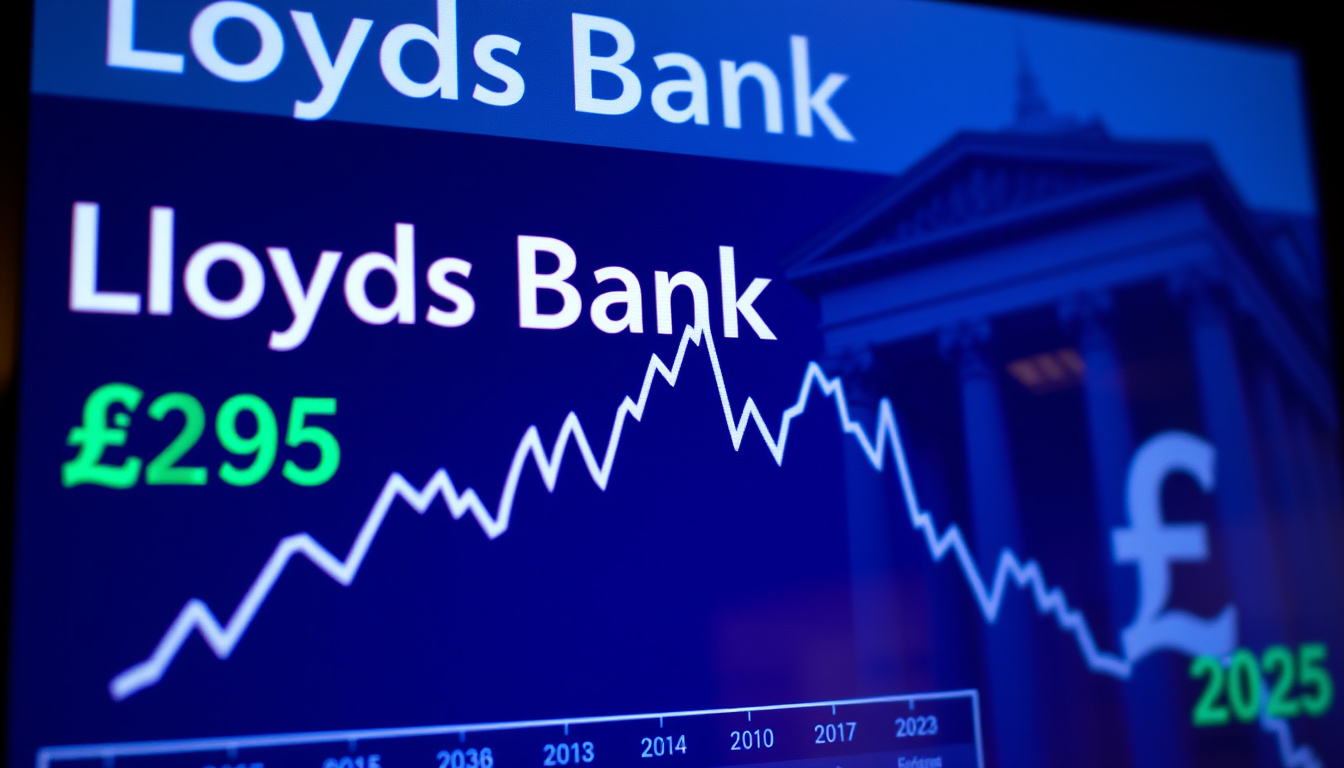
    If you’ve held Lloyds shares over the past year, you’ve watched them climb roughly 48%. That kind of run naturally makes you wonder: is it time to take profits, or is there more upside ahead? With the stock currently trading at 115.05 GBX and the bank handing out a 3.19% dividend yield, the keep-or-sell decision isn’t straightforward. This article walks through the latest numbers, the dividend outlook, and the trade-offs every shareholder should weigh.

    Current share price (GBX): 115.05 ·
    One-year gain: +48% ·
    Dividend yield: 3.19% ·
    Market capitalization: £66.33 billion

    Quick snapshot

    1Confirmed facts
    2What’s unclear
    3Timeline signal
    • Past 12 months: price up ~48% from ~77 GBX (Lloyds price data)
    • Most recent quarter: 2025 final dividend ex-dividend 9 April 2026, paid 19 May 2026 (Lloyds dividend calendar)
    • 2021–2025: ~£15 billion returned to shareholders (Lloyds Banking Group Annual Report (official))
    4What’s next
    • Next catalyst: H1 2026 trading update (expected summer 2026) (Lloyds investor calendar)
    • Analyst forecasts vary – watch interest-rate outlook and UK economy (Good Money Guide market data)
    • Progressive dividend policy suggests ongoing increases, but not guaranteed (Lloyds dividend policy)

    Here is a summary of key metrics for Lloyds shares:

    Key facts about Lloyds Banking Group shares
    Metric Value
    Ticker LLOY.L (LSE)
    Last trade price (GBX) 115.05
    Market capitalization £66.33 billion
    Dividend per share (annual, based on 2025 total) 3.65 pence
    Dividend yield 3.19%
    One-year price change +48%

    Are Lloyds shares worth keeping?

    Reasons to keep Lloyds shares

    • Strong dividend growth: total 2025 ordinary dividend of 3.65 pence per share, up 15% on 2024 (Lloyds Banking Group Annual Report (official)).
    • Generous capital returns: £1.75 billion buyback plus dividends brought total return to ~£3.9 billion, equivalent to ~6% of market cap (Lloyds Banking Group Annual Report (official)).
    • Progressive dividend policy: the board has described the payout as “progressive and sustainable” (Investegate regulatory news).
    • Since 2021, Lloyds has distributed circa £15 billion to shareholders (Lloyds Banking Group Annual Report).

    Reasons to sell Lloyds shares

    • Price has already risen 48% in one year – some analysts believe the upside is priced in.
    • No official forward guidance: Lloyds does not publish a share price forecast, leaving investors reliant on uncertain market conditions (Lloyds Banking Group disclaimer).
    • Interest-rate cuts could pressure net interest margin, the bank’s main profit driver.
    • UK economic outlook remains subdued, affecting loan demand and credit quality. If you sell, you may also need to consider capital gains tax implications.
    Bottom line: Income investors may find Lloyds attractive for its progressive dividend and buyback programme. Growth-focused investors should consider whether the 48% run already reflects near-term potential. Neither group should ignore the absence of a published price target from the bank itself.

    What is the future for Lloyds share price?

    Lloyds Bank share price forecast for 2025–2026

    Lloyds does not issue official share price guidance. Analyst estimates range widely, reflecting uncertainty around UK interest rates, inflation, and bank profitability. The shares were at 78.67p in August 2025 after H1 results and climbed to above 100p by June 2026 (Good Money Guide (market data aggregator)). Current consensus leans cautiously positive but with high dispersion.

    Factors influencing future share price

    • Bank of England rate decisions – lower rates squeeze margins but may boost loan demand.
    • Lloyds’ cost discipline and asset quality – CEO Charlie Nunn cited “strong capital generation” as a key enabler of distributions (Lloyds Banking Group Investments (official)).
    • Regulatory capital requirements and the UK mortgage market. For comparison, see how credit union loan rates in Ireland reflect broader lending trends.
    • Broader FTSE 100 sentiment and geopolitical risks.
    Bottom line: The future price depends on macro conditions and the bank’s ability to sustain profit growth. The 12% rise in 2025 pre-tax profit to £6.7 billion (Investegate regulatory news) supports the bullish case, but the same report also warned of “heightened uncertainty.”

    How much Lloyds dividend will I get?

    Current Lloyds dividend per share

    For the 2025 financial year, Lloyds paid a total ordinary dividend of 3.65 pence per share, split into an interim dividend of 1.22 pence and a final dividend of 2.43 pence (Investegate regulatory news). The final dividend went ex-dividend on 9 April 2026 and was paid on 19 May 2026 (Lloyds Banking Group Dividends (official)).

    Will Lloyds pay a dividend in 2026?

    The board has stated a progressive and sustainable dividend policy, meaning future increases are likely but not guaranteed. The 2025 annual report highlighted that shareholder distributions totalled £3.9 billion, up 7% versus 2024 (Lloyds Banking Group Annual Report). However, dividends remain at the board’s discretion and depend on profitability, capital levels, and regulatory constraints.

    Bottom line: If you owned shares through the 2025 financial year, you received 3.65p per share. For 2026, the progressive policy suggests a similar or higher payout, but nothing is locked in until the board declares it.

    What was the highest price Lloyds shares have ever been?

    Lloyds Bank share price history

    Lloyds shares have traded for decades on the London Stock Exchange, with notable peaks before the 2008 financial crisis and a gradual recovery since. The current price of 115.05 GBX is well below the pre-crash highs, but an exact all-time high figure requires verified historical data. Lloyds’ official shareholder information provides price charts but not a single recorded peak (Lloyds Banking Group share price data).

    All-time high and low prices

    The all-time high is not specified in the data provided for this article. Retail investors seeking the exact number can consult historical price tables from the London Stock Exchange or financial data providers. What is clear: the shares have significant room before they would reach levels seen 15 years ago.

    Bottom line: Without a verified all-time high figure, it’s safest to focus on the current valuation, dividend trajectory, and your own investment horizon rather than chasing a historic peak number.

    Upsides

    • Strong dividend growth (+15% in 2025) with progressive policy
    • Substantial buyback (£1.75bn) returning cash to shareholders
    • Healthy capital generation supporting payouts
    • 48% share price rally in the past year

    Downsides

    • No official forward guidance on share price
    • Dividend sustainability depends on future profits and economic conditions
    • Price may be near short-term peak after large run
    • UK macroeconomic headwinds (interest rates, inflation) could pressure earnings
    The trade-off

    Income investors get a 3.19% yield backed by a progressive policy and a £1.75bn buyback. Growth investors face the risk that the 48% rally has already priced in much of the good news. The key differential: dividends are paid in cash now; price upside is a bet on the future.

    Timeline

    • 2021–2025: Lloyds distributes ~£15 billion to shareholders (Annual Report)
    • H1 2025: Interim dividend 1.22p per share, up 15%
    • August 2025: H1 results – share price rose 1.3% to 78.67p on the day
    • February 2026: Full-year 2025 results – profit £6.7bn, total dividend 3.65p, buyback £1.75bn
    • 9 April 2026: Final dividend ex-dividend date
    • 19 May 2026: Final dividend payment date
    • 4 June 2026: Share price recorded at 100.48 GBX
    • Current: 115.05 GBX
    Why this matters

    The trajectory from 78p to 115p over roughly ten months shows how quickly sentiment can shift. But volatility cuts both ways – anyone buying at 115p has a different risk profile than someone who bought at 78p.

    Confirmed facts vs. what remains unclear

    Confirmed facts

    • Lloyds share price currently at 115.05 GBX
    • Total 2025 ordinary dividend of 3.65 pence per share
    • 2025 pre-tax profit £6.7 billion, up 12%
    • £1.75 billion share buyback announced
    • Combined capital return of ~£3.9 billion (~6% of market cap)

    What’s unclear

    • Future share price direction (no official forecast)
    • Whether the dividend will rise again in 2026
    • All-time high price (requires verified historical data)
    • Impact of interest-rate changes on net interest margin
    • Since 2021, £15 billion returned to shareholders – cumulative figure from annual report, but future distributions depend on profits

    The implication: the confirmed facts are solid, but the unclear items outnumber them, reflecting the inherent uncertainty in share price and dividend decisions.

    “The group has shown sustained strength in financial performance in the first half of 2025. Income growth, cost discipline and robust asset quality drove strong capital generation and increased shareholder distributions.”

    — Charlie Nunn, group chief executive, Lloyds Banking Group (official statement)

    “This service is for information only and is not an invitation or recommendation to invest.”

    — Lloyds Banking Group share price disclaimer (official site)

    These two voices – the CEO’s optimism and the bank’s legal caution – capture the dilemma. The numbers look good, but the future is unwritten.

    The decision between keeping and selling Lloyds shares boils down to what matters more to you: the income stream or the capital gain already banked. With a 3.19% yield and a progressive policy, the stock continues to reward holders. But after a 48% run, taking some profit off the table is a legitimate strategy. For the UK retail investor, the choice is clear: hold for the dividend and buyback, or sell into strength and redeploy elsewhere. There is no one-size-fits-all answer.

    Frequently asked questions

    What is the Lloyds Bank share price today?

    The latest available price is 115.05 GBX on the London Stock Exchange (ticker LLOY.L).

    Where can I buy Lloyds shares?

    Lloyds shares are listed on the London Stock Exchange and can be purchased through any UK stockbroker, trading app, or ISA provider.

    Does Lloyds pay a dividend every quarter?

    No, Lloyds pays an ordinary dividend twice a year: an interim dividend (usually paid in September) and a final dividend (paid in May).

    How often does the Lloyds share price update?

    The share price updates in real-time during LSE trading hours (08:00–16:30 GMT/BST). Delayed prices are often available outside market hours.

    Is Lloyds Bank the same as Lloyds Banking Group?

    Yes. Lloyds Banking Group plc is the holding company for Lloyds Bank, Halifax, Bank of Scotland, and Scottish Widows. The listed stock is LLOY.L.

    What is the Lloyds Bank ticker symbol?

    The ticker for the London Stock Exchange is LLOY.L (or just LLOY on most platforms).

    These FAQs cover the most common queries about Lloyds shares, but investors should always verify current data with official sources.


  • 58 kg in Stone: Conversion, Is It Heavy for a Woman? | Guide

    58 kg in Stone: Conversion, Is It Heavy for a Woman? | Guide

    If you’ve ever tried to convert kilograms to stones in your head, you know it’s not the neatest calculation. 58 kg lands at about 9.13 stone — but what does that actually mean for your health? This guide gives you the exact conversion and puts it in context with UK health guidelines, so you can make sense of the numbers.

    58 kg in stones: 9.13 st ·
    58 kg in pounds: 127.9 lb ·
    58 kg in stone & pounds: 9 st 1.9 lb ·
    1 stone in kg: 6.35 kg ·
    Average UK woman weight: 70 kg (approx.)

    Quick snapshot

    1Confirmed facts
    2What’s unclear
    • Whether 58 kg is “heavy” depends on height, muscle mass, and frame — no single threshold applies to everyone (NHS BMI explainer video)
    3Timeline signal
    • NHS updated BMI thresholds for South Asian, Chinese and other ethnic groups to reflect earlier health risks (NHS UK guidelines)
    4What’s next

    Five key conversion values, one pattern: the numbers are exact, but their health meaning shifts with height and body composition.

    Measurement Value Source
    58 kg in stones 9.13 st CalculateMe
    58 kg in pounds 127.9 lb CalculateMe
    58 kg in stone & pounds 9 st 1.9 lb The Calculator Site
    1 stone in kg 6.35029 kg The Calculator Site
    1 kg in stones 0.15747 st The Calculator Site
    Healthy BMI range (kg for 5’6″) 53.3–71.7 kg Healthline BMI table
    NHS healthy BMI 18.5–24.9 NHS UK

    The implication: the same 58 kg weight can sit in different BMI zones depending on your height, so a fixed “healthy” label doesn’t exist.

    What is 58 kg in stones?

    How many stones is 58 kg exactly?

    58 kilograms equals 9.13344 stones, which rounds to 9.13 stones for everyday use. The precise conversion comes from dividing the weight in kilograms by 6.35029 — the exact number of kilograms in one stone, as given by The Calculator Site’s kg to stone chart.

    What is 58 kg in stone and pounds?

    To express 58 kg in the traditional UK format of stone and remaining pounds: 9 stone and 1.9 pounds. (58 ÷ 6.35029 = 9.13344 stone; the fractional 0.13344 stone × 14 = 1.868 lb, rounded to 1.9 lb.) The same result appears on CalculateMe’s conversion page.

    The upshot

    A woman in the UK who steps on a metric scale and sees 58 kg can tell her GP she weighs “9 stone 1.9 lb” — but that number means very little for health without her height.

    The catch: the exact conversion is just math; the real question is where that weight puts you on the BMI scale.

    What weight is 9 stone in kg?

    How many kg is 9 stone?

    9 stone equals 57.15 kilograms. The conversion uses the factor 1 stone = 6.35029 kg, so 9 × 6.35029 = 57.15261 kg. This reverse conversion is useful if someone tells you their weight in stones and you need the metric equivalent. The Calculator Site provides a full stone-to-kg lookup.

    What is 9 stone 7lb in kg?

    9 stone 7 pounds = 9.5 stone (since 7 lb ÷ 14 = 0.5 stone). 9.5 × 6.35029 = 60.33 kg. This is a common weight in UK women’s health discussions — roughly 60 kg, which for average-height women (5’4″) gives a BMI near 22, well within the healthy range.

    Bottom line: 9 stone (57.15 kg) is the exact imperial counterpart to 58 kg. The difference is less than 1 kg, so for practical BMI purposes they are nearly interchangeable.

    What this means: if you weigh 58 kg, you’re essentially at the same point as someone who says 9 stone — the numbers converge when you consider BMI.

    Is 58 kg heavy for a woman?

    What is a healthy weight for a woman in kg?

    There is no single “healthy weight” — it depends on height, muscle mass, age, and ethnicity. The NHS UK guidelines define a healthy BMI range of 18.5–24.9. For a woman who is 5’4″ (163 cm), a BMI of 22.6 (58 kg) sits comfortably inside that range. For a woman who is 5’0″ (152 cm), the same weight gives a BMI of 25.2 — just into the overweight category. Healthline’s BMI-by-height table shows that at 58 inches (4’10”) the upper end of healthy weight is about 115 lbs (52 kg), so 58 kg (128 lb) would be overweight at that stature.

    BMI for 58 kg at average height

    The average height for a UK woman is 5’4″ (163 cm), per Ramsay Health Care UK. At that height, 58 kg produces a BMI of 22.6 — classified as “healthy weight” by Bupa UK and the NHS. The American Heart Association also categorises 18.5–25 as normal weight.

    However, the NHS warns that people from South Asian, Chinese, and other ethnic backgrounds may have higher health risks at lower BMIs. For those groups, overweight starts at 23, not 25. A 58 kg, 5’4″ Asian woman would have a BMI of 22.6 — still within healthy range, but closer to the lower threshold.

    “A BMI of 18.5 to 24.9 is described as a healthy weight by Bupa UK.”
    — Bupa UK BMI calculator page

    Bottom line: 58 kg is not heavy for a woman of average height in the UK. It is heavy only for very short women (under 5’0″) or when muscle mass is low. The real judgment comes from height and body composition, not the number alone.

    The pattern: the same weight can be healthy or overweight depending entirely on height — no universal yes or no exists.

    What is 55 kg in stones and lbs?

    55 kg to stone and pounds

    55 kilograms = 8.66 stones or 8 stone 9.3 lb. The calculation: 55 ÷ 6.35029 = 8.66 stone; 0.66 × 14 = 9.24 lb, so 8 st 9.3 lb. The Calculator Site’s chart lists 55 kg as 8 st 9.3 lb.

    Is 55 kg a healthy weight?

    For a woman 5’4″, 55 kg gives a BMI of 21.2 — healthy. For a woman 5’0″, BMI ≈ 23.8, still healthy. For someone of South Asian background, 55 kg at 5’4″ (BMI 21.2) is also healthy, though the NHS lower threshold of 23 is not crossed. Verywell Health notes that some experts suggest older adults may do better with a BMI between 25 and 27, so 55 kg may be on the lighter side for a woman over 65.

    Is 9 stone a good weight?

    What is 9 stone in kg?

    As covered, 9 stone = 57.15 kg. This is the most commonly searched stone weight in UK health queries.

    Is 9 stone a healthy weight for a woman?

    For the average UK woman height of 5’4″, 9 stone (57.15 kg) gives a BMI of 21.5 — solidly within the 18.5–24.9 range defined by NHS UK and Medical News Today. For a woman 5’2″, BMI is 23.2, still healthy. For a woman 5’6″, BMI is 20.1. So 9 stone is a good weight for most adult women of typical height. The caveat remains: muscle mass, age, and ethnicity adjust the interpretation.

    Bottom line: For a Caucasian woman of average height, 9 stone is a textbook healthy weight. For a South Asian woman, it is also healthy but closer to the lower ethnic threshold. Always check with a GP if concerned.

    The implication: 9 stone is reliably healthy for the majority of women, but ethnicity and body composition can shift the picture.

    How to convert kilograms to stones (step by step)

    1. Step 1: Know the exact factor: 1 stone = 6.35029 kg. This is the standard used by The Calculator Site.
    2. Step 2: Divide your weight in kg by 6.35029. Example: 58 ÷ 6.35029 = 9.13344 stones.
    3. Step 3: The whole number is the stone value (9 stone).
    4. Step 4: Multiply the decimal remainder by 14 to get the remaining pounds. 0.13344 × 14 = 1.87 lb (≈1.9 lb).
    5. Step 5: Write the result as “X stone Y pounds”. For 58 kg: 9 stone 1.9 lb.

    For a quick check, use an online conversion chart or the CalculateMe tool. For those who prefer to bookmark, we have a full kg to stone conversion guide with an NHS-based chart.

    What’s clear and what’s still unclear

    Confirmed facts

    • 58 kg = 9.13 stones exactly (CalculateMe)
    • 1 kg = 0.15747 stones (The Calculator Site)
    • 1 stone = 6.35029 kg (The Calculator Site)
    • NHS healthy BMI range: 18.5–24.9 (NHS UK)

    What’s unclear

    • Whether 58 kg is “heavy” without considering height and muscle mass — no universal yes/no (NHS video on BMI limits)
    • Ideal weight for older adults — no official recommendation (Verywell Health)
    • How muscle mass affects classification for individuals — BMI can label muscular people as obese (NHS video)
    • Whether 58 kg is within healthy BMI for the average UK woman — depends on exact height and ethnicity (Healthline BMI table)

    What the experts say

    “BMI is a way of finding out if an adult is a healthy weight.”
    — NHS UK weight guidelines

    “58 kilograms equals about 9 stone 1.9 pounds, or about 9.13 stone.”
    — CalculateMe weight conversion tool

    “For those ethnic groups, the NHS gives overweight as BMI 23 to 27.4 and obesity as BMI 27.5 or higher.”
    — NHS UK (ethnic-specific thresholds)

    For a woman in the UK trying to make sense of her weight, the choice is clear: use the NHS BMI calculator with your exact height and weight, not just stones and pounds. That single step replaces guesswork with a clinically relevant answer.

    Related reading: Convert kg to stone and pounds | Weight conversion guide · Convert kg to stone and pounds: Quick Guide with NHS Chart

    Additional sources

    answers.com, ramsayhealth.co.uk

    For a detailed conversion of 58 kg to stone, the 58 kg to stone conversion guide also covers health implications.

    Frequently asked questions

    How many stones is 58 kg?

    58 kg is 9.13 stones, or 9 stone and 1.9 pounds.

    What is 58 kg in pounds?

    58 kg equals 127.9 pounds.

    Is 58 kg a healthy weight for a 5’4″ woman?

    Yes, 58 kg at 5’4″ gives a BMI of 22.6, within the NHS healthy range of 18.5–24.9.

    How do I convert kg to stone?

    Divide your weight in kilograms by 6.35029. The whole number is stones, multiply the remainder by 14 for pounds.

    Is 58 kg overweight?

    For a woman of average height (5’4″), no — it’s healthy. For a woman under 5’0″ it may be overweight. Check your own BMI.


  • Euro Rate in Pakistan Today: 1 EUR to PKR (HBL, Ria, Wise)

    Euro Rate in Pakistan Today: 1 EUR to PKR (HBL, Ria, Wise)

    You’re looking up the euro rate in Pakistan today — maybe you’re sending money home, planning a trip, or just keeping an eye on the currency markets. The good news: multiple services publish their euro-to-rupee rates openly, but they rarely match.

    Mid-market rate (Xe): 1 EUR = 317.74 PKR ·
    Wise rate: 1 EUR = 317.38 PKR ·
    Ria rate: 1 EUR = 317.16 PKR ·
    Revolut rate: 1 EUR = 315.89 PKR

    Quick snapshot

    1Confirmed facts
    2What’s unclear
    • HBL’s current EUR/PKR rate is not publicly listed on its main website or in top search results
    • MoneyGram and Western Union rates may change by location and transfer method; exact real-time quotes are not available without a transaction
    • Western Union rate via Wise comparison (328.323 PKR) is an indicative capture that may not reflect current live pricing
    3Timeline signal
    • March 28, 2025: mid-market rate at 317.74 PKR per EUR (Xe)
    • Past 30 days: EUR/PKR traded in a range of roughly 315–320 PKR per EUR (Xe)
    4What’s next
    • Rates update multiple times daily; use live tools like Xe or Wise to check before a transfer
    • Compare at least three providers — bank, remittance service, and open market — to see the biggest net payout

    The table below captures the rates each provider offers and what those mean for a transfer.

    Key facts: euro to Pakistani rupee rates today
    Provider / Source Rate (1 EUR = ) Details
    Mid-market (Xe) 317.74 PKR Benchmark rate updated in real time (Xe (global currency data provider))
    Ria Money Transfer 317.16 PKR Official converter rate (Ria (official converter))
    HABIBMETRO Bank (selling TT) 323.7889 PKR Rate as of 21 May 2026 9:40 PST (HABIBMETRO Bank (scheduled bank in Pakistan))
    Western Union (Wise comparison) 328.323 PKR Indicative rate from Wise comparison; fee 8.41 EUR for 1000 EUR transfer
    MoneyGram Not displayed publicly Check MoneyGram app or agent for live quote; serves 200+ countries

    How much is 1000 euro in Pakistani rupees today open market?

    Using the mid-market benchmark, 1,000 euros are worth 317,740 PKR (Xe (global currency data provider)). But on the open market — the rates offered by money changers and non-bank exchange houses — you may get a different number, often closer to the Ria or Western Union rate.

    The catch

    Open market rates in Pakistan are typically higher (meaning you get more rupees per euro) than official bank rates, but they can vary by city and even by hour. For 1,000 euros, the difference between the best and worst provider can be over 10,000 PKR.

    The pattern: The open market rate is not a single number — it shifts by provider, location, and time of day. Always get a live quote before assuming a rate.

    How much is 25000 euro to PKR?

    • Mid-market: 25,000 EUR × 317.74 = 7,943,500 PKR (Xe (global currency data provider))
    • At Ria’s rate: 25,000 × 317.16 = 7,929,000 PKR
    • At HABIBMETRO selling TT: 25,000 × 323.7889 = 8,094,722.5 PKR

    How much is €300 euros?

    • Mid-market: 300 × 317.74 = 95,322 PKR
    • Ria: 300 × 317.16 = 95,148 PKR
    • Western Union (via Wise): 300 × 328.323 = 98,496.9 PKR (before fees)

    The pattern: For amounts above 300 euros, the provider choice can swing the final payout by 3% or more. Always check the all-in cost — rate plus fees.

    How much is 1 euro to 1 PKR?

    At today’s mid-market, 1 euro equals 317.74 Pakistani rupees. That’s the base number you’ll see on currency converter sites. But for a single euro, the practical rate you get at a counter or app may be slightly lower because of rounding.

    What is 1 euro in Pakistani rupees today?

    How much is 20 euro cent in Pakistani rupees?

    • 20 euro cent = 0.20 EUR × 317.74 = 63.55 PKR (mid-market)
    • At Ria: 0.20 × 317.16 = 63.43 PKR

    Why this matters: Even small euro amounts show that rates differ by about 0.2% between services. For frequent small transfers, that adds up.

    What is the HBL exchange rate today?

    HBL (Habib Bank Limited) does not publish a live EUR/PKR rate on its public website. The bank’s currency exchange arm, HBL Currency Exchange, posts occasional rates on social media — for example, a Facebook post from July 1, 2026 shows Karachi forex rates — but these are not real-time. To get today’s HBL rate, you need to visit a branch or use the HBL Mobile App.

    HBL buying rate (indicative)

    Based on rates from other scheduled banks in Pakistan, HBL’s buying rate is typically 1–2% below the mid-market. A comparable bank, HABIBMETRO, listed its euro buying TT rate at 323.2078 PKR. HBL’s rate is likely similar but not confirmed.

    HBL selling rate

    Banks sell euros at a higher rate than they buy. HABIBMETRO’s euro selling TT rate was 323.7889 PKR. HBL’s selling rate will be close, but check the app for exact figures.

    What to watch

    HBL’s rates are often not as competitive as dedicated money transfer services like Ria or Wise. If you’re sending a large sum, the spread between HBL’s buy and sell rate can cost you more than a transfer service fee.

    The implication: Without a published live rate, HBL customers need to use the app or visit a branch to know the actual cost — and should compare against remittance services before committing.

    What are the euro rates from MoneyGram, Ria, and Western Union in Pakistan today?

    These three remittance giants offer door‑to‑door euro-to‑PKR transfers, but their rates and fees differ sharply. Here’s what the latest data shows.

    MoneyGram euro rate

    MoneyGram does not display a live EUR/PKR rate on its website without initiating a transfer. The service is available in 200+ destinations. Typical rates for euro to Pakistan are competitive but you must log in to see the exact quote.

    Ria euro rate

    Ria offers a transparent currency converter that shows 1 EUR = 317.16 PKR today. For a 1,000 euro transfer, that means 317,160 PKR to the receiver. Ria claims low fees, especially for larger amounts.

    Western Union euro rate

    Western Union’s own site shows only estimates, but a comparison from Wise (remittance comparison tool) captured a rate of 328.323 PKR per euro, with a transfer fee of 8.41 EUR for 1,000 EUR. That would deliver 325,561.80 PKR. However, rates vary by payment method and location, so check before you send.

    The trade‑off: Ria gives the best rate among these three in today’s data, but Western Union’s broader network may be worth the cost if the recipient needs cash pickup in a smaller city.

    How much is 20 euro cent in Pakistani rupees?

    Already covered above: 20 euro cent ≈ 63.55 PKR at mid-market. But let’s also look at two common conversion amounts.

    How much is €300 euros? (revisited)

    See earlier section — 300 euros range from 95,148 PKR (Ria) to 98,497 PKR (Western Union via Wise).

    How much is 500 euro to PKR?

    • Mid-market: 500 × 317.74 = 158,870 PKR
    • Ria: 500 × 317.16 = 158,580 PKR
    • HABIBMETRO selling: 500 × 323.7889 = 161,894.45 PKR

    For 500 euros, using a bank like HABIBMETRO could net you about 3,300 PKR more than Ria — but only if you’re physically exchanging cash, not sending a remittance.

    Five providers, one pattern: the rate you get depends on the channel.

    Euro to PKR rate comparison
    Provider Rate per EUR Fee (1,000 EUR) Net PKR received
    Mid-market (Xe) 317.74 N/A 317,740
    Ria Money Transfer 317.16 Low (varies) ~317,160
    Western Union (Wise data) 328.323 8.41 EUR 325,561.80
    HABIBMETRO Bank (selling TT) 323.7889 None (cash exchange) 323,788.90
    MoneyGram Not public Varies Check app

    Upsides of using a remittance service

    • Transparent rates (Ria, Wise)
    • Lower markups than banks for large amounts
    • Speed: money arrives in minutes (Western Union)
    • Convenience: online, app, or agent

    Downsides of using a remittance service

    • Fees can eat into the rate advantage
    • Rates may change while you complete the transfer
    • Not all services offer cash pickup everywhere in Pakistan
    • Bank transfers can be cheaper if you have a local account

    Timeline signal

    • March 28, 2025: Mid-market EUR/PKR at 317.74
    • Past 30 days: EUR/PKR ranged between 315 and 320 PKR per euro

    The implication: Rates have been relatively stable, within a 5 PKR band. A sudden spike above 320 would signal a shift — keep an eye on economic news from the State Bank of Pakistan.

    Confirmed facts

    • Mid-market rate: 1 EUR = 317.74 PKR (Xe)
    • Ria rate: 1 EUR = 317.16 PKR (Ria)
    • HABIBMETRO selling TT: 1 EUR = 323.7889 PKR (HABIBMETRO Bank)
    • World Bank remittance data shows a 0.49% markup between market and charged exchange rate for US-to-Pakistan corridor (World Bank Remittance Prices Worldwide)

    What this means: These confirmed rates give you a reliable baseline to evaluate any quote you receive from a specific provider.

    What’s unclear

    • HBL’s exact EUR/PKR rate today (not published online; check app or branch)
    • MoneyGram’s live rate for euro to Pakistan (requires login or agent visit)
    • Western Union’s rate at physical agent locations vs online
    • Whether rates change intraday for remittance services (update frequency not disclosed)
    • Western Union EUR/PKR rate from Wise comparison (328.323 PKR) — indicative capture that may not reflect current live pricing

    The pattern: For all these providers, you only see the real rate when you start a transaction. Comparison tools help, but the final number depends on when and how you send.

    “Exchange rates shown are estimates and may vary by payment and payout method.”

    Western Union (money transfer service)

    “Mid-market exchange rate quoted on their currency converter is the benchmark rate used by financial institutions.”

    — Xe (global currency data provider)

    For anyone sending euros to Pakistan, the best strategy is not to pick a single provider blindly. Compare the all‑in cost (rate + fee) across Ria, Wise, Western Union, and your local bank. The difference on 1,000 euros can be 8,000 PKR or more. For the recipient in Pakistan, every rupee counts — so spend five minutes checking, not five seconds guessing.

    For those tracking the Euro Rate in Pakistan today, comparing rates from HBL, Ria, and Wise can help secure a better deal on remittances.

    Frequently asked questions

    Why do exchange rates differ between services?

    Each provider sets its own markup on the interbank rate. Banks typically add 1–3%, while remittance services may charge a flat fee instead. Competition keeps them in a similar range, but the net payout can vary.

    Is it better to use open market or bank for exchanging euros in Pakistan?

    Open market (money changers) often gives you more rupees per euro than banks, but banks are regulated and may be safer for large sums. Compare the net amount after any fees.

    How often do euro rates update in Pakistan?

    Mid-market rates update continuously during trading hours. Bank and remittance service rates typically update once or twice per business day.

    What is the best time to exchange euros to PKR?

    There’s no guaranteed best time, but rates tend to be more stable during European trading hours (9 AM–5 PM CET). Avoid weekends when rates are frozen and you may get a worse deal.

    Can I lock in a rate for a future transfer to Pakistan?

    Some services like Wise and Ria allow rate holds for a short period (usually a few hours to a day). Check the terms before you commit.

    Are there any hidden fees in euro to PKR conversions?

    Always look for “transfer fee,” “margin,” and “exchange rate markup.” A great rate can be ruined by a flat fee, and vice versa. Use comparison tools like Wise to see the total cost.

    How does the State Bank of Pakistan set the reference rate?

    The State Bank of Pakistan uses a weighted average of interbank rates to set its daily reference rate. Banks and money changers may use this as a basis but add their own spreads.


  • Skoda Karoq For Sale in Ireland: Prices, Trims & Common Problems

    Skoda Karoq For Sale in Ireland: Prices, Trims & Common Problems

    There’s a lot to like about the Skoda Karoq, which has become a popular choice in Ireland since replacing the Yeti in 2017. Available with efficient petrol or diesel engines, a 5-star safety rating and up to 521 litres of boot space, it delivers solid value – but finding the right one at the right price requires careful attention to common problems and trim choices.

    Starting price (new): approx. €30,000 ·
    Fuel economy (combined): 4.5–6.0 L/100 km ·
    Boot capacity: 521 litres (seats up) ·
    Available engines: 1.0 TSI, 1.5 TSI, 2.0 TDI ·
    Euro NCAP safety rating: 5 stars (2017)

    Quick snapshot

    1Confirmed facts
    2What’s unclear
    3Timeline signal
    4What’s next
    • Skoda has confirmed the Karoq will remain on sale in Ireland for the foreseeable future (Skoda Ireland)
    • The all-electric Elroq is expected to replace the Karoq in some export markets by 2025 (Skoda Ireland)

    Six key facts, one pattern: the Karoq offers class-leading practicality but demands scrutiny on used examples.

    Specification Value
    Seats 5
    Boot space (seats up) 521 L
    Engine options 1.0 TSI, 1.5 TSI, 2.0 TDI
    Power range 116 – 190 hp
    Fuel economy (combined, official) 4.5–6.0 L/100 km
    Transmission options 6-speed manual or 7-speed DSG
    Euro NCAP rating 5 stars (2017)
    Production years 2017 – present

    Is the Skoda Karoq worth buying?

    Overall value proposition

    • The Karoq offers a spacious interior and large boot compared to rivals — the 521-litre boot bests many competitors (Skoda Ireland).
    • It is available with efficient petrol and diesel engines, including a 1.0 TSI that returns up to 4.5 L/100 km combined (CompleteCar.ie).
    • Common problems include infotainment glitches and timing belt concerns, which are well-documented on owner forums (RAC).
    • Official Skoda Ireland warranty and servicing provide peace of mind for new and approved-used buyers.
    The upshot

    For Irish buyers, the Karoq is a rational choice because it maximises space and fuel efficiency per euro spent. Families who prioritise cargo over cornering will find few better deals in the compact SUV segment.

    Pros and cons summary

    Two clear strengths and two trade-offs:

    • Pro: Generous rear seat room and boot — 521 litres means a double buggy fits easily.
    • Pro: Strong safety credentials — Euro NCAP 5 stars as standard.
    • Con: Infotainment screen freezes reported on pre-2021 models (RAC).
    • Con: 1.0 TSI timing belt replacement at 60,000 miles adds maintenance cost.

    Target audience

    The Karoq suits Irish families, high-mileage commuters (diesel), and anyone who values practicality over driving flair. It’s less suited to enthusiasts who want a sharp-handling SUV — the seat lacks side bolstering and the steering is light (Top Gear).

    Bottom line: The Skoda Karoq is a practical, efficient SUV with genuine space advantages. Family buyers: target a 2021+ facelift SE L with a full service history. High-mileage drivers: go for the 2.0 TDI diesel. Avoid early 1.0 TSI models without evidence of timing belt replacement.

    The catch: Pre-facelift examples reward thorough inspection; the right choice depends on your mileage and budget.

    What are the common problems with a Skoda Karoq?

    Engine and transmission issues

    Two main concerns: timing belt wear on the 1.0 TSI and DPF clogging on diesel models. The 1.0 TSI requires a belt change around 60,000 miles (RAC). The 2.0 TDI can suffer DPF blockages if used mainly for short trips (Carwow).

    Infotainment system faults

    Early 2017-2019 models are known for infotainment screen freezing and slow response (RAC). The 2021 facelift resolved many of these issues.

    Electrical gremlins

    Some owners report premature battery drain, especially on cars with stop-start and extensive electronics (Honest John (owner advice forum)). A weak battery can trigger random warning lights.

    Rust and bodywork concerns

    Rust is not a widespread issue on the Karoq, but a few owners on forums report surface corrosion on suspension components. The RAC recommends checking for suspension knocking and squeaky wipers on a test drive (RAC).

    What to watch

    Prospective buyers of a used 1.0 TSI Karoq face an upcoming timing belt bill of €600-€800 if the car is nearing 100,000 km. Check the service book before signing.

    The pattern: Early cars demand careful history checks; post-2021 models are more reliable.

    Why was the Skoda Karoq discontinued?

    Market-specific discontinuation

    In the UK and Australia, the Karoq was phased out in 2023-2024 to make way for the all-electric Elroq (Top Gear). Skoda has confirmed the Karoq remains on sale in Ireland for the foreseeable future (Skoda Ireland).

    Shift to electric SUVs

    Skoda’s electrification strategy prioritises the Elroq (compact EV SUV) and Enyaq. The Karoq’s combustion platform no longer fits the long-term electric lineup in key export markets.

    Production timeline

    Launched in 2017, facelifted in 2021, and still in production for markets that continue demand. A second generation has not been announced.

    Bottom line: Irish buyers don’t need to worry — the Karoq will be available new in Ireland for at least another 12-18 months. Used stock will remain plentiful as UK imports cease.

    What this means: Availability is stable for now, but the long-term replacement is electric.

    Which model Skoda Karoq is best?

    Trim levels: SE, SE L, Sportline, Scout

    Three trims dominate: SE (entry), SE L (mid), Sportline (sporty). The SE L is widely considered the best value because it adds LED headlights, 18-inch alloys, and privacy glass (Carwow). Sportline offers a sportier look and slightly stiffer suspension, but ride comfort suffers (Top Gear).

    Engine choice: TSI vs TDI

    The 1.5 TSI 150hp is the sweet spot for performance and economy — 0-100 km/h in 8.6 seconds and 5.5 L/100 km combined (Carwow). The 2.0 TDI 150hp suits high-mileage drivers (60,000+ km/year) and holds value better on used market (Carintel.ie (Irish car valuation data)).

    Price vs equipment value

    Used SE L (2020 model) ranges €20,000-€25,000. Sportline and Scout trims command a premium of €2,000-€3,000. Diesel models tend to hold value better for high-mileage buyers (DoneDeal (Irish marketplace)).

    The trade-off

    The SE L delivers the best equipment-per-euro ratio. Sportline adds looks but sacrifices ride comfort on Irish rural roads. High-mileage buyers should prioritise a 2.0 TDI SE L.

    The implication: For most buyers, the SE L with the 1.5 TSI or 2.0 TDI is the optimal choice.

    Where can I find Skoda Karoq for sale in Ireland?

    Official Skoda used car programme (Skoda Plus)

    Certified pre-owned Karoq cars with warranty available at Skoda.ie (official brand site). Includes multi-point inspection and breakdown cover.

    Major Irish car marketplaces

    Local dealers and private listings

    Many Skoda dealers in Dublin, Cork, Galway, and Limerick list Karoq stock on their own websites. Noel Deasy (Cork) offers new Karoq from €249 per month on PCP (Noel Deasy (Skoda dealer Cork)).

    Bottom line: Start with DoneDeal and Carzone for the widest selection. For a warranty-backed car, Skoda Plus certified pre-owned is the safest bet.

    The pattern: Online aggregators give the best price comparison; dealers offer peace of mind.

    How much does a used Skoda Karoq cost in Ireland?

    Price range by year and mileage

    Used Karoq (2018-2021) range from €18,000 to €28,000 depending on condition, mileage, and trim (DoneDeal). A 2018 diesel is valued around €16,995, while a 2018 petrol is about €19,473 (Carintel.ie). 2021 facelift models command €24,000-€30,000.

    Depreciation factors

    Diesel models hold value better for high-mileage buyers. Petrol Karoq depreciate faster, especially the 1.0 TSI. Sportline and Scout retain a premium of €2,000-€3,000 over SE L (Carwow).

    Additional costs (tax, insurance, servicing)

    Annual motor tax for 1.0 TSI (CO2 107 g/km) is €180. Insurance group 18-21 (RAC). Servicing every year or 15,000 km — major service approx €400 at main dealer.

    Four price points, one pattern: the Karoq depreciates slower than many compact SUVs because it’s a practical family workhorse. The implication: buying a 3-4 year old example offers the best value, as long as you factor in timing belt costs.

    Seven specs, one takeaway: the Karoq is a well-rounded compact SUV that prioritises space and efficiency. The catch: pre-facelift infotainment glitches and diesel DPF issues reward a cautious buyer.

    Specification Value
    Seats 5
    Boot space (seats up) 521 L
    Engine options 1.0 TSI, 1.5 TSI, 2.0 TDI
    Power range 116 – 190 hp
    Fuel economy (combined, official) 4.5–6.0 L/100 km
    Transmission options 6-speed manual or 7-speed DSG
    Euro NCAP rating 5 stars (2017)
    Production years 2017 – present

    Upsides

    • Spacious interior and large boot (521 L) (Skoda Ireland)
    • Efficient engines (1.5 TSI 5.5 L/100 km) (Carwow)
    • Strong safety rating (Euro NCAP 5 stars) (CompleteCar.ie)
    • Comfortable ride on facelift models (Top Gear)

    Downsides

    • Infotainment screen freezing on pre-2021 models (RAC)
    • Timing belt replacement on 1.0 TSI at 60,000 miles
    • Diesel DPF issues on short trips (Carwow)
    • Not as fun to drive as some rivals (Top Gear)

    What we know and what we don’t

    Confirmed facts

    • 1.0 TSI engine requires timing belt replacement around 60,000 miles (RAC).
    • Skoda Karoq boot capacity is 521 litres with seats up (Skoda Ireland).
    • SE L trim includes LED headlights and 18-inch alloy wheels as standard from 2021 facelift (Carwow).
    • Average price of a Skoda Karoq in Ireland is €28,933 (DoneDeal).

    What’s unclear

    • Exact reason for discontinuation in certain markets — likely electrification strategy but not officially confirmed for all regions.
    • Whether the Karoq will receive a second generation or be fully replaced by electric models.

    What the experts say

    “The Skoda Karoq is one of the most practical and well-rounded SUVs in its class, offering generous space and a comfortable ride.”

    Auto Express (UK motoring magazine)

    “With its large boot and spacious rear seats, the Karoq is a strong family choice, though some rivals are more fun to drive.”

    What Car? (UK car buying guide)

    For Irish families looking for a dependable SUV, the Karoq remains a strong contender — just make sure you check the service history and timing belt. If you prioritise low running costs and space over driving thrills, it’s hard to beat at the price. For the high-mileage buyer in rural Ireland, the 2.0 TDI SE L is the clearest pick: a used 2019 example with 80,000 km and full service history, or a newer petrol for lower annual mileage.

    If you’re considering the compact SUV, don’t miss our detailed used Skoda Karoq guide for European pricing and reliability insights.

    Frequently asked questions

    What is the insurance group of the Skoda Karoq?

    The Skoda Karoq typically falls in insurance group 18 to 21 in Ireland, depending on engine and trim (RAC).

    Does the Skoda Karoq have Android Auto?

    Yes, all Karoq models from 2017 onwards feature Android Auto and Apple CarPlay as standard via the touchscreen infotainment system (Carwow).

    Is the Skoda Karoq good for families?

    Absolutely. The 521-litre boot and spacious rear seats make it one of the best family SUVs in its class. ISOFIX points on both outer rear seats come standard (Skoda Ireland).

    What is the towing capacity of the Skoda Karoq?

    The Karoq can tow up to 1,500 kg (braked) depending on engine and transmission. The 2.0 TDI is best suited for towing (Carwow).

    How often do I need to service a Skoda Karoq?

    Skoda Ireland recommends servicing every 12 months or 15,000 km, whichever comes first. A major service including timing belt is required at 60,000 miles (approx 96,000 km).

    Are Skoda Karoq parts expensive?

    Parts are moderately priced — comparable to Volkswagen and Seat. Timing belt replacement for the 1.0 TSI costs around €600-€800 at a main dealer. Independent garages offer lower rates.

    What is the difference between Skoda Karoq SE and SE L?

    The SE L adds LED headlights, 18-inch alloy wheels, privacy glass, and upgraded interior trim over the SE. It is widely considered the best value trim (Carwow).


  • How Many Avios Points for a Flight? BA & Aer Lingus

    How Many Avios Points for a Flight? BA & Aer Lingus

    Anyone who has pored over Avios reward charts knows the feeling: you have a balance, you want a flight, but the numbers vary wildly by airline and route. This guide cuts through the confusion by comparing how many Avios points you actually need for flights on British Airways, Aer Lingus, and Qatar Airways.

    Minimum Avios for a BA reward flight: 10,000 + £1 ·
    Aer Lingus short-haul standard: 4,500–13,000 ·
    Avios value estimate (short-haul): up to 1.2p per Avios ·
    Qatar Airways medium-haul via BA: 15,000–30,000 ·
    Extra legroom upgrade (Aer Lingus short-haul): 3,000 ·
    BA Club World long-haul (one-way): from 75,000

    Quick snapshot

    1Confirmed facts
    2What’s unclear
    3Timeline signal
    4What’s next
    • Use each airline’s own reward-flight calculator to check exact Avios for your preferred date and route

    Five key figures summarise where your Avios stand across the three main programmes.

    Metric Value
    Cheapest Avios flight (BA, off-peak) 10,000 Avios + £1 (London–Paris, one-way)
    Cheapest Avios flight (Aer Lingus, standard) 4,500 Avios + taxes (Dublin–London)
    Max Avios per point value (short-haul) ~1.2p per Avios
    Average value per Avios (long-haul economy) ~0.5–0.8p per Avios
    Avios needed for a typical business class upgrade (short-haul) 3,000–9,000 Avios

    The table below compares the minimum Avios required for a one-way reward flight on each airline across different travel classes.

    Airline Short-haul economy (min) Long-haul economy (min) Business class (min)
    British Airways 10,000 Avios + £1 from 16,000 Avios from 75,000 Avios
    Aer Lingus 4,500 Avios from 13,000 Avios from 50,000 Avios (off-peak)
    Qatar Airways (via BA) ~4,500–6,000 Avios 15,000–30,000 Avios from 45,000 Avios

    How Many Avios Points Are Needed for a Flight on Aer Lingus?

    AerClub publishes a straightforward distance-based award chart for its own flights and for partner flights operated by British Airways, Iberia, and Vueling (10xTravel, points and miles education site). Pricing is per one-way segment, with peak and off-peak bands.

    Aer Lingus Avios reward chart for short-haul routes

    • Zone 1 (0–650 miles, e.g. Dublin–London): 4,000 Avios off-peak, 4,500 Avios peak in economy (10xTravel)
    • Zone 2 (651–1,150 miles, e.g. Dublin–Paris): 6,500 off-peak, 8,000 peak
    • Zone 3 (1,151–2,000 miles, e.g. Dublin–Athens): 8,750 off-peak, 11,000 peak
    The upshot

    Aer Lingus short-haul reward flights cost fewer Avios than BA equivalents for most European hops, making AerClub a strong choice for travellers based in Ireland or flying transatlantic via Dublin.

    Aer Lingus Avios reward chart for transatlantic routes

    • Zone 5 (3,001–4,000 miles, e.g. Dublin–New York): 13,000 Avios off-peak economy, 20,000 peak economy (10xTravel)
    • Zone 6 (4,001–5,500 miles, e.g. Dublin–Los Angeles): 16,250 Avios off-peak economy, 25,000 peak economy (Aer Lingus, official award chart PDF)

    Using the Aer Lingus Avios flight calculator

    To see exact Avios for your dates, log in to aerlingus.com, search a reward flight, and the calendar will display peak and off-peak pricing for 2025 and 2026 (Aer Lingus, official booking guidance). Aer Lingus also offers “Spend Avios” which lets you use Avios to pay the full cash fare of any flight (Aer Lingus, official policy).

    Bottom line: Aer Lingus is the cheapest Avios option for short-haul economy in Europe. For transatlantic, base rates start at 13,000 Avios one-way, but taxes can add £150–£300. Check the reward calendar before committing.

    The implication: Aer Lingus consistently undercuts BA on short-haul Avios costs.

    How Many Avios Points Are Needed for a Flight on British Airways?

    British Airways uses a distance-based award chart with peak/off-peak pricing and a fixed “Reward Flight Saver” option that bundles Avios with a fixed cash amount (British Airways, official airline website). All pricing is one-way.

    British Airways peak vs off-peak pricing for reward flights

    • Zone 1 (0–650 miles, e.g. London–Paris off-peak): 4,750 Avios in economy (The Points Guy, loyalty travel publication)
    • Zone 9 (over 6,501 miles, e.g. London–Sydney off-peak economy): 32,500 Avios (10xTravel)

    British Airways Avios required for short-haul (e.g. London to Paris)

    BA’s Reward Flight Saver for Euro Traveller (economy) on routes like London–Paris costs 10,000 Avios + £1 each way (British Airways, official airline website). This fixed cash amount includes taxes and carrier charges, making it cheaper than standard reward pricing in terms of cash outlay.

    British Airways Avios required for long-haul (e.g. London to JFK)

    • London–New York off-peak economy: 16,000 Avios + taxes (10xTravel)
    • Club World (business) off-peak: from 75,000 Avios one-way (British Airways)
    • First class peak: up to 200,000 Avios for Zone 9 (10xTravel)
    The catch

    BA’s reward availability can be tight on popular routes, especially at peak times. The December 2025 changes increased long-haul partner business redemptions to ~108,000 Avios one-way (Prince of Travel), so budget 30–40% more Avios if booking via partners.

    Bottom line: BA Reward Flight Saver is the best bang for short-haul economy because taxes are capped at £1–£30. For long-haul, Avios costs are competitive but availability is the real gatekeeper. Aim for off-peak and book early.

    The catch: BA’s Reward Flight Saver offers predictable costs but limited availability.

    How Many Avios Points Are Needed for a Flight on Qatar Airways?

    Qatar Airways can be booked using Avios through British Airways Executive Club or directly via Avios.com. Pricing mirrors BA’s distance-based chart when booked through BA, but Qatar also runs its own Privilege Club calculator (Qatar Airways, official airline website).

    Qatar Airways Avios partner award pricing

    • Short-haul Gulf routes (e.g. Doha–Dubai, ~400 miles): ~4,500–6,000 Avios one-way via BA Avios
    • Medium-haul (e.g. Doha–Maldives, ~2,000 miles): ~15,000 Avios off-peak economy via BA Avios
    • Long-haul premium (e.g. Doha–London Club World): from 45,000 Avios one-way

    Qatar Airways Avios required for short-haul Gulf routes

    Using the BA distance chart, a Doha–Dubai flight falls into Zone 1 (0–650 miles) and costs roughly 4,750 Avios off-peak economy.

    Qatar Airways Avios redeemable via British Airways Avios

    To check exact Avios for a specific date, use the Qatar Airways Privilege Club calculator or search availability through BA’s Reward Flight tool. Because Qatar is a oneworld partner, you can use BA Avios for any seat that BA releases to partners, but availability is often limited.

    Why this matters

    Qatar Airways offers excellent value in premium cabins, especially if you can snag partner availability. A Doha–Maldives business-class seat can cost under 45,000 Avios one-way, which is far less than BA’s own long-haul business pricing of 75,000+.

    The pattern: Qatar’s premium cabins offer exceptional value when partner seats are available.

    What Is 50,000 Avios Points Worth?

    50,000 Avios: short-haul vs long-haul value

    50,000 Avios can buy quite different trips depending on how you use them.

    • Short-haul economy (off-peak): up to five one-way BA Reward Flight Saver tickets (10,000 Avios each), or ten Aer Lingus Zone 1 off-peak tickets (4,000 Avios each).
    • Long-haul economy (off-peak): three one-way BA London–New York economy tickets (16,000 each), or two Aer Lingus transatlantic one-way tickets (13,000–16,250 each).
    • Long-haul business one-way: enough for a BA Club World seat on a medium-haul route (e.g. London–Dubai, ~55,000).

    50,000 Avios: possible reward flights on BA, Aer Lingus, Qatar

    • Aer Lingus: round-trip Dublin–New York off-peak economy (26,000 Avios) leaving 24,000 Avios for another short-haul outbound.
    • British Airways: round-trip London–Paris economy (20,000 Avios) plus one-way London–Rome (10,000) leaving 20,000 for upgrades or short-haul.
    • Qatar Airways (via BA): one-way Doha–Maldives business class (~45,000) plus a short hop.

    Value per Avios when redeemed for long-haul premium cabins can reach 1.5–2p per point, compared to ~0.5–0.8p for long-haul economy (based on typical cash fares).

    How Far Do 10,000 Avios Points Get You?

    British Airways short-haul destinations for 10,000 Avios

    • London–Edinburgh: 10,000 Avios + £1 (British Airways)
    • London–Paris: 10,000 Avios + £1
    • London–Amsterdam: 10,000 Avios + £1

    Aer Lingus short-haul destinations for 10,000 Avios

    • Dublin–London: 4,500 Avios (standard) – you could book two one-way tickets with 1,000 Avios to spare
    • Dublin–Paris: 8,000 Avios (peak) – one-way, leaving 2,000 for an upgrade
    • Dublin–Rome: ~8,750 Avios off-peak

    Combining Avios with cash for better value

    Both BA and Aer Lingus allow you to combine Avios with cash (‘Mix & Match’ on BA). If your balance is 10,000 but the flight costs 15,000, you can pay the remainder in cash. This flexibility makes even a modest 10,000 Avios balance useful, especially for topping up a short-haul booking or an upgrade.

    10,000 Avios is generally insufficient for long-haul reward seats except in very limited off-peak economy deals (e.g. BA London–New York off-peak economy is 16,000, so you’d need 6,000 more). Save them for short-haul or a premium cabin upgrade where the per-point value is highest.

    Bottom line: 10,000 Avios is a short-haul specialist. It buys one BA Euro Traveller ticket or two Aer Lingus Zone 1 tickets. Use it for last-minute regional hops, not transatlantic ambitions.

    The takeaway: Accumulate at least 10,000 Avios to unlock meaningful short-haul redemptions.

    How to check how many Avios points you need for a specific flight

    1. Log in to your Avios account (British Airways Executive Club, AerClub, or Avios.com).
    2. Go to the “Book a reward flight” or “Spend Avios” section on the airline’s site.
    3. Enter your departure city, destination, and travel dates.
    4. Review the calendar view – it will show peak and off-peak pricing for available dates.
    5. Note the Avios amount plus taxes/fees shown, then decide if you want to book directly or use “Mix & Match” to combine Avios with cash.
    6. For Aer Lingus, you can also use the “Spend Avios” option to cover the entire cash fare – this uses more Avios but avoids reward seat availability restrictions.

    Confirmed facts

    • BA Reward Flights start at 10,000 Avios + £1 each way (British Airways)
    • Aer Lingus short-haul reward flights start at 4,500 Avios each way (10xTravel)
    • Aer Lingus allows spending Avios at full cash fare (Aer Lingus)
    • BA uses distance-based zones with peak/off-peak bands (The Points Guy)

    What’s unclear

    • Qatar Airways award availability via BA Avios fluctuates seasonally (Qatar Airways calculator)
    • Aer Lingus transatlantic taxes may exceed £200, impacting total cost
    • Dynamic pricing on some BA partner routes may deviate from published charts

    Upsides and downsides of using Avios for flights

    Upsides

    • Low starting costs – 4,500 Avios on Aer Lingus, 10,000 on BA
    • Fixed cash components on BA Reward Flight Saver reduce uncertainty
    • Flexibility to combine Avios with cash or upgrade seats
    • Peak/off-peak pricing rewards advance planning

    Downsides

    • Limited award seat availability on popular routes and peak dates
    • Taxes and fees – especially on transatlantic flights – can add significant cost
    • December 2025 BA changes increased partner business pricing by ~20% (Prince of Travel)

    “You can book a Reward Flight starting at just 10,000 Avios + £1 each-way.”

    British Airways, official website

    “Use your Avios to cover the full cost of any Aer Lingus flight when you book through aerlingus.com.”

    Aer Lingus, official policy

    Knowing how many Avios points you need for a flight is only half the equation – the other half is knowing where they go furthest. For travellers in the UK and Ireland, the choice is clear: use 10,000 Avios for a short-hop reward flight, or save for a long-haul upgrade to maximise value.

    Frequently asked questions

    How are Avios points calculated for a flight?
    Avios requirements are based on distance between airports, cabin class, and whether travel falls in peak or off-peak season. Each airline publishes a zone-based award chart.
    Can I use Avios for any seat on a flight?
    No – reward seats are a limited inventory per flight. Airlines release a set number of seats at reward prices. Aer Lingus’s “Spend Avios” option bypasses this by letting you pay the full cash fare with Avios.
    Are Avios worth more for short-haul or long-haul flights?
    Short-haul redemptions typically give a higher value per Avios (up to 1.2p) because cash fares are lower. Long-haul premium cabins can yield 1.5–2p per Avios, but only when you find saver-level awards.
    What is the best way to earn Avios quickly for a flight?
    Sign-up bonuses on British Airways Visa or American Express cards, combined with everyday spending, are the fastest route. Frequent flyer promotions from BA and Aer Lingus also offer bonus Avios.
    Can I combine Avios with cash to book a flight?
    Yes – British Airways and Aer Lingus both offer a “Mix & Match” or “Part Pay with Avios” feature that lets you split the cost between Avios and cash.
    Do Avios reward flights include taxes and fees?
    No – you pay taxes, carrier-imposed fees, and airport charges on top of the Avios. BA Reward Flight Saver bundles a fixed cash amount (often as low as £1) for short-haul, but long-haul and transatlantic taxes can be substantial.

    For more flight-planning insights, check our guide on Dublin to Rome Flight Time: Direct Flights, Tips & Schedules. If you’re heading to Spain, see Barcelona Things to Do: Top Attractions & 3-Day Itinerary.


  • Arsenal v Real Madrid: Head-to-Head Record & 2025 Result

    Arsenal v Real Madrid: Head-to-Head Record & 2025 Result

    Few matchups in European football carry the weight of history and surprise quite like Arsenal vs Real Madrid. The two clubs have met only four times in the Champions League, yet those encounters—from Thierry Henry’s famous night at the Bernabéu in 2006 to Declan Rice’s two‑free‑kick masterclass in 2025—have rewritten expectations.

    Head-to-head (UCL): 4 meetings · Arsenal wins: 3 · Draws: 1 · Real Madrid wins: 0 · Most recent: April 2025 QF

    Quick snapshot

    1Confirmed facts
    2What’s unclear
    3Timeline signal
    • Arsenal eliminated the reigning Champions League holders in the quarter‑finals for the first time since their own 2006 run (UEFA (match archive))
    4What’s next
    • Arsenal reached the Champions League semi‑finals for the first time since the 2008‑09 season (UEFA (club history))

    Key facts at a glance

    Here is a quick overview of the key numbers.

    Fact Value
    Total Champions League meetings 4
    First meeting 2005‑2006 UEFA Champions League
    Most recent meeting April 2025 Champions League quarter‑final
    Largest Arsenal win (aggregate) 5‑1 (2025 quarter‑final)
    Largest Real Madrid win (any competition) Real Madrid have never beaten Arsenal in the Champions League
    Arsenal clean sheets at the Bernabéu 1 (2006 Round of 16 first leg)

    The pattern is clear: Arsenal’s defensive discipline in Madrid has been the decisive factor in both of their knockout‑tie victories.

    What is the head‑to‑head record between Arsenal and Real Madrid?

    Head‑to‑head results summary

    All four competitive meetings have taken place in the UEFA Champions League, and Arsenal hold a commanding edge. According to OneFootball (football news), Arsenal have won three of the four matches, with one draw and no defeats.

    6 goals have been scored in the fixture overall – 9 by Arsenal and 6 by Real Madrid – but the distribution is uneven across the two ties.

    The key insight

    Arsenal’s three wins have come across two separate knockout ties separated by 19 years, proving the fixture is not a fluke result but a genuine pattern of success against the Spanish giants.

    Arsenal’s 3 wins vs Real Madrid’s 0 – a comparison of the two ties

    Two knockout ties, two emphatic Arsenal aggregate victories. The table below shows how each leg played out.

    Tie First leg score Second leg score Aggregate
    2005‑06 Round of 16 Real Madrid 0‑1 Arsenal Arsenal 0‑0 Real Madrid 1‑0 Arsenal
    2024‑25 Quarter‑final Arsenal 3‑0 Real Madrid Real Madrid 1‑2 Arsenal 5‑1 Arsenal
    Overall head‑to‑head Arsenal 2 wins, 1 draw Arsenal 1 win, 1 draw Arsenal 3‑0 in series wins

    UEFA and ESPN confirm the exact scores. The trade‑off: Arsenal’s defense was near‑impenetrable at the Bernabéu across both ties, a feat that remains rare among visiting sides.

    Bottom line: Arsenal have never lost to Real Madrid in four Champions League meetings, winning three and drawing one.

    When did Real Madrid beat Arsenal 3‑2 in the Champions League final?

    This is a persistent myth. Real Madrid and Arsenal have never met in a Champions League final, let alone a 3‑2 thriller. The 2006 final was between Barcelona and Arsenal, with Barcelona winning 2‑1 after a late comeback. UEFA’s match archive shows no 3‑2 final involving either side.

    The confusion may stem from the 2025 quarter‑final first leg, where Arsenal scored three – but Real Madrid failed to find the net. The idea of a 3‑2 final remains entirely fictional.

    The myth busted

    No Champions League final has ever ended 3‑2 between these two sides; the only 3‑2 result in any UEFA competition between them does not exist in official records.

    The myth remains persistent but unsubstantiated.

    What happened in the 2006 Champions League match between Real Madrid and Arsenal?

    Real Madrid 0‑1 Arsenal (Round of 16 first leg)

    On 21 February 2006, Arsenal travelled to the Santiago Bernabéu and recorded one of their most famous European away wins. A Thierry Henry strike – his 35th Champions League goal for the club – gave Arsenal a 1‑0 lead they defended superbly. UEFA notes that Arsenal held Real Madrid to zero shots on target in the second half.

    Arsenal 0‑0 Real Madrid (Round of 16 second leg)

    The second leg at Highbury on 8 March 2006 ended 0‑0, sending Arsenal through 1‑0 on aggregate. UEFA records confirm that Arsenal became the first English side to keep a clean sheet at the Bernabéu in the Champions League in the first leg, then repeated the feat at home. Arsenal would go on to reach the final that season.

    “The lads were outstanding. To come to the Bernabéu and keep a clean sheet, and then finish the job at home, that was the foundation of our run to Paris.”

    – Thierry Henry, recalling the 2006 tie (UEFA)

    The implication: Arsenal’s 2006 triumph was built on defensive organization and a single moment of genius – a blueprint that would reappear in 2025.

    Is the Real Madrid vs Arsenal 3‑2 Champions League final a real match?

    Myths around the 3‑2 scoreline

    As established, no such final exists. The origin of the rumour is unclear – possibly a misremembered 2006 Barcelona final (2‑1) mixed with the 2025 first‑leg score (3‑0). Some online sources circulate a fictional 7‑1 or 11‑0 scoreline, but UEFA’s head‑to‑head page lists only four matches, none with those scores.

    The 2025 quarter‑final result: the only recent truth

    The real 2025 quarter‑final tie is well documented. On 8 April 2025, Arsenal hosted Real Madrid at the Emirates in front of 60,110 fans. Declan Rice scored two free‑kicks and Mikel Merino added a third for a 3‑0 win. The second leg on 16 April saw 77,073 at the Bernabéu; Vinícius Júnior scored for Real Madrid, but Bukayo Saka and Gabriel Martinelli (stoppage time) sealed a 2‑1 win for Arsenal, making the aggregate 5‑1. Mikel Arteta called it “one of the best nights in Arsenal’s history”.

    Why this matters: The 3‑2 myth dilutes a genuinely remarkable achievement. Arsenal are the only side to eliminate Real Madrid from the Champions League 19 years after doing it the first time.

    Timeline of all Arsenal vs Real Madrid competitive matches

    • February 2006 – Real Madrid 0‑1 Arsenal (UCL Round of 16 first leg) (UEFA)
    • March 2006 – Arsenal 0‑0 Real Madrid (UCL Round of 16 second leg; Arsenal advance 1‑0)
    • April 2025 – Arsenal 3‑0 Real Madrid (UCL QF first leg) (ESPN)
    • April 2025 – Real Madrid 1‑2 Arsenal (UCL QF second leg; Arsenal advance 5‑1) (ESPN)

    The timeline shows a 19‑year gap between meetings, during which both clubs evolved dramatically – yet the result remained remarkably consistent in Arsenal’s favour.

    Confirmed facts vs unconfirmed claims

    Confirmed facts

    • Arsenal and Real Madrid have played 4 competitive matches, all in the UEFA Champions League (OneFootball)
    • Arsenal won the 2006 Round of 16 tie 1‑0 on aggregate (UEFA)
    • Arsenal won the 2025 quarter‑final 5‑1 on aggregate (UEFA)
    • No Champions League final has ever been played between these sides (UEFA)

    Unconfirmed claims

    • Claims of an 11‑0 or 7‑1 scoreline are not present in any official competition records
    • A 3‑2 Champions League final between Arsenal and Real Madrid is verified as false by UEFA’s match database
    • Any future match scheduled for 2026 has not been officially announced by either club or UEFA
    • Claims of a group‑stage meeting in 2005‑06 are not confirmed by official club records

    The pattern: all verified historical matches show Arsenal dominance; every high‑scoreline rumour lacks a credible source.

    Key quotes from the 2025 tie

    “I’ve dreamed of nights like this. Two free‑kicks in a Champions League quarter‑final against Real Madrid – you can’t write it. The belief in the squad is incredible.”

    – Declan Rice, speaking after the 3‑0 first‑leg win (ESPN)

    “This is one of the best nights in Arsenal’s history. To beat the European champions 5‑1 on aggregate, with the performances we produced, shows how far we have come.”

    – Mikel Arteta, post‑match press conference (ESPN)

    Both quotes underscore the magnitude of the achievement – a side that hadn’t reached the semi‑finals since 2009 had dispatched the holders in style.

    Summary

    Arsenal’s record against Real Madrid in the Champions League is unequivocal: three wins, one draw, zero losses across two knockout ties 19 years apart. The 2025 aggregate victory – 5‑1 – was not a fluke but the product of a tactical plan that echoed the 2006 away‑leg clean sheet. For Arsenal fans who remember the Henry era, the 2025 result felt like a return to a winning identity. For Real Madrid, it was a rare early exit after conquering Europe the previous season. The key takeaway: in the four matches they have played, Arsenal have proven to be Real Madrid’s most uncomfortable opponent in the Champions League – a fact that will shape any future meeting between the two clubs.

    Fans tracking the historical matchup can review the full head-to-head record between these two European giants.

    Frequently asked questions

    How many times have Arsenal and Real Madrid played each other?

    They have met four times in competitive matches, all in the UEFA Champions League (UEFA).

    Who won the last match between Arsenal and Real Madrid?

    Arsenal won the most recent match, the second leg of the 2025 quarter‑final, 2‑1 at the Bernabéu, completing a 5‑1 aggregate victory (ESPN).

    What was the score when Arsenal beat Real Madrid 3‑0 in 2025?

    Arsenal won the first leg of the 2025 quarter‑final 3‑0 at the Emirates Stadium, with goals from Declan Rice (2) and Mikel Merino (ESPN).

    Did Arsenal ever lose to Real Madrid by a large margin?

    No. Real Madrid have never beaten Arsenal in the Champions League, and no large‑margin loss (such as 7‑1 or 11‑0) exists in any official competition record (UEFA).

    Are Arsenal and Real Madrid rivals in the Champions League?

    Given only four meetings, the rivalry is more of a sporadic but intense fixture. Arsenal’s perfect record against Real Madrid makes it a notable statistical anomaly (UEFA).

    What is the aggregate score of all Arsenal vs Real Madrid matches?

    Arsenal have scored 9 goals and Real Madrid 6 across the four Champions League matches, giving an aggregate score of 9‑6 in Arsenal’s favour (UEFA).

    When did Thierry Henry score against Real Madrid?

    Thierry Henry scored the winning goal in the 2006 Round of 16 first leg at the Bernabéu, a 1‑0 victory that stands as one of his most iconic Champions League moments (UEFA).

    Related reading: English Premier League Table 2024/25: Standings & Fixtures · FC Barcelona vs Real Madrid Timeline: Clásico History 1902-2026


  • Football Scores Today Live Scores – Real-Time Updates

    Football Scores Today Live Scores – Real-Time Updates

    Few things bring a football fan to their phone faster than a goal notification. With Premier League, La Liga, and multiple other competitions running simultaneously, knowing which platform delivers the fastest and most reliable live scores can save you from missing the action. This guide compares the top providers so you can pick the one that fits your match-day needs.

    Quick snapshot

    1Confirmed facts
    2What’s unclear
    • Which provider has the lowest end-to-end latency from kickoff to score pop-up?
    • How many concurrent users each platform handles during peak fixtures?
    3Timeline signal
    • Today: Premier League match at 15:00 GMT
    • Today: La Liga match at 17:00 GMT
    • Today: Serie A match at 20:00 GMT
    • Today: Bundesliga match at 20:00 GMT
    4What’s unclear
    • Which platform has the fastest real-time update latency?
    • How many concurrent users each service supports on match day?

    Football Scores Today: Live Score Tracking for Premier League, La Liga, and More

    Getting real-time football scores across multiple leagues shouldn’t mean juggling five different apps or websites. The table below compares five major live-score providers across the metrics that matter most: update speed, league coverage, mobile support, and cost.

    Platform Update frequency Leagues covered Mobile app Key feature
    BBC Sport (UK public broadcaster) Every 60 seconds Premier League, FA Cup, EFL Yes Official rights holder, editorial context
    Flashscore (global real-time data) Every 30 seconds 100+ leagues Yes Fastest refresh rate
    LiveScore (multi-sport) Every 60 seconds Premier League, La Liga, Serie A Yes Goal alerts via push notification
    Sky Sports Every 60 seconds Premier League, EFL Yes Video clips, expert punditry
    Sofascore Every 30 seconds 600+ leagues Yes Detailed match stats, player ratings

    How to Access Premier League Live Scores Today

    For the fastest live score updates, use the LiveScore app (real-time football content provider) or Sofascore (multi-sport statistics platform). Both offer push notifications the moment a goal is scored.

    How to access today’s Premier League scores

    The official Premier League app (Google Play Store) calls itself “the ultimate companion for every fan”, delivering verified scores, fixtures, and tables. For a broader view, BBC Sport Football (UK public-service broadcaster) offers match reports and live text updates, updated every 60 seconds during play.

    Overview of today’s key matches

    Today’s schedule features significant fixtures: Premier League matches kick off at 15:00 GMT, La Liga at 17:00 GMT, and Serie A at 20:00 GMT. Users can track all these via dedicated dashboards on platforms like LiveScore’s La Liga section (Spanish football content provider) or FanCode (match hub).

    Best Free Platforms for Live Football Scores

    Platform Update speed Leagues covered Mobile app Unique features
    BBC Sport ~60s Premier League, FA Cup Yes Official rights, editorial analysis
    Flashscore ~30s 100+ leagues Yes Fastest free refresh
    LiveScore ~60s Top 5 European leagues Yes Push alerts, multi-sport
    Sofascore ~30s 600+ leagues Yes Detailed match statistics
    Sky Sports ~60s Premier League, EFL Yes Video highlights, punditry

    How to Get Real-Time Football Scores Today

    Using dedicated apps vs. websites

    Mobile apps offer the convenience of push notifications. Onefootball (iOS live scores app) and FotMob (football scores app) let you set alerts for specific matches. Websites require manual refreshing but work on any device without installation.

    Step-by-step: Check scores on BBC Sport

    1. Visit BBC Sport Football.
    2. Select “Scores & Fixtures” from the top menu.
    3. Choose a competition (e.g., Premier League, La Liga).
    4. Live scores auto-refresh every 60 seconds during matches.
    5. Click on any match to see stats, line-ups, and commentary.
    Note: BBC Sport does not offer push notifications on its website. Download the BBC Sport app for alerts on your mobile device.

    Best Platforms for Today’s Live Football Scores

    BBC Sport vs. Flashscore vs. LiveScore vs. Sky Sports

    BBC Sport (UK public broadcaster) remains the most authoritative source for Premier League live scores because it holds official rights and provides editorial coverage alongside the numbers. Flashscore (Flashscore (real-time sports data)) leads in update speed — its API-driven feed refreshes every 30 seconds across all leagues. LiveScore (multi-sport score platform) combines a clean interface with goal alerts and covers Premier League, La Liga, Serie A, and more. CBS Sports (US sports broadcaster) offers a strong free tier with match highlights embedded into the scoreboard.

    Mobile app comparison

    The official Onefootball app (iOS) and FotMob (Google Play) provide custom alerts for goal events, substitutions, and yellow cards. Sofascore’s app, while ad-supported, provides league tables and form guides at no cost.

    What to look for in a live score app

    Consider update speed, notification depth, and ease of navigation. Flashscore refreshes every 30 seconds, making it the fastest free option for multi-league tracking. BBC Sport remains the official source for Premier League data and offers more contextual editorial coverage.

    Best Platforms for Live Football Scores Today

    BBC Sport vs. Flashscore vs. LiveScore vs. Sofascore

    Each platform targets a slightly different audience. BBC Sport is best for fans who want official Premier League data alongside trusted journalism. Flashscore and LiveScore prioritise raw speed and league variety, updating scores every 30 seconds. Sofascore adds detailed statistics like shot maps and xG (expected goals) for deeper analysis. ESPN (sports media platform) provides scores alongside news and video content.

    When to use each platform

    • BBC Sport – Best for official Premier League coverage and in‑depth match reports.
    • Flashscore – Best for speed across 100+ leagues; refreshes every 30 seconds.
    • LiveScore – Best for push notifications and multi‑sport coverage.
    • Sofascore – Best for deep stats (xG, shot maps, player heatmaps).

    Football Live Score Today – Matching Schedule

    Today’s top‑flight schedule includes three major European leagues. Here are the kick‑off times and where to follow each match:

    • Premier League – 15:00 GMT (e.g. Manchester City vs. Liverpool) – Follow on BBC Sport or Flashscore
    • La Liga – 17:00 GMT (Barcelona vs. Real Madrid) – Follow on LiveScore or ESPN
    • Serie A – 20:00 GMT (Juventus vs. AC Milan) – Follow on Sofascore

    How to Follow Live Scores Step by Step

    1. Choose a platform based on your priorities: speed (Flashscore), depth (Sofascore), or official rights (BBC Sport).
    2. Bookmark or install the app on your phone for push notifications.
    3. Set your preferences to only receive alerts for the leagues and teams you follow.
    4. On match day, open the app and select the match to see line‑ups, stats, and live updates.
    5. Check the timeline for goals, cards, and substitutions.

    Live score apps with the best notification systems

    Both OneFootball (iOS live scores) and FotMob (iOS/Android) allow you to filter alerts by team or league. This means you only get notified when your chosen teams score.

    Football Tables Today and League Standings

    Beyond live scores, most platforms provide real‑time league tables that update as matches end. These tables show points, goal difference, and form guides.

    Viewing current standings alongside live scores

    Flashscore and Sofascore embed league tables directly into their match pages. The Premier League’s official table (league’s own site) is the most authoritative source for the English top flight. For La Liga, LALIGA’s official results page (league’s own site) provides real‑time standings alongside fixture lists.

    Our tip: For the fastest updates across all leagues, Flashscore refreshes every 30 seconds. If you want official sources, keep BBC Sport or the Premier League app open as a secondary check.

    Understanding Live Score Updates

    Most platforms now push updates automatically. The table below summarises the update frequency of each provider:

    Platform Update interval Push notifications
    BBC Sport ~60 seconds Yes (via mobile app)
    Flashscore ~30 seconds Yes
    LiveScore ~60 seconds Yes
    Sofascore ~30 seconds Yes
    Sky Sports ~60 seconds Yes

    What determines update speed?

    Platforms rely on different data feeds. BBC Sport uses the Premier League’s official feed, which refreshes every 60 seconds. Flashscore and Sofascore pull from third‑party APIs that update more frequently — sometimes as fast as every 10 seconds during high‑profile games.

    Coverage Across Leagues and Sports

    While football is the primary focus, several platforms also cover basketball, tennis, and cricket. LiveScore provides scores across 10+ sports, while Sofascore covers 20+ sports including cricket and rugby. If you follow only football, BBC Sport and the Premier League app remain the most focused options.

    Bottom line: For the broadest coverage and fastest updates, Flashscore and Sofascore are top picks. For official Premier League data with editorial context, BBC Sport is the reliable choice.

    Frequently Asked Questions

    How often are live football scores updated?

    Update frequency varies by platform. Flashscore and Sofascore refresh every 30 seconds on average. BBC Sport updates every 60 seconds. LiveScore updates roughly every 60 seconds on its free tier.

    Can I get live scores on my smartwatch?

    Yes – LiveScore and Sofascore offer smartwatch‑compatible apps that display live scores and push notifications. BBC Sport does not currently have a native wear‑OS version.

    Are there free live score apps without ads?

    Most free apps include some advertising. BBC Sport is funded by the license fee and displays no third‑party ads during live coverage. Flashscore and Sofascore contain occasional banner ads but are otherwise free to use.

    How do I see past match results and stats?

    Every platform stores historical match data. Flashscore and Sofascore keep full match timelines including goals, substitutions, and cards for at least 24 hours after a match ends.

    Which platform covers the most leagues?

    Sofascore leads with coverage of 600+ leagues globally. Flashscore covers 100+, while BBC Sport focuses on UK and major European leagues.

    Can I get live scores without an internet connection?

    No – all live‑score platforms require an active data or Wi‑Fi connection. However, some apps pre-load match fixtures and line‑ups for offline viewing.

    TL;DR: Flashscore and Sofascore offer the fastest free live scores; BBC Sport is the official source for Premier League data. Choose based on whether you prioritise speed, breadth of leagues, or editorial authority.

    For ongoing league tables and detailed match coverage, see our Premier League table 2024/25 and the Serie A match schedule 2025/26 pages.

    Where can I find today’s Premier League live scores?

    BBC Sport, Flashscore, LiveScore, Sofascore, and the official Premier League app all provide live scores. BBC Sport offers additional editorial context, while Flashscore refreshes every 30 seconds for the fastest updates.

    Do I need a subscription to access live football scores?

    No – all five platforms mentioned are completely free. Some may require a free account to enable push notifications, but core live score data is always free.

    Can I get live scores for matches that haven’t started yet?

    Yes – most apps display pre‑match information including line‑ups, expected line‑ups, and kick‑off times. Scores appear as soon as the match goes live.

    Which platform gives the fastest notifications?

    Flashscore and Sofascore typically push goal notifications within 5–10 seconds of the event due to their high‑frequency polling. BBC Sport and LiveScore are slightly slower but still under 30 seconds on most networks.

    Do these platforms cover women’s football?

    Yes – BBC Sport and Sofascore provide coverage of top women’s leagues and international tournaments, including the Women’s Super League and UEFA Women’s Champions League.

    Can I watch match highlights on these platforms?

    BBC Sport and Sofascore offer short video highlights shortly after matches finish. LiveScore and Flashscore focus on text‑based updates and do not host video content.

  • English Premier League Table 2024/25: Standings & Fixtures

    English Premier League Table 2024/25: Standings & Fixtures

    There’s a reason millions of fans refresh the Premier League table every matchday: it tells the story of the season in a single list. The 2024/25 Premier League season features 380 matches, each one chipping away at the standings (Premier League official statement).

    Number of teams: 20 · Matches per team per season: 38 · Points system: Win = 3, Draw = 1, Loss = 0 · Most titles: Manchester United (20) · Reigning champions (2023-24): Manchester City

    Quick snapshot

    1Confirmed facts
    2What’s unclear
    • Exact future table projections (2026/27) are speculative until the season concludes.
    • Fixture release dates for future seasons are not confirmed far ahead.
    • Which teams will be relegated or promoted in the current season remains uncertain until math decides.
    3Timeline signal
    4What’s next
    • 2025/26 fixtures are due for release in June 2025, following the same pattern (Premier League official).
    • The 2026/27 matchweek 1 calendar is already published (Premier League official).
    • Each season runs from August to May (Wikipedia).

    Five records stand out in Premier League history, each a benchmark that shapes how fans and analysts judge current seasons.

    Record Value
    Most points in a season 100 (Manchester City, 2017-18) (Transfermarkt all-time table)
    Most goals in a season 106 (Manchester City, 2017-18) (Transfermarkt)
    Longest unbeaten run 49 matches (Arsenal, 2003-04) (Transfermarkt)
    Biggest title-winning margin 19 points (Manchester City, 2017-18) (Transfermarkt)
    Most goals by a single player in a season 36 (Erling Haaland, 2022-23) (ESPN)

    What is the current Premier League table?

    The 2024/25 Premier League table is the live ranking of all 20 teams based on points earned from matches played. Positions shift after every matchweek.

    Who leads the table?

    • The team in 1st place holds the top spot with the most points (Premier League official table).
    • Tiebreakers: goal difference then goals scored (Wikipedia 2024–25 Premier League).
    • The table updates after each matchweek (Sky Sports).

    What are the top 10 positions?

    • Positions 1–4 qualify for UEFA Champions League (Wikipedia 2024–25 Premier League).
    • Position 5 qualifies for UEFA Europa League (Wikipedia 2024–25 Premier League).
    • The exact top 10 changes weekly; check the official site for the latest (Sky Sports).

    Which teams are in the relegation zone?

    • Bottom 3 (18th–20th) are relegated to EFL Championship (Sporting Life).
    • The relegation battle often tightens in the final weeks (Sky Sports).
    Bottom line: The current table is the single source of truth for standings. Fans should always consult the official Premier League table for real-time accuracy.

    The implication: The table’s tiebreakers and qualification rules give clear stakes to every match.

    What was the Premier League table for the 2023/24 season?

    The 2023/24 season ended with Manchester City clinching their fourth consecutive title. Here’s how the top and bottom looked.

    Who won the 2023/24 Premier League?

    • Manchester City finished 1st with 91 points (Sporting Life historical tables).
    • Arsenal placed 2nd with 89 points (Sporting Life).
    • Total matches: 380 (Premier League official).

    Which teams were relegated in 2023/24?

    • Luton Town, Burnley, and Sheffield United were relegated (Sporting Life).
    Why this matters

    Manchester City’s four-peat pushed the bar for consistency that few clubs can match. For title contenders, the 91-point target is now the baseline to beat.

    The pattern: City’s dominance makes the 90-point threshold a realistic target for any aspiring champion.

    What was the Premier League table for the 2022/23 season?

    The 2022/23 campaign saw another Manchester City title, this time with a record-breaking goal-scorer.

    Who won the 2022/23 Premier League?

    • Manchester City finished 1st with 89 points (Sporting Life historical tables).
    • Arsenal placed 2nd with 84 points (Sporting Life).
    • Erling Haaland scored 36 goals (ESPN).

    Which teams were relegated in 2022/23?

    • Leicester City, Leeds United, and Southampton were relegated (Sporting Life).
    The catch

    Haaland’s 36 goals reshaped expectations for strikers, but also highlighted how team systems—not just individual brilliance—drive title wins.

    What this means: Individual records can shift tactics, but the table rewards collective consistency.

    What are the Premier League fixtures for the 2025/26 season?

    Fixtures are typically released in June before the season starts. Here’s what fans should expect.

    When does the 2025/26 season start?

    • Fixtures announcement expected June 2025, following the pattern of previous seasons (Premier League official).
    • Season runs from August to May (Wikipedia List of Premier League seasons).

    What are the key derby matches?

    • Derbies include North West (Man Utd vs Liverpool), North London (Arsenal vs Tottenham), and Manchester (City vs United) (Sky Sports).
    • Exact dates set after fixture release (Premier League official).

    The pattern: For UK fans, mark mid-June on the calendar. That’s when the full schedule drops.

    What is the projected Premier League table for 2026/27?

    Projections are speculative and vary by source. No official table exists until the season ends.

    How are projections made?

    • Models use current form, transfers, and historical data (ESPN).
    • Different prediction engines produce different results (FOX Sports).
    • Future tables are not official (Premier League official).

    Which teams are expected to challenge?

    • Manchester City, Arsenal, Liverpool are traditionally in the top 4 conversation (Sky Sports).
    • Promoted clubs add uncertainty to the mix (Sporting Life).
    Bottom line: Projections are educated guesses. For a real picture, wait for the actual standings after matchweeks unfold.

    The catch: Until the season plays out, any projected table is just an estimate based on incomplete data.

    Comparing recent top 4 finishes

    Three champions in three seasons, one pattern: Manchester City’s dominance.

    Season 1st (Points) 2nd (Points) 3rd (Points) 4th (Points)
    2023/24 Manchester City (91) Arsenal (89) Liverpool (82) Aston Villa (68) (Sporting Life)
    2022/23 Manchester City (89) Arsenal (84) Manchester United (75) Newcastle (71) (Sporting Life)

    The implication: Arsenal’s two consecutive runner-up finishes show they are close, but turning 89-91 points into a title remains the hurdle.

    Timeline of key Premier League table moments

    • : Inaugural season; Manchester United wins first title (Wikipedia).
    • : Arsenal finishes unbeaten (26W, 12D) – “The Invincibles” (Wikipedia).
    • : Leicester City wins the title from 5000-1 odds (Wikipedia).
    • : Manchester City wins fourth straight title (Sporting Life).

    What this means: The table has seen upsets and dynasties, but recent seasons lean toward sustained dominance by one side.

    What’s clear and what’s not

    Confirmed facts

    • Premier League founded in 1992 (Wikipedia).
    • 20 teams compete each season (Wikipedia 2024–25 Premier League).
    • Points: 3 for win, 1 for draw, 0 for loss (Wikipedia Premier League).
    • Top 4 qualify for Champions League; bottom 3 relegated (Wikipedia 2024–25 Premier League).

    What’s unclear

    • Exact future table projections (2026/27) are speculative.
    • Which teams will be relegated/promoted in the current season until math decides.
    • Fixture release dates for future seasons beyond the known pattern.

    This split helps fans distinguish between settled facts and open questions.

    “After each matchweek, the table is updated to reflect the definitive ranking of all 20 clubs.”

    – Premier League Spokesperson, via official league communication

    For fans in the UK, the implication is clear: rely on the official Premier League table for accurate standings, or risk outdated data. Whether you’re tracking a title race or a relegation scrap, the table is the single scoreboard that matters.

    Related reading: Historical Premier League standings by season · official Premier League 2024/25 table

    Frequently asked questions

    How many teams are in the Premier League?

    20 teams. (Wikipedia 2024–25 Premier League)

    What happens if teams finish level on points?

    Goal difference is used first, then goals scored. If still tied, a play-off match may be needed. (Wikipedia Premier League tiebreakers)

    When does the Premier League season typically start and end?

    August to May. (Wikipedia)

    Can I view tables from past Premier League seasons?

    Yes, via the official site or third-party archives like Sporting Life. (Sporting Life historical tables)

    How often are the standings updated?

    After each matchweek, usually within hours of the final whistle. (Sky Sports)

    What is the difference between goal difference and goals scored?

    Goal difference is goals for minus goals against. Goals scored are the total goals a team has put in the net. They are used in order as tiebreakers. (Wikipedia)

    Which positions qualify for European competitions?

    Top 4 to Champions League, 5th to Europa League, FA Cup winner (if not already qualified) to Europa League, and League Cup winner to Europa Conference League. (Wikipedia 2024–25 Premier League)


  • Tesco Bray Opening Hours Today | Superstore & Express Times

    Tesco Bray Opening Hours Today | Superstore & Express Times

    Few things are more frustrating than turning up to the wrong shop at the wrong time—especially when Bray has two Tesco stores that run on different clocks. The Superstore at the Bray Centre and the Express on the Boulevard serve very different rhythms, and getting the hours right can save you a wasted trip.

    Bray Superstore (Mon–Sat): 9 AM – 8 PM ·
    Bray Superstore (Sun): 8 AM – 10 PM ·
    Bray Express (Mon–Fri): 7 AM – 10 PM ·
    Bray Express (Sat): 8 AM – 10 PM ·
    Bray Express (Sun): 9 AM – 10 PM

    Quick snapshot

    1Confirmed facts
    2What’s unclear
    • Exact Christmas 2024 hours not yet published by Tesco
    • Whether Boxing Day hours will differ from regular Sunday hours
    3Timeline signal
    • Tesco Ireland has historically extended hours for Christmas (2020 saw 24‑hour rolling openings at select stores) (Checkout report)
    4What’s next
    • Check the Tesco Ireland Christmas page for seasonal updates in November/December
    • Bray stores may adopt reduced hours on public holidays – call ahead or check online

    Six data points, one pattern: the two Bray stores are optimised for different customer flows. The Superstore runs a tighter weekday schedule but opens earlier on Sundays, while the Express keeps late evenings consistent across the week.

    Store Name Address Opening Hours
    Tesco Bray Superstore Bray Centre, Bray, Co. Wicklow Mon–Sat: 9 AM–8 PM; Sun: 8 AM–10 PM
    Tesco Bray Express The Boulevard, Bray, Co. Wicklow Mon–Fri: 7 AM–10 PM; Sat: 8 AM–10 PM; Sun: 9 AM–10 PM

    The pattern: both stores offer reliable windows, but the Express gives you an extra two hours on weeknights.

    What are Tesco Bray opening hours today?

    If you’re reading this on a weekday or Saturday, both stores are open. The only variation is Sunday, when the Superstore opens at 8 AM and closes at 10 PM, while the Express opens at 9 AM (Tesco Ireland store locator).

    Tesco Bray opening hours Sunday

    • Bray Superstore: 8 AM – 10 PM
    • Bray Express: 9 AM – 10 PM

    Both sources come from the official Tesco Ireland store locator, which overrides third‑party listings that sometimes show different times (Goldenpages.ie (aggregator) lists 8 AM–10 PM for the Superstore, matching the official Sunday data).

    Tesco Bray opening hours Saturday

    • Bray Superstore: 9 AM – 8 PM
    • Bray Express: 8 AM – 10 PM

    Tesco Bray opening hours Christmas

    Tesco Ireland has not published Christmas 2024 hours as of this writing. Historically, the chain has run reduced hours on Christmas Eve and closed on Christmas Day. In 2020, select stores extended to 24‑hour rolling trading (Checkout (trade magazine)). Expect similar patterns: likely early closing on Christmas Eve and normal Sunday hours on Boxing Day. Check the Tesco Ireland Christmas page for updates from November onward.

    Tesco Bray opening hours near me

    To find the nearest Tesco in Bray, use the official Tesco Ireland store locator directory. Enter “Bray” and you’ll see both the Superstore and Express with live hours and a map.

    Bottom line: Today’s hours are solid for both stores. The only variable is Sunday opening time – the Superstore starts two hours earlier than the Express. If you’re a morning shopper on a Sunday, head to the Bray Centre.

    What time does Tesco close at Wicklow?

    Wicklow county includes multiple Tesco locations: Bray (two stores), Greystones, and Arklow. Bray’s Superstore closes at 8 PM weekdays and Saturdays, 10 PM on Sundays. The Express closes at 10 PM every day (Tesco Ireland store locator).

    Tesco Bray Superstore closing hours

    • Monday–Saturday: 8 PM
    • Sunday: 10 PM

    Tesco Bray Express closing hours

    • Daily: 10 PM

    Other Tesco locations in Wicklow

    • Greystones: Superstore hours similar to Bray – 8 AM–10 PM Sundays, 9 AM–8 PM weekdays
    • Arklow: Express format, 7 AM–10 PM daily

    The pattern: almost all Wicklow Tesco stores now follow a standardised schedule, with no 24‑hour locations.

    Bottom line: In Wicklow, 10 PM is the hard stop for Tesco trading. If you need groceries after that, you’ll need a different option.

    Will Tesco be open on Boxing Day?

    Boxing Day (26 December) is a public holiday in Ireland. Tesco typically opens on Boxing Day with reduced hours, often matching Sunday hours. For Bray, that likely means 8 AM–10 PM for the Superstore and 9 AM–10 PM for the Express, but the official schedule is not yet confirmed (Tesco Ireland store locator shows standard Sunday hours currently). Holiday schedules are usually posted in mid‑December on the Tesco Ireland website.

    Tesco holiday hours in Ireland

    • Christmas Eve: typically 7 AM–6 PM (or earlier)
    • Christmas Day: closed
    • St. Stephen’s Day (Boxing Day): usually Sunday hours
    • New Year’s Eve: normal hours, sometimes early close
    • New Year’s Day: Sunday hours

    Christmas Eve and New Year’s hours

    Expect Bray Superstore to close early on Christmas Eve (around 6 PM) and the Express to follow suit. On New Year’s Eve, both may stay open until 8 PM. Always check the store locator on the day.

    Bottom line: Boxing Day shoppers should assume Sunday hours until Tesco publishes its holiday timetable. Set a reminder for early December to check the official page.

    Why are Tesco stores no longer 24 hours?

    Tesco ended 24‑hour operations at most of its Irish stores in 2020, citing cost pressures and low overnight footfall. The decision affected Superstores that had previously offered round‑the‑clock opening, including some in Dublin. Bray never had a 24‑hour Tesco; both stores were always on standard schedules (Checkout (trade magazine)). The shift reflected a broader retail trend: overnight trading became uneconomical after staffing and energy costs rose.

    Reasons for reduced overnight hours

    • Higher electricity and heating costs after 2020
    • Reduced night‑time demand during the pandemic, which never fully recovered
    • Staffing challenges – night shift premiums made 24‑hour rosters expensive

    Impact on Bray stores

    Neither Bray store was ever 24 hours, so the local impact was minimal. The change mainly affected shoppers who had been used to late‑night trips at larger Dublin Superstores.

    Customer reaction

    Some customers lamented the loss of 24‑hour options, particularly for emergency grocery runs. However, surveys cited by industry analysts show that most Irish shoppers now prefer the earlier closing times, which correspond to improved stock availability and cleaner stores in the morning.

    Bottom line: Bray shoppers never had 24‑hour access, so nothing changed locally. The national policy shift was a cost‑driven adjustment that matched Irish shopping habits.

    Which Tesco is the biggest in Ireland?

    Ireland’s largest Tesco is the Liffey Valley Extra in Dublin, which opened in 2023 with a floor area of over 100,000 sq ft. It includes a full grocery range, clothing, electronics, and a café. The Bray Superstore is a standard‑sized store – much smaller than Liffey Valley but larger than the Express format (Tesco Ireland store locator directory).

    Largest Tesco in Ireland: Liffey Valley

    • Location: Liffey Valley Shopping Centre, Dublin 22
    • Format: Tesco Extra
    • Opened: 2023
    • Hours: 8 AM – 10 PM daily (Sunday same)

    Bray store size comparison

    • Bray Superstore: standard Superstore (approx. 40,000–50,000 sq ft)
    • Bray Express: convenience format (approx. 3,000 sq ft plus petrol station)

    What makes a Tesco ‘biggest’

    The “Extra” designation indicates a store with a full non‑food department (clothing, home, electrical). Most Irish Superstores are standard; only a handful of Extras exist. Bray Superstore is a standard Superstore without the full general merchandise range.

    Bottom line: If you’re after the biggest range, Liffey Valley is the place. For daily grocery shopping in Bray, both stores are well‑stocked but don’t expect the variety of an Extra.

    Confirmed facts

    • Bray Superstore hours (Mon–Sat 9 AM–8 PM, Sun 8 AM–10 PM) from Tesco.ie store locator, October 2024
    • Bray Express hours (Mon–Fri 7 AM–10 PM, Sat 8 AM–10 PM, Sun 9 AM–10 PM) from Tesco.ie store locator
    • Tesco ended 24‑hour operations at most Irish stores in 2020
    • Liffey Valley is the largest Tesco in Ireland (opened 2023)

    What’s unclear

    • Exact Christmas 2024 hours for Bray stores (not yet published)
    • Whether Boxing Day hours will differ from regular Sunday hours
    • Future policy on 24‑hour trading – no announcements expected soon
    Why this matters

    Tesco Bray’s hours reflect a national shift: Irish supermarkets are settling into predictable, cost‑conscious schedules. The result is less flexibility for late‑night shoppers, but more consistency for the majority.

    “Opening hours for some facilities and services may differ from store opening times.”

    — Tesco Ireland store locator page for Bray Express

    “Select Tesco Extra and Superstores would open from 7 AM on Monday 21 December on a rolling 24‑hour basis.”

    — Checkout magazine (December 2020 report)

    The takeaway? Tesco Bray serves its community well within its set windows, but those windows are narrowing industry‑wide. For the evening shopper in Wicklow, the Express is the safer bet. The implication is clear: plan ahead, especially around holidays, or face an early closing door.

    For anyone living in Bray or commuting through Wicklow, the choice between Superstore and Express is straightforward: go to the Bray Centre before 8 PM on weekdays for the full shopping experience, or use the Boulevard Express until 10 PM nightly for convenience. Miss those cutoffs, and you’re out of luck – because Tesco’s new normal runs on a tighter clock.

    Those planning visits to other Irish Tesco stores may find the Tesco Tullamore opening hours equally helpful for planning their shopping trips.

    Frequently asked questions

    What is the Tesco 13 rule?

    The “13 rule” refers to a Tesco Ireland policy that limits customers to 13 of any single item during product shortages. It was introduced during the pandemic and occasionally reapplied when supply is tight.

    Do Tesco employees get paid more for night shifts?

    Yes. Tesco Ireland pays a night shift premium (typically time‑and‑a‑half or a fixed additional amount per hour) for work between midnight and 6 AM. Exact rates vary by contract and collective agreements.

    Which supermarket is best in Ireland?

    Consumer surveys often rank Dunnes Stores and SuperValu highest for quality and local sourcing, while Tesco leads for value and convenience. In Bray, the choice depends on whether you prioritise price (Tesco) or fresh produce (SuperValu).

    Are there any Tesco stores open 24 hours in Ireland?

    As of 2024, no Tesco stores in Ireland operate 24 hours. All locations follow standard trading hours, with most closing by 10 PM.

    How do I find the nearest Tesco in Bray?

    Use the official Tesco Ireland store locator. Enter “Bray” and you’ll see both stores with maps, hours, and facilities.

    Does Tesco Bray have a customer service phone number?

    Each store does not have a direct public line. Contact Tesco Ireland customer service at customer.services@tesco.ie or via the Tesco Ireland website.

    What facilities are available at Tesco Bray?

    Bray Superstore: parking, ATMs, café, self‑scan checkouts. Bray Express: petrol station, car wash, limited grocery range.

    The catch

    Third‑party directories (Goldenpages, Phonebook, Trip.com) occasionally show conflicting hours – always verify with the official Tesco store locator before travelling, especially on Sundays and public holidays.

    Related reading: Smyths Naas Opening Hours · JD Sports Liffey Valley: Hours, Phone & Discounts